Google Integrates Meridian Open Source Marketing Mix Model into Analytics 360 to Drive AI-Powered Unified Measurement

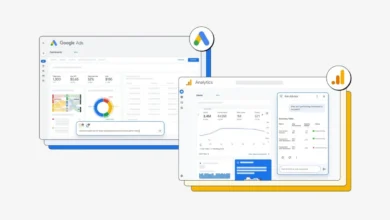
Google has officially announced the integration of its open-source Marketing Mix Model, Meridian, into the Google Analytics 360 environment, marking a significant shift in how enterprise-level advertisers measure and optimize their cross-channel marketing efforts. This strategic move aims to provide businesses with a unified measurement framework that combines the granular, real-time data of digital analytics with the high-level strategic insights of traditional marketing mix modeling (MMM). By leveraging the Gemini AI architecture, Google is also introducing Qualified Future Conversions (QFCs), a predictive tool designed to bridge the gap between brand-building activities and long-term sales outcomes.
The integration comes at a critical juncture for the advertising industry. As privacy regulations tighten and the efficacy of third-party cookies continues to wane, marketers are increasingly turning to durable measurement solutions that do not rely on individual user tracking. Meridian, which was released earlier this year as a standalone open-source project, offers a Bayesian approach to MMM, allowing brands to account for offline variables, macroeconomic trends, and digital touchpoints simultaneously. Its inclusion in Google Analytics 360 signifies a move toward "Unified Measurement," a philosophy that seeks to harmonize disparate data streams into a single source of truth for decision-makers.
The Evolution of Marketing Measurement: From Attribution to Unified Models
For much of the last decade, digital marketing was dominated by Multi-Touch Attribution (MTA), a method that tracked individual user journeys across the web to assign credit for a sale. However, the rise of privacy-centric browsing and the deprecation of identifiers have made MTA increasingly difficult to execute accurately. In response, the industry has seen a resurgence in Marketing Mix Modeling, a statistical technique that has been used by major consumer packaged goods (CPG) brands since the 1960s.
Unlike MTA, MMM does not require personal data. Instead, it uses aggregate data—such as weekly spend by channel and total sales—to calculate the Return on Ad Spend (ROAS). Google’s Meridian was developed to modernize this practice, providing an open-source framework that is transparent, extensible, and capable of handling the complexities of the modern digital landscape. By bringing Meridian into Google Analytics 360, Google is making these sophisticated statistical tools accessible to a broader range of enterprise clients who already utilize the Google Cloud and Analytics ecosystem.
Meridian Integration: Technical Capabilities and Strategic Advantages
The integration of Meridian into Google Analytics 360 allows for a more seamless data pipeline. Traditionally, building an MMM required manual data extraction from various platforms, a process that could take months and often resulted in "stale" insights. With the new integration, data from Google Ads, YouTube, and other digital channels can be fed directly into the Meridian model.
Key features of the Meridian-GA360 integration include:
- Open-Source Transparency: Because Meridian is open-source, data scientists can inspect the code, customize the Bayesian priors, and ensure that the model aligns with their specific business logic. This addresses a common criticism of "black-box" measurement tools provided by large tech platforms.
- Cross-Channel Synthesis: Meridian is designed to measure not just Google-owned properties, but the entire marketing mix, including television, radio, print, and competitor platforms.
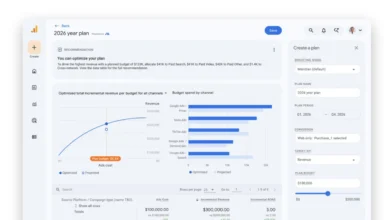
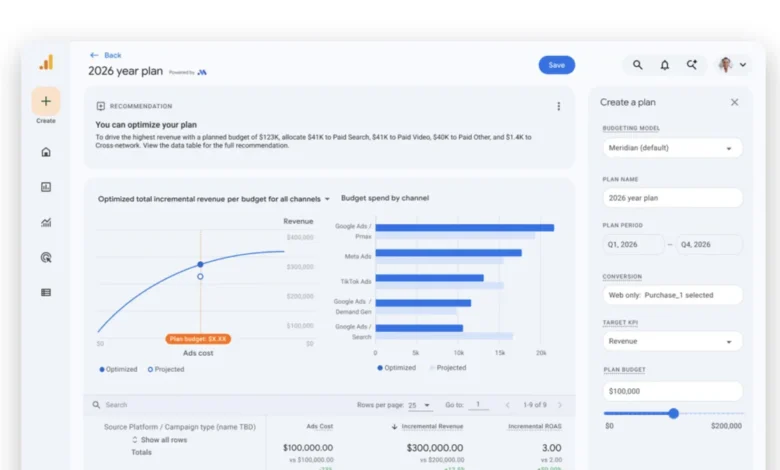
- Actionable Optimization: The tool provides "what-if" scenario planning, allowing marketers to simulate the impact of shifting budgets between channels before committing spend.
The synergy between Meridian and the existing Google Analytics infrastructure is intended to turn raw data into actionable decisions. As Google stated in its announcement, "In the AI era, data is your fuel for growth. But beyond a strong foundation, you need tools that leverage that data to give you a complete picture of performance."
Bridging the Funnel with Qualified Future Conversions (QFCs)
A persistent challenge for CMOs has been proving the value of "upper-funnel" marketing—activities like brand awareness campaigns and video ads that do not result in an immediate click or purchase. To address this, Google is introducing Qualified Future Conversions (QFCs) within Google Ads.
Powered by Gemini, Google’s most capable AI model, QFCs utilize predictive signals to link current brand spend to future revenue. One of the primary signals used in this calculation is brand search volume. When a consumer sees a video ad and later searches for the brand name, Gemini identifies this as a "qualified" signal of future intent.
These predictive signals are not meant to exist in a vacuum. Google has indicated that QFC data will eventually be integrated directly into the Meridian MMM framework. This will allow the model to account for the "long tail" of marketing impact, refining the accuracy of the MMM by acknowledging that a dollar spent on brand awareness today may not yield a conversion for several weeks or months.
Chronology of Google’s Measurement Roadmap
The integration of Meridian into Google Analytics 360 is the latest step in a multi-year roadmap focused on privacy-safe measurement.
- October 2020: Google launches Google Analytics 4 (GA4), shifting the platform from session-based tracking to event-based tracking to prepare for a cookieless future.
- 2022-2023: Google introduces various AI-driven features in Google Ads, such as Performance Max, which automates bidding across all Google channels.
- February 2024: Google officially releases Meridian as an open-source MMM, positioning it as a competitor to Meta’s "Robyn" and Uber’s "Orbit."
- May 2024: During the Google Marketing Live event, the company emphasizes the role of Gemini in measurement and creative production.
- Late 2024: The current announcement confirms the direct integration of Meridian into the enterprise-level Analytics 360 suite and the rollout of QFCs.
Industry Context and Supporting Data
The shift toward MMM and unified measurement is backed by broader market trends. According to a report by Gartner, nearly 60% of marketing leaders surveyed expressed concerns about the accuracy of their current attribution models due to privacy changes. Furthermore, a study by Deloitte found that companies using advanced analytics and unified measurement frameworks saw a 15% to 20% increase in marketing efficiency.
The demand for open-source solutions is also rising. By making Meridian open-source, Google is tapping into a community of data scientists who prefer to build upon existing frameworks rather than rely on proprietary vendor models. This mirrors the trajectory of the software industry, where open-source tools like TensorFlow and PyTorch have become the standard for machine learning development.
Stakeholder Reactions and Market Implications
While Google’s internal teams highlight the efficiency gains for marketers, industry analysts have noted the competitive implications. By offering a robust, integrated measurement tool, Google strengthens the value proposition of its "360" enterprise suite, potentially discouraging large advertisers from migrating to third-party measurement vendors.
"The integration of Meridian into GA360 is a defensive and offensive move," says one digital marketing consultant. "It’s defensive because it addresses the privacy-driven data gaps that are making GA4 less useful for some. It’s offensive because it creates a ‘sticky’ ecosystem where the measurement tool and the media buying tool are inextricably linked."
Agencies, too, are adjusting their strategies. Many large holding companies have spent years building proprietary MMMs. The availability of Meridian within GA360 may lead some agencies to pivot toward offering "Meridian Implementation Services" rather than building models from scratch, shifting the focus from tool creation to strategic interpretation.
Fact-Based Analysis of Broader Implications
The rollout of Meridian and QFCs suggests several long-term shifts in the advertising landscape:
- The Democratization of Data Science: Historically, MMMs were the province of companies with multi-million dollar marketing budgets and dedicated econometrics teams. By automating the data ingestion process through GA360, Google is lowering the barrier to entry for sophisticated statistical modeling.
- The End of "Last-Click" Dominance: For years, last-click attribution incentivized marketers to over-invest in search and retargeting at the expense of brand building. By using Gemini to quantify "Future Conversions," Google is providing a mathematical justification for investing in the top of the funnel.
- AI as the Connective Tissue: The role of Gemini in this update cannot be overstated. AI is no longer just for generating ad copy or optimizing bids; it is now the primary engine for interpreting complex, noisy data sets to predict business outcomes.
- Privacy-First as the Standard: This update reinforces the reality that the industry has moved past the era of individual user tracking. Measurement is becoming a game of aggregate signals and statistical probability rather than deterministic tracking.
Conclusion
The integration of Meridian into Google Analytics 360 and the introduction of Qualified Future Conversions represent a significant advancement in the "Unified Measurement" movement. By combining the transparency of open-source modeling with the predictive power of Gemini AI, Google is attempting to provide a solution to the "measurement gap" created by the decline of third-party cookies. These updates are designed to help enterprise marketers understand not just what happened in the past, but what is likely to happen in the future, allowing them to invest with greater confidence in an increasingly complex digital economy. As these tools become more widely adopted, the focus of marketing measurement will likely shift from tracking clicks to understanding the holistic influence of every marketing dollar spent.