Four ways Google Analytics delivers actionable insights for your business.


The modern marketing landscape is undergoing a fundamental transformation driven by shifting consumer behaviors, stringent privacy regulations, and the rapid advancement of artificial intelligence. In this context, Google Analytics has emerged as a cornerstone for businesses seeking to navigate the complexities of digital measurement while maintaining a commitment to user privacy. As the digital ecosystem moves away from legacy tracking methods, Google is introducing a suite of new features within Google Analytics 4 (GA4) designed to provide deeper, more actionable insights. These updates, which include AI-generated summaries, enhanced cross-channel measurement, and sophisticated budgeting tools, represent a significant leap forward in how organizations interpret data to drive growth.
The Sunset of Universal Analytics and the Rise of GA4
The transition to Google Analytics 4 is not merely an incremental update but a complete overhaul of the measurement paradigm. For over a decade, Universal Analytics (UA) served as the industry standard, relying heavily on cookies and session-based data. However, the introduction of the General Data Protection Regulation (GDPR) in Europe and the California Consumer Privacy Act (CCPA) in the United States necessitated a more durable approach.
Google first introduced GA4 five years ago to address these regulatory shifts. Unlike its predecessor, GA4 is built on an event-based data model, allowing for a more flexible and comprehensive view of the user journey across multiple platforms and devices. The urgency for businesses to adopt this new system has reached a critical juncture. Google has officially confirmed that Universal Analytics will be completely shut down on July 1, 2024. After this date, users will lose access to both current and historical data within standard and 360 properties. Consequently, data migration and the downloading of historical records have become immediate priorities for marketing departments worldwide.
AI-Generated Insights and Predictive Analytics
One of the most significant enhancements to Google Analytics 4 is the integration of advanced AI-generated insights. As data sets become increasingly massive and fragmented, the ability for human analysts to manually identify every significant trend or anomaly has diminished. To bridge this gap, Google is rolling out "generated insights" that utilize machine learning to provide plain-language summaries of data fluctuations.
Steve Ganem, Director of Product Management for Google Analytics, emphasizes that these insights are designed to act like a digital colleague. When a business experiences a sudden spike in "Purchase" events, the AI engine analyzes millions of combinations of metrics and dimensions—such as geography, device type, and referral source—to proactively explain the "why" behind the trend. This shift from descriptive analytics (what happened) to diagnostic and predictive analytics (why it happened and what will happen next) allows businesses to react in real-time to market changes.
Furthermore, GA4 employs behavioral and conversion modeling to solve for "unknowns" in the purchase path. In instances where users opt out of tracking, Google’s AI fills the data gaps by modeling the behavior of similar cohorts, ensuring that marketers maintain a holistic view of campaign performance without compromising individual privacy.
Cross-Channel Measurement and Full-Funnel Visibility
In the current fragmented media environment, consumers rarely follow a linear path to purchase. They may discover a product on social media, research it via a search engine, and finally complete the transaction through a mobile app. Capturing this "messy middle" requires sophisticated cross-channel measurement.
Google is expanding GA4’s capabilities to include aggregated impressions from Campaign Manager 360 directly within the advertising workspace. This integration provides a clearer picture of how "top-of-funnel" awareness efforts, such as display and video impressions, eventually contribute to "bottom-of-funnel" conversions.
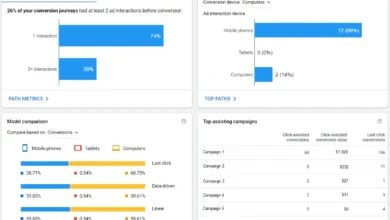
In a move to provide a more platform-agnostic view, Google is also simplifying the process of importing non-Google campaign data. New integrations allow businesses to connect advertising accounts from Pinterest, Reddit, and Snap directly to their Analytics properties. This automated "cost data import" maps external campaign data to Analytics traffic source dimensions. Marketers can now view metrics such as ad cost, clicks, and impressions from these platforms alongside Google Ads data in a single, unified cross-channel performance report. This consolidated view is essential for calculating true Return on Ad Spend (ROAS) across a diversified media mix.

Integrated Planning and Budgeting Tools
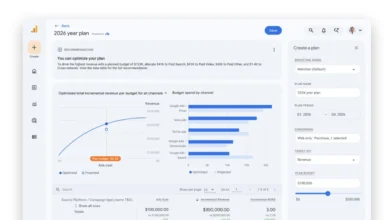
Beyond data collection and reporting, Google is moving into the realm of strategic planning. A new cross-channel budgeting feature, currently in beta, is set to roll out in the coming months. This tool is designed to help marketers optimize in-flight media spend by providing projection reports.
These reports allow businesses to track media "pacing"—the rate at which a budget is being spent—and project future performance against specific target objectives, such as total revenue or lead volume. By using historical data and current performance trends, the AI-powered tool can suggest reallocations of budget to the highest-performing channels. This level of automation reduces the manual labor involved in spreadsheet-based budget tracking and allows for more agile financial decision-making.
Building for a Privacy-First Future
The deprecation of third-party cookies in browsers like Google Chrome represents one of the most significant technical challenges in the history of digital advertising. To ensure measurement durability, Google Analytics 4 is being integrated with the Chrome Privacy Sandbox APIs. This allows for audience reaching and conversion measurement to continue in a way that is anonymized and privacy-compliant.
A key component of this durable strategy is "Enhanced Conversions" in GA4. This feature allows businesses to use hashed, consented first-party data—such as an email address provided during a newsletter sign-up—and match it against Google’s internal data in a privacy-safe environment. This process provides a more accurate view of attribution, especially when users switch devices. Once captured, these enhanced conversions can be exported to Google Ads to improve the training of bidding algorithms, thereby increasing the efficiency of automated campaigns.
Additionally, the implementation of "Consent Mode" has been streamlined. This feature allows a website to communicate a user’s cookie consent choices directly to Google Analytics. If a user denies consent, GA4 automatically switches to behavioral modeling to estimate the missing data, ensuring that the integrity of the overall data set remains intact while respecting the user’s legal rights.
Industry Implications and Strategic Analysis
The updates to Google Analytics 4 signal a broader industry shift toward "black box" measurement, where AI handles the heavy lifting of data processing while humans focus on high-level strategy. While this automation offers significant efficiency gains, it also requires a change in mindset for data analysts. The focus is shifting away from manual data cleaning and toward the interpretation of AI-generated narratives.
For small and medium-sized businesses (SMBs), these tools democratize access to high-level data science that was previously only available to large enterprises with dedicated data teams. Conversely, for large enterprises, the challenge lies in the integration of these Google-centric tools with broader internal data lakes and third-party Business Intelligence (BI) platforms.
Market analysts suggest that the July 1 deadline for Universal Analytics will be a "forcing function" for the industry. Organizations that have procrastinated on their GA4 migration may find themselves at a competitive disadvantage, lacking the historical data needed to train the very AI models that Google is now deploying.
Conclusion: Charting the Course Forward
The evolution of Google Analytics 4 reflects the dual demands of the modern era: the need for deep, cross-platform business intelligence and the absolute requirement for user privacy. By investing in AI-driven insights, cross-channel integration, and automated budgeting, Google is positioning GA4 as more than just a reporting tool; it is becoming a strategic engine for business growth.
As the July 1, 2024, sunset of Universal Analytics approaches, the message from Google is clear: the future of measurement is automated, modeled, and privacy-centric. Businesses that embrace these changes and leverage the new tools within GA4 will be better equipped to understand their customers’ complex journeys and make data-driven decisions in an increasingly unpredictable digital world. The transition may be challenging, but the potential for more accurate, actionable, and ethical measurement offers a significant reward for those who navigate the change successfully.