The Evolution of the Bug-Free Workforce and the Erosion of Human Scaffolding in Professional Environments

As artificial intelligence permeates the modern workplace, a new mantra is echoing through the corridors of product design firms and engineering hubs: “Now I don’t have to bug anyone.” This shift, characterized by the deployment of Retrieval-Augmented Generation (RAG) tools, automated accessibility scanners, and AI-generated mockups, is frequently framed as a liberation from the inefficiencies of human dependency. However, emerging research and organizational experts suggest that this "bug-free" efficiency may be dismantling the very social scaffolding—trust, belonging, and serendipitous innovation—that sustains high-performing teams.
The transition toward AI-mediated workflows marks a significant departure from the collaborative models that defined the early 21st-century tech boom. Historically, the "friction" of needing help from a colleague served a dual purpose: it solved a technical problem while simultaneously reinforcing a social bond. Today, product designers who once consulted researchers now query RAG-enabled databases. Product managers who previously sought mockups from design teams now generate "acceptable" options via generative AI. Even engineers, who once relied on accessibility experts for audits, now use real-time automated scanners to flag compliance issues. While these advancements unblock individual tasks, they risk creating a centralized, isolated network where human-to-human interaction is no longer a requirement for productivity.
A Chronology of Team Dynamics and AI Integration
The path toward the "bug-free workforce" has accelerated rapidly over the last decade. In the early 2010s, the focus was on "collaboration software" like Slack and Jira, which digitized interactions but kept humans at the center. By the early 2020s, the advent of Large Language Models (LLMs) began to shift the paradigm from digital collaboration to digital replacement.

By 2024, specialized AI tools were being integrated into specific departmental silos, allowing for "self-service" insights. By 2025, researchers began to observe the first significant cracks in this model. A landmark study published by scholars from Harvard, Columbia, and Yeshiva University analyzed the impact of AI on team coordination. Their findings were stark: AI-driven automation frequently led to a decrease in overall team performance and an increase in coordination failures, particularly among low- and medium-skilled teams. Most notably, the study identified a measurable decline in team trust, as the "micro-moments" of interpersonal reliance began to vanish.
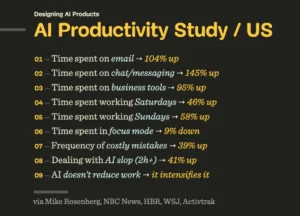
As the industry moved into 2026, a new phenomenon dubbed "AI Brain Fry" was identified. A study of 1,488 full-time U.S. workers revealed that excessive interaction with AI tools led to acute mental fatigue and cognitive exhaustion. This fatigue was not merely a result of workload, but of the isolation inherent in managing AI-driven processes without the social buffer of peer interaction.

The Scientific Case for Informal Interaction
To understand why the "bug-free" workforce might be a liability, one must examine the foundational research on team productivity. In 2012, MIT’s Human Dynamics Lab conducted a study using wearable electronic sensors to track the communication patterns of 2,500 individuals across various industries. The researchers, led by Alex "Sandy" Pentland, discovered that the single best predictor of a team’s success was not the intelligence of its members or the quality of its tools, but the "energy" generated through informal communication.
Teams that engaged in frequent hallway conversations, coffee chats, and "quick questions" were 35% more successful in their outcomes. This informal interaction builds "social capital," a reserve of goodwill and mutual understanding that teams draw upon during crises. When AI removes the need to "bug" a colleague, it effectively eliminates these high-energy informal exchanges, potentially capping the team’s total productivity at a lower threshold.

Similarly, Google’s Project Aristotle, a multi-year study of 180 teams, concluded that "psychological safety"—the belief that one can take risks without being shamed—was the primary driver of performance. Psychological safety is not built during formal quarterly reviews; it is forged in the "micro-moments" of daily interaction. When a junior designer "bugs" a senior researcher, they are not just getting an answer; they are testing the safety of the environment. If AI provides the answer instead, that test never occurs, and the safety of the environment remains unverified and fragile.
The Economic Consequences of Disconnection
The erosion of team scaffolding carries a heavy price tag. According to research from McKinsey’s "Great Attrition" study, a lack of a sense of belonging is one of the most cited reasons for employee turnover. In an era where work is increasingly remote or hybrid, the informal "scaffolding" of work culture is the only thing tethering an employee to their organization.

McKinsey estimates that for a median-size S&P 500 company, employee disengagement and attrition can cost between $228 million and $355 million annually in lost productivity and replacement costs. If AI adoption leads to a workforce of "strangers" who happen to work on the same project, the likelihood of turnover increases. Workers do not stay for the software; they stay for the people. When the "people" component is optimized out of the daily workflow, the company’s retention strategy collapses.
Furthermore, innovation itself is at risk. A 2024 study by South Korean researchers found that "weak ties"—the bridging conversations with colleagues outside one’s immediate circle—are essential for sustained innovation. Breakthroughs often occur at the intersection of different disciplines. By eliminating the need to "bug" people in other departments, companies are inadvertently closing the doors to the serendipitous collisions that lead to new product categories and creative solutions.

Institutionalizing Productive Friction
To combat these risks, forward-thinking leaders are beginning to implement strategies that balance AI efficiency with human connection. The goal is to move from a "bug-free" workforce to one that leverages "productive friction."
One approach is the "Toil Elimination" model. Research indicates that when AI is used specifically to remove repetitive, unenjoyable tasks—known as "toil"—rather than interpersonal communication, team health actually improves. A 2026 report in the Harvard Business Review found that workers who used AI to automate busy work reported 15% lower rates of burnout and a higher degree of social connection. Because they were no longer bogged down by administrative tasks, they had more time for "off-keyboard" problem-solving with their peers.

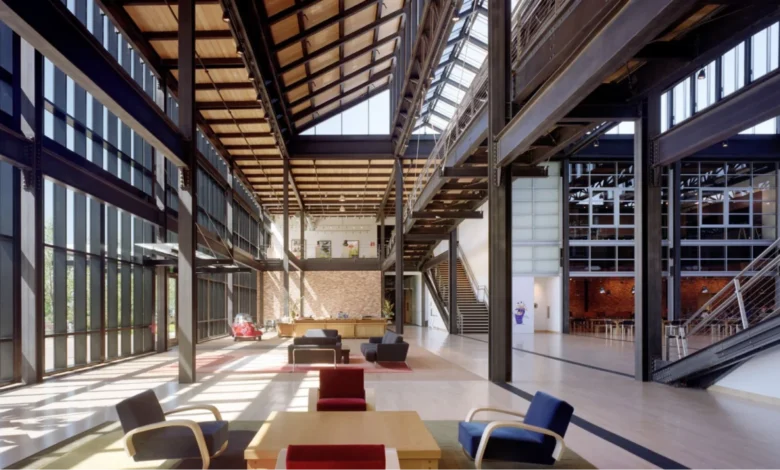
Another strategy involves architectural and digital design inspired by Steve Jobs’ philosophy at Pixar. Jobs famously designed the Pixar headquarters with a central atrium that forced employees from different departments to "collide" throughout the day. In the AI era, this "productive friction" can be institutionalized through:
- Collaborative Prompting: Requiring teams to develop AI prompts together, turning a solitary task into a social one.
- Cross-Disciplinary AI Audits: Instead of an engineer using an automated scanner alone, they might pair with an accessibility expert to review the AI’s findings, maintaining the mentor-mentee relationship.
- AI-Generated Icebreakers: Using AI to create humor or absurd "vibe-coding" challenges that encourage teams to laugh and bond over the quirks of the technology.
Broader Impact and Future Implications
The long-term impact of the "bug-free" workforce will likely depend on the "Emotional Intelligence" (EQ) of the leadership overseeing the AI rollout. Companies that view AI as a way to reduce headcount or eliminate "distractions" may see short-term gains in efficiency, but they will likely suffer from long-term declines in innovation and employee loyalty.

Conversely, organizations that treat AI as a "new teammate" rather than a replacement for human interaction will be better positioned to handle the inevitable crises of the business cycle. When a market pivot is required or a global crisis hits, a team that has built trust through years of "bugging" each other will be more resilient than a group of isolated individuals who have only ever interacted with a chatbot.
In conclusion, the "bug-free" workforce is a double-edged sword. While it offers immediate relief from the friction of modern work, it threatens the invisible structures that make work meaningful and teams effective. The challenge for the next decade of management will be to ensure that in the quest for an efficient, automated future, we do not optimize away the very humanity that makes a company worth working for. The most successful teams will not be those who never need to "bug" each other, but those who use AI to clear the path for deeper, more meaningful human collisions.