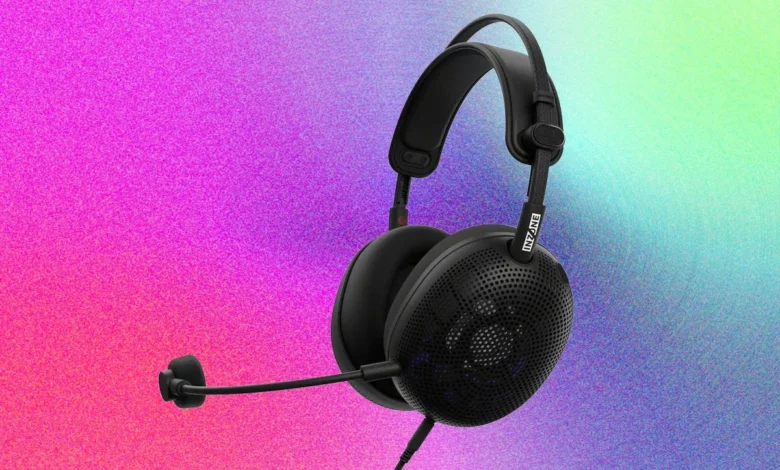
Sony’s expansion into the PC gaming peripheral market continues to evolve with the introduction of the Sony Inzone H6 Air, a wired gaming headset that prioritizes ergonomic comfort and acoustic transparency over the bells and whistles of its wireless counterparts. In an industry increasingly dominated by heavy, battery-laden peripherals, the H6 Air stands out for its minimalist approach, weighing in at a mere 199 grams. This strategic move by Sony Interactive Entertainment signals a nuanced understanding of the modern gamer’s needs, balancing the demands of high-stakes competitive play with the long-term comfort required for extended professional or recreational sessions. By leveraging its decades of expertise in audiophile-grade hardware, Sony has crafted a device that bridges the gap between traditional gaming headsets and high-fidelity open-back headphones, offering a soundstage that is as expansive as it is precise.
The Strategic Evolution of Sony Inzone
The Inzone brand was launched in mid-2022 as Sony’s dedicated foray into the PC gaming hardware space, a move intended to capitalize on the growing synergy between PlayStation’s first-party titles and the Windows ecosystem. The initial lineup, which included the H3, H7, and H9 headsets, focused heavily on wireless connectivity and active noise cancellation. However, consumer feedback and market trends have shifted toward a demand for ultra-lightweight gear, a trend popularized by the "superlight" mouse category.
The H6 Air represents the latest iteration of this philosophy. By stripping away the internal batteries, Bluetooth radios, and 2.4GHz wireless receivers, Sony has managed to reduce the weight of the headset to a point where it becomes nearly imperceptible during use. This design choice addresses the primary complaint regarding modern gaming headsets: neck fatigue during marathon sessions. Furthermore, the decision to utilize an open-back design—a rarity in the gaming sector—indicates a shift toward prioritizing natural sound reproduction and breathability over the passive isolation provided by closed-back models.
Technical Specifications and Design Philosophy
At the heart of the H6 Air’s appeal is its 199-gram chassis. To put this in perspective, the industry-standard SteelSeries Arctis Nova 3 weighs approximately 260 grams, while many flagship wireless headsets exceed 350 grams. This 23% reduction in weight compared to its closest competitors is achieved through the use of high-strength, lightweight polymers. While some critics might initially perceive the plastic construction as less "premium" than metal-reinforced alternatives, the engineering intent is clear: durability through flexibility and weight optimization.
The open-back architecture is the defining acoustic feature of the H6 Air. Unlike closed-back headphones, which trap air and sound waves inside the ear cup to enhance bass and isolate noise, open-back designs allow air to pass through the ear cups. This results in a more "airy" and natural soundstage, preventing the "in-your-head" sensation often associated with gaming audio. For the user, this translates to a more realistic perception of distance and direction, a critical factor in both immersive RPGs and tactical shooters.
Audio Performance in Competitive and Immersive Environments
In practical application, the H6 Air demonstrates a versatility that challenges the dominance of tactical-heavy headsets like the Razer BlackShark V3 Pro. While the BlackShark is often lauded for its aggressive frequency tuning that highlights footsteps and weapon reloads in titles like Rainbow Six Siege, the H6 Air adopts a more balanced, "audiophile" approach.
During testing in the upcoming extraction shooter Marathon, the headset’s spatial implementation proved to be a significant advantage. The sound design of Marathon, characterized by the creaking infrastructure of Tau Ceti and the mechanical stomping of UESC robots, requires a wide dynamic range to be fully appreciated. The H6 Air provides the "room to breathe" that the game’s rich audio landscape demands. Despite the open-back design, which theoretically allows for more ambient noise leakage, the directional accuracy remains sharp. In squad-based scenarios, users have reported an enhanced ability to detect flanking maneuvers, such as opposing teams boarding a "Hauler" vessel, purely through subtle acoustic cues that might be muffled by the heavy bass of closed-back competitors.

Beyond the realm of competitive gaming, the H6 Air excels in music reproduction and multi-tasking. The sound profile is described as "light and effortless," making it suitable for genres ranging from bass-forward Steely Dan tracks to the atmospheric orchestral scores of World of Warcraft. The headset’s ability to layer complex sounds—such as the busy environment of Silvermoon City—without muddying the mid-tones suggests a high-quality driver implementation that punches above its weight class.
The Wired Advantage: Reliability and Simplicity
The H6 Air’s reliance on a wired connection is a deliberate counter-trend in an era of "wireless everything." This choice offers several logistical and technical advantages that are often overlooked by the casual consumer.
- Elimination of Latency: Even the most advanced 2.4GHz wireless protocols introduce a negligible amount of latency. For professional gamers, the zero-latency nature of a wired connection remains the gold standard.
- Battery Management: By removing the battery, Sony eliminates the "planned obsolescence" associated with lithium-ion cells, which inevitably degrade over time. It also removes the anxiety of a headset dying during a crucial match.
- Plug-and-Play Ecosystem: The H6 Air does not require proprietary dongles, firmware updates, or account-based software to function. This simplicity is particularly beneficial for users who jump between multiple devices, including PCs, PlayStation 5 consoles, and handheld devices like the Steam Deck.
- Weight Reduction: As previously noted, the absence of a battery and wireless hardware is the primary driver behind the 199-gram featherweight design.
While the "tether" of a wire is often seen as a drawback, Sony has mitigated this by including a high-quality, low-friction cable that resists tangling and minimizes "cable microphonics"—the sound of the wire rubbing against clothing.
Comparison with Market Competitors
To understand the H6 Air’s position, it is necessary to compare it with other high-end options in the market.
- Razer BlackShark V3 Pro: While the Razer model offers superior isolation and a more aggressive "gamer-centric" EQ, it is significantly heavier and requires frequent charging. The H6 Air is positioned for the "average gamer" who values a natural soundscape and long-term comfort over noise isolation.
- SteelSeries Arctis Nova 3: The Nova 3 is a formidable competitor in the lightweight wired category. However, the H6 Air manages to undercut it in weight by over 60 grams while offering an open-back design that the Nova 3 lacks.
- Audiophile Speakers (Kanto Tuk): Interestingly, the H6 Air has been compared favorably to high-end bookshelf speakers like the Kanto Tuk in terms of clarity and "focus." For users who typically prefer speakers for their lack of "clamping force" and natural sound, the H6 Air serves as a viable headset alternative that doesn’t sacrifice that sense of openness.
Industry Impact and Market Implications
The release of the Inzone H6 Air reflects a broader shift in the peripheral industry. For years, the "arms race" was focused on features: more LEDs, more buttons, and more wireless range. However, the rise of esports has refocused the market on ergonomics. A headset that is too heavy can lead to neck strain, and a headset that is too "hot" (due to closed-back leatherette pads) can lead to discomfort in warm environments.
Industry analysts suggest that Sony’s move into open-back, ultra-lightweight wired headsets could prompt competitors like Logitech and Corsair to re-evaluate their wired offerings. Furthermore, the H6 Air’s design language—clean, white, and minimalist—aligns it more closely with the PlayStation 5 aesthetic than the traditional "RGB-heavy" PC gaming look. This cross-platform appeal is a key component of Sony’s strategy to unify its gaming ecosystem.
Conclusion: A Specialized Tool for the Discerning Gamer
The Sony Inzone H6 Air is not a "one-size-fits-all" solution. Its open-back design means it is not suitable for loud environments, as it will leak sound to those nearby and allow ambient noise in. However, for the gamer working or playing in a controlled home environment, it offers a level of comfort and acoustic transparency that is rarely found in the gaming market.
By focusing on the fundamentals—weight, soundstage, and reliability—Sony has produced a headset that challenges the status quo. It is a testament to the idea that sometimes, less is indeed more. As the PC gaming market continues to mature, the H6 Air stands as a sophisticated option for those who prioritize the physiological and psychological benefits of a "barely there" audio experience. Whether navigating the abandoned infrastructure of Tau Ceti or managing emails while AFK farming in Old School RuneScape, the H6 Air provides a professional-grade solution that refuses to compromise on the core tenets of high-fidelity audio.