The modern corporate landscape is currently grappling with a paradox where, despite multi-million dollar investments in data infrastructure, the majority of strategic decisions are still dictated by the Highest Paid Person’s Opinion, commonly referred to as the HiPPO effect. While organizations have successfully built sophisticated "clean rooms" and unified consumer-view cloud platforms, the efficacy of these investments is frequently undermined by what industry experts define as "insights latency." This delay between data collection and actionable intelligence has rendered traditional analytical workflows—characterized by manual reporting and reactive segmentation—increasingly obsolete in a high-velocity digital economy.
The Structural Failure of Traditional Analytics
For over two decades, the "marketing funnel" has served as the foundational blueprint for budget allocation and human resource management. However, empirical data spanning several decades suggests that this linear model no longer reflects the complexities of modern consumer behavior. The traditional analytics workflow, which relies on a four-stage process of report generation, manual analysis, insight extraction, and executive presentation, is fundamentally ill-equipped to handle the high-dimensionality of current datasets.
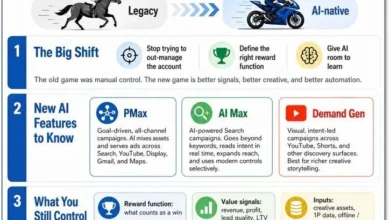
Human analysts, while capable of identifying "known knowns," often struggle with the "last-mile barrier." This occurs when data-driven insights compete with conflicting corporate priorities or are lost in translation during the transition to execution. Furthermore, the sheer volume of variables—tracking hundreds of points per user engagement across non-linear paths—makes it nearly impossible for human teams to identify subtle, non-intuitive patterns or emerging anomalies in real-time. This systemic inefficiency has prompted a radical reassessment of the "10/90 Rule of Analytics," a concept originally introduced twenty years ago which suggested that for every $100 spent, $10 should go to tools and $90 to human analysts. In the age of artificial intelligence, this ratio is being redefined: $10 for human analytical strategists and $90 for AI activation.
Chronology of the Analytical Shift
The transition from manual reporting to AI-driven intelligence has evolved through several distinct phases:
- The Descriptive Era (2006–2014): Focused on "what happened." This era was dominated by the Trinity Model, which sought to balance experience, behavior, and outcomes.
- The Diagnostic Era (2015–2020): Focused on "why it happened." Organizations began investing heavily in cloud-based Business Intelligence (BI) and manual segmentation to understand consumer friction.
- The Predictive Era (2021–Present): Focused on "what will happen." This current phase sees the integration of Machine Learning (ML) and Large Language Models (LLMs) to automate the mundane and provide real-time propensity scoring.
- The Prescriptive Future (2028 and Beyond): A forecasted state where "Analyst 2028" roles shift entirely toward strategic validation and AI orchestration, reducing the human-to-automation cost ratio even further.
Supporting Data: The Impact of AI Activation
The shift toward AI-powered analytics is not merely theoretical; it is backed by significant performance metrics across various industries, particularly in e-commerce and SaaS (Software as a Service). Data from implementations across three continents indicates that organizations moving toward AI-driven models experience transformative gains.
In the realm of Propensity Modeling, which uses ML algorithms like XGBoost and Random Forest to predict which users are likely to convert, upgrade, or churn, the results are quantifiable. Targeted segments have shown a 35% to 60% improvement in conversion rates. Furthermore, by focusing ad spend on high-propensity individuals rather than broad audiences, companies have reported a 20% to 35% reduction in customer acquisition costs (CAC).
Advanced Customer Segmentation via unsupervised learning has also yielded high returns. By moving beyond basic demographics—such as "mobile users" or "logged-in users"—and employing clustering algorithms like K-Means or DBSCAN, firms can identify "unknown unknowns." In one B2B SaaS case study, AI identified four distinct sub-segments within the "free trial" category, ranging from "High-Intent Explorers" to "Feature-Specific Researchers." Tailoring the onboarding experience to these algorithmic segments resulted in a 25% to 50% increase in activation rates and a 60% to 75% reduction in the time analysts spent on manual cohort analysis.
Integrating the Voice of the Customer (VoC)
A significant leap in modern analytics is the achievement of multi-modality—the ability of AI to synthesize structured behavioral data with unstructured text, voice, and video. Historically, survey responses, support tickets, and social media mentions lived in silos, disconnected from actual user behavior on a website or app. This fragmentation made it impossible to connect the "why" (customer sentiment) with the "what" (user clicks).
Through Natural Language Processing (NLP) and sentiment analysis, multimodal AI systems can now process thousands of chat transcripts and call recordings simultaneously. Practical applications have shown that this integration can lead to an 8 to 12-point improvement in Net Promoter Scores (NPS). By identifying specific points of friction—such as technical bugs mentioned in chatbots that correlate with cart abandonment—companies have achieved a 20% to 25% reduction in "fails" or abandoned transactions through real-time interventions.
Industry Responses and the "Analyst 2028" Framework
The reaction from the global business community suggests a mixture of urgency and restructuring. Chief Marketing Officers (CMOs) are increasingly under pressure to demonstrate the ROI of their data lakes, leading to a surge in demand for AI-literate analytical strategists. The consensus among industry leaders is that the traditional role of the "data reporter" is reaching its expiration date.
By January 2028, the role of the analyst is expected to undergo a "S.H.I.F.T." for relevance. This framework implies a transition toward:
- Strategic Validation: Moving from hunting for insights to validating AI-generated hypotheses.
- Hyper-Automation: Overseeing systems that handle routine anomaly detection and report generation.
- Intelligence Orchestration: Managing the flow of data between various AI models (Propensity, CLV, and NLP).
- Friction Reduction: Focusing on the "last-mile" of execution to ensure insights lead to immediate action.
While Artificial General Intelligence (AGI) remains a future milestone, current "Narrow AI" applications are already providing what experts call a "25x improvement" over traditional manual methods. The grit and persistence required to implement these systems today are viewed as the necessary groundwork for the eventual arrival of more autonomous intelligence systems.
Broader Impact and Strategic Implications
The integration of AI into analytics represents the most significant paradigm shift since the field’s inception as a formal science. The primary competitive advantage in the coming decade will not belong to the organizations with the largest datasets, but to those with the lowest "insights latency."
The ability to move from reactive historical reporting to predictive intelligence and prescriptive optimization allows for "liquid merchandising" and real-time pricing—strategies that were previously impossible to manage at scale. For example, AI can now adjust offers and discounts dynamically for every individual user based on their predicted Customer Lifetime Value (CLV), ensuring that high-value customers receive premium service while acquisition costs for low-value segments are minimized.
As organizations rebuild their analytics infrastructure from the ground up, the focus is shifting toward "AI activation" as the primary driver of profitability. The reduction in the cost of intelligence, combined with the exponential increase in the scale of automation, suggests a future where strategic decision-making is more objective, faster, and significantly more accurate than the HiPPO-led cultures of the past. The bottom line for global enterprises is clear: those who fail to transition their digital analytics to AI-powered models within the next 18 to 24 months risk falling several years behind their more agile competitors. In this new era, the "10/90 rule" is not just a guideline for investment—it is a mandate for survival.