Massachusetts Aims to Lead the Quantum Revolution with New State-of-the-Art Research Hub

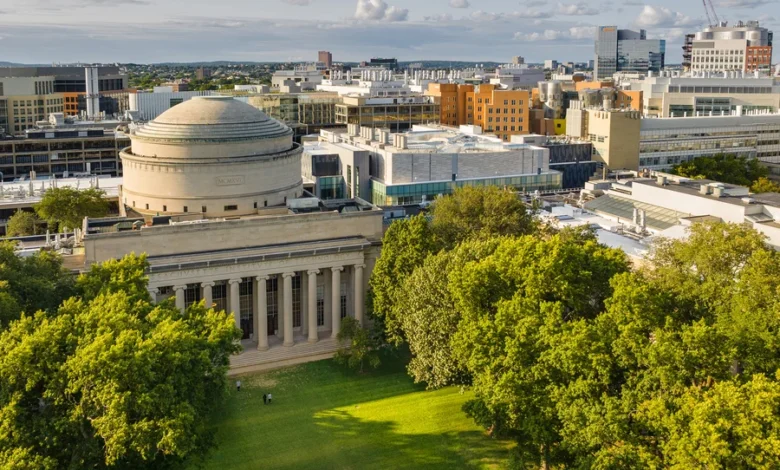
Massachusetts is poised to solidify its position at the vanguard of the burgeoning quantum technology sector with the establishment of a groundbreaking new research facility at the Massachusetts Institute of Technology (MIT). The initiative, spearheaded by Governor Maura Healey and MIT President Sally Kornbluth, seeks to transform the Commonwealth into a national epicenter for quantum innovation, accelerating the development and application of next-generation quantum technologies. This strategic move is deemed critical for maintaining U.S. technological leadership amidst intensifying global geopolitical rivalries, with potential impacts reaching across computing, security, healthcare, defense, and space exploration.
The cornerstone of this ambitious plan is the creation of the Quantum Systems Laboratory (QSL), a shared-use facility designed to provide researchers with unprecedented access to cutting-edge quantum hardware and specialized experimental capabilities. Scheduled for construction to commence as early as this summer, the QSL represents a significant leap forward in fostering a collaborative and robust quantum ecosystem within Massachusetts. The announcement of this initiative on Thursday, May 28th, marked a pivotal moment in the state’s commitment to nurturing a field that promises to redefine scientific and technological paradigms.
A Vision for Quantum Supremacy
The QSL is envisioned as a world-first facility that will integrate state-of-the-art quantum computers with advanced quantum sensors and peripherals, all interconnected by quantum interconnects designed for the seamless transfer of quantum information. This holistic approach aims to overcome current limitations in quantum research, providing scientists with the essential tools to explore the full transformative potential of quantum science and engineering. By bringing together disparate elements of quantum technology under one roof, the QSL will facilitate synergistic research and development, enabling breakthroughs that were previously unattainable.
"Greater Boston has the greatest concentration of quantum talent anywhere in the world, working on a range of potential applications," stated President Sally Kornbluth during the announcement. "Through the new Quantum Systems Laboratory, we will help position Massachusetts to lead the next era of quantum technologies. This facility will serve those at the edges of our wildest imaginations in physics and quantum computing, yes. But it will also equip the talent in our region — and ultimately, our nation — to push our knowledge to new limits, and new innovations."
Strategic Investment and Collaborative Framework
The establishment of the QSL is underpinned by a substantial financial commitment from the Commonwealth of Massachusetts, which has pledged $25 million. This state investment will serve to match a portion of the federal funding already allocated for quantum research at MIT, thereby bolstering the institute’s capacity to advance its quantum endeavors. The QSL’s development also benefits from MIT’s own significant financial contributions and generous philanthropic support from prominent figures like Thomas Tull, underscoring a broad-based commitment to the project’s success.
The QSL will be strategically located within Building 39 on the MIT campus, a site already undergoing substantial infrastructure upgrades to accommodate the unique environmental controls required for quantum research. Quantum phenomena are notoriously sensitive to external interference, necessitating highly controlled environments for the creation and study of coherent quantum states. The state’s investment will accelerate these upgrades, transforming Building 39 into a premier multi-disciplinary hub for scientists across the region. This hub will foster collaboration among researchers working on next-generation quantum technologies, as well as those focused on startup applications, defense technologies, and advanced health solutions.
Anantha Chandrakasan, MIT’s Provost, emphasized the region’s existing strengths in innovation. "Our region has unparalleled strengths in science-intensive innovations and tough tech breakthroughs that combine engineering, science, and computing," Chandrakasan noted. "With the new Quantum Systems Laboratory, we aim to arm Massachusetts with the compute power and integrated platforms needed to lead the coming era of quantum technologies."
Economic and Workforce Implications
The QSL is designed not only to advance scientific frontiers but also to yield substantial public benefits in terms of scientific discovery, workforce development, and economic growth. Quantum technologies hold immense promise for sectors such as life sciences and defense technologies, which already contribute significantly to the Massachusetts economy. The state’s investment in foundational quantum infrastructure is expected to catalyze job creation across academic research institutions, burgeoning startups, and established technology firms.
The construction phase alone is projected to generate over 150 full-time, on-site construction jobs, with an additional 75 to 100 jobs anticipated in supply chain and professional services across the Commonwealth. Beyond construction, the QSL will serve as an incubator for the quantum workforce of the future. By providing hands-on access to advanced quantum hardware and fostering interdisciplinary research, the facility will equip students and researchers with the skills and knowledge necessary to thrive in this rapidly evolving field.
MIT’s entrepreneurial ecosystem is a well-documented engine of economic growth. A 2015 report by Sloan Professors Edward Roberts and Fiona Murray highlighted that MIT alumni entrepreneurs have founded over 30,000 active companies, employing 4.6 million people and generating nearly $2 trillion in annual global revenue. The QSL is expected to further invigorate this ecosystem by providing critical resources and facilities for startups developing quantum technologies, thereby strengthening the region’s innovation economy and its capacity for commercializing groundbreaking research.
Ian Waitz, MIT’s Vice President for Research, articulated the facility’s broader impact. "The new QSL will introduce modern experimental infrastructure to quantum research at MIT and beyond, allowing us to scale experiments and expand into critical domains in disciplines such as biology and chemistry, where we see enormous innovative potential," Waitz explained. "As the new physical home of the MIT Quantum Initiative (or QMIT), the QSL will serve not only as an on-campus incubator, but more broadly, a regional hub to catalyze quantum innovation, growth, and investment in this critical R&D sector for the Commonwealth."
Advanced Capabilities and Infrastructure
The QSL will feature specialized laboratories equipped to support a wide range of quantum research activities. One dedicated floor will focus on the development of radio-frequency (RF) electronics essential for controlling and interfacing with quantum systems. This will enable researchers to design and build custom quantum experiments with advanced high-frequency packages, crucial for protecting delicate quantum data in real-world applications. Furthermore, the facility will develop the associated Terahertz (THz) electronics necessary for the operation of advanced quantum systems.
A Legacy of Future-Focused Investment
This strategic investment in quantum technology echoes MIT’s successful commitment to nanotechnology nearly a decade ago, which led to the establishment of MIT.nano. This state-of-the-art, shared-use facility, equipped with over 200 instruments for nanoscale discovery and innovation, has become a vibrant hub for research, industry collaboration, and startup acceleration. MIT.nano’s success, with a significant portion of its users coming from outside MIT and a substantial number of its accelerator companies founded by non-MIT entrepreneurs, demonstrates the power of shared infrastructure in fostering broad innovation.
The QSL will also complement the capabilities of MIT Lincoln Laboratory’s SQUILL Foundry, a dedicated quantum fabrication hub for superconducting qubit systems. The SQUILL Foundry already provides free access to its fabrication capabilities for researchers across Massachusetts and the nation, further solidifying the region’s comprehensive quantum research infrastructure. This collaborative approach ensures that the QSL will not operate in isolation but will be part of a larger, interconnected network of quantum research and development resources.
Press and Public Reaction
The announcement of the Quantum Systems Laboratory has garnered significant attention from media outlets and public officials, highlighting its potential to position Massachusetts as a global leader in quantum technology.
GBH reported on the initiative, quoting President Kornbluth on the transformative potential of quantum computing: "Everything you can think of that uses classical computing now, think about quantum speeding it up, making it more efficient. We think about the AI revolution and the expenses of AI and data centers. This is going to be impacted by a whole new different way of computing."
The Boston Globe underscored the strategic importance of the QSL, with President Kornbluth stating, "It has been clear to us for some time that if we could magnify all of that talent with the right facilities and shared quantum toolbox, we could establish Massachusetts as a national hub for quantum innovation."
Axios noted the QSL’s unique ability to facilitate direct communication among multiple quantum computers, a key differentiator from existing labs.
The State House News Service highlighted the QSL’s role in bringing together quantum computers, sensors, and peripherals through specialized interconnects.
The Boston Business Journal emphasized Governor Healey’s endorsement, calling the initiative "good news for MIT, good news for Massachusetts and, frankly, good news for the world." President Kornbluth further elaborated that the facility would "set the stage to have cutting-edge quantum computers be able to operate in that building" and serve as a central hub for quantum innovation in the Commonwealth.
Future Outlook
The establishment of the Quantum Systems Laboratory marks a significant investment in the future of technological innovation. By consolidating cutting-edge quantum hardware, fostering interdisciplinary collaboration, and driving workforce development, Massachusetts is strategically positioning itself to harness the transformative power of quantum technologies. This initiative not only promises to enhance national security and economic prosperity but also to unlock scientific discoveries that could reshape our understanding of the universe and our capabilities within it. The QSL is poised to become a beacon for quantum research, attracting talent and investment, and ensuring that Massachusetts remains at the forefront of this technological revolution for decades to come.
Related posts: