Google Reassures Advertisers: AI Creative Tools Will Expand Variation, Not Lead to a "Sea of Sameness"

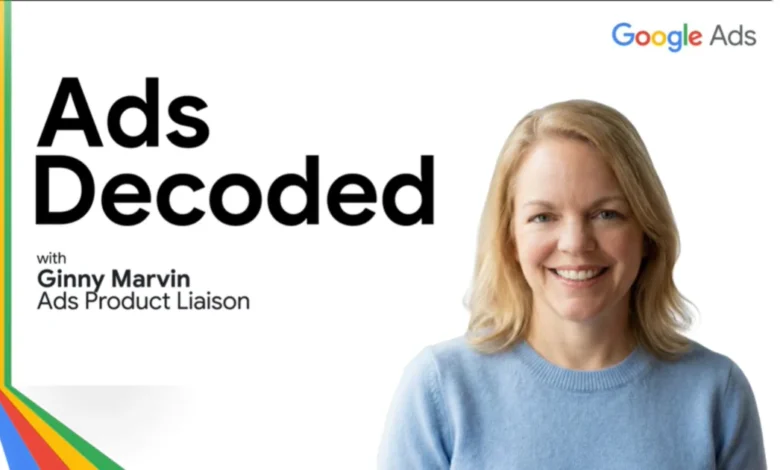
In a recent installment of Google’s "Ads Decoded" podcast, a significant portion of the discussion addressed a burgeoning concern among advertisers regarding the proliferation of AI-generated creative: the fear that widespread adoption of these tools could lead to a homogenization of advertising content, resulting in a "sea of sameness." This apprehension stems from the understandable premise that if all brands leverage similar AI models, their outputs might converge, diminishing brand distinctiveness. However, Google, through its Ads Liaison Ginny Marvin and Groupe Product Manager for Creative Charles Boyd, presented a counter-narrative, positioning AI as a powerful catalyst for expanding creative variation, accelerating testing, and enabling unprecedented adaptation of messaging across diverse audiences and placements. This perspective offers a crucial insight into Google’s strategic direction for AI within its advertising ecosystem, particularly as the industry anticipates further announcements at upcoming events like Google Marketing Live.
The dialogue underscored a pivotal moment in the evolution of digital advertising, where the promise of AI-driven efficiency meets the imperative of brand differentiation. As generative AI tools become more accessible, the initial industry conversation has often gravitated towards anxieties about generic outputs and a potential loss of unique brand voice. Google, however, appears to be adopting an antithetical position, advocating that AI, when properly guided, can amplify an advertiser’s unique strengths and strategic insights. Charles Boyd articulated the core value of generative tools as "the ability to quickly create different creative styles and iterations at scale," emphasizing that AI serves as an infrastructure to produce more combinations, more testing opportunities, and more audience-specific variations, rather than a factory for monotonous content.
The Evolution of Google’s Automation and the Rise of "Advertiser-in-the-Loop"
Google’s journey with automation in advertising is not new, extending back to intelligent bidding strategies and dynamic ad features. Early iterations of these automation capabilities, while powerful for efficiency, sometimes presented challenges for advertisers seeking granular control over brand messaging and tone. The perceived rigidity of these systems occasionally left brands feeling constrained, particularly when maintaining a very specific voice or adhering to strict brand guidelines.
However, the advent of sophisticated generative AI has prompted Google to evolve its approach, introducing more nuanced control mechanisms. A recurring theme throughout the "Ads Decoded" episode was the concept of "advertiser-in-the-loop," signaling a commitment to ensuring that human strategic guidance and oversight remain central to automated processes. This philosophy is manifested in several new tools designed to empower advertisers with greater command over AI-generated assets. For instance, Google now allows advertisers to provide specific text instructions directly within campaigns. Charles Boyd explained that a brand can specify up to 40 distinct text guidelines, which Google’s systems will "literally check every asset that gets created against each one of the guidelines that you provide." This functionality enables brands to dictate preferred language, avoid certain phrases, maintain a consistent tone, or even ensure specific product positioning. This represents a significant departure from earlier, less flexible automation features and a clear attempt to address past concerns about a lack of brand control. The integration of such detailed text guidelines, alongside "AI briefs" and expanded creative controls, demonstrates Google’s concerted effort to imbue advertisers with more influence over the creation and adaptation of AI-generated content across diverse campaigns.
Expanding Creative Breadth: A New Paradigm for Advertising
A fundamental shift in Google’s advertising philosophy, heavily amplified by AI, is the profound emphasis on creative breadth and variation. The podcast repeatedly highlighted the importance of diverse assets across various platforms. This includes recommendations for employing multiple responsive search ads (RSAs) with different landing pages within the same ad group, a piece of advice that would have been considered unconventional by many PPC practitioners just a few years ago. Google’s rationale behind this guidance is rooted in the advanced capabilities of its AI systems, such as Performance Max and the newly mentioned AI Max, which can dynamically combine elements to better align messaging with highly specific user journeys.
Sarah Hathiramani, Director of Product Management for YouTube Ads, reinforced this idea when discussing Demand Gen and YouTube creative. She articulated that "there may be different audiences that you’re going after, and those audiences are going to resonate with very different creative messages." This insight is crucial as Google’s systems increasingly personalize creative combinations dynamically, moving away from a static, one-size-fits-all approach. The optimization process is no longer centered on isolated assets or keywords but rather on intricate combinations of signals, intent, placements, and audience segments. This holistic approach necessitates a robust library of diverse creative assets that AI can draw upon and tailor in real-time. The conversation touched upon the need for a wide array of creative elements: different aspect ratios for various placements, audience-specific messaging, and structured asset testing across Search, Performance Max, Demand Gen, and YouTube. This broad coverage allows Google’s AI to serve the most relevant and impactful creative permutations to individual users, optimizing for engagement and conversion in an increasingly fragmented digital landscape.
Revolutionizing Production: Veo and the Democratization of Video Creative
Beyond merely optimizing existing assets, Google is also leveraging AI to address fundamental barriers in creative production itself. The episode offered further insights into the integration of Veo within Google Ads and Asset Studio. Veo, Google’s advanced generative AI model for video, empowers advertisers to upload as few as three images and automatically generate multiple short-form video variations. This capability is positioned as a transformative tool, particularly for advertisers who may lack dedicated video production resources or the budgets traditionally associated with high-quality video content.
As articulated by Google spokespeople, the goal is to "reduce production barriers for advertisers that may not have dedicated video resources." This democratizes access to video advertising, enabling smaller businesses or those historically reliant on static image creative to participate effectively across more inventory types, placements, formats, and surfaces. The quote, "Instead of asking every advertiser to become an in-house video production company, we’re able to use Veo to leverage automation while maintaining transparency and control," encapsulates Google’s vision for AI as an enabler of broad participation. While AI-generated creative helps reduce the operational burden, Google consistently emphasized that strong inputs from advertisers remain paramount. Ginny Marvin specifically highlighted that brands with a clear voice, defined point of view, and well-understood audience are most likely to reap the greatest benefits from these advanced tools, reinforcing that AI is a magnifier of strategic intent, not a replacement for it.
Implications for Advertisers: A Strategic Shift Towards Adaptability
The insights from Google’s "Ads Decoded" podcast paint a clear picture of the evolving landscape of digital advertising. For advertisers, this necessitates a fundamental strategic reorientation:
- Embrace Creative Breadth: The era of relying on a small set of meticulously crafted, static assets is waning. Advertisers must shift towards developing a broad, adaptable creative system that can generate and test numerous variations across different audience stages, platforms, and formats. This includes preparing multiple headlines, descriptions, images, videos, and even landing page variations.
- Deepen Brand Understanding and Guidelines: Far from diluting brand identity, AI-powered creative tools make a clear, well-articulated brand voice and comprehensive guidelines more critical than ever. The ability to input specific text guidelines and AI briefs means that advertisers with a strong understanding of their brand ethos, tone, and forbidden language can leverage AI to scale these strengths efficiently and consistently.
- Become "Advertiser-in-the-Loop": Marketers need to actively engage with AI tools, providing strategic direction, refining outputs, and continuously monitoring performance. This involves understanding prompt engineering, interpreting AI-generated data, and making informed decisions to guide the automation effectively. The role of the advertiser transforms from solely creation to strategic oversight and refinement.
- Prioritize Testing and Iteration: AI accelerates the ability to test creative variations at an unprecedented scale. Advertisers should embrace a culture of continuous experimentation, using data to inform and refine their AI-driven creative strategies.
- Expand Across Inventory Types: With tools like Veo reducing production barriers, advertisers are encouraged to participate more actively across all available inventory, including video, which was once a significant hurdle for many. This maximizes reach and engagement potential across Google’s vast network.
This guidance reflects how Google’s systems increasingly optimize around complex combinations of assets, intent signals, placements, and audiences, rather than isolated ads or keywords. The takeaway is that success in the AI-driven advertising future will hinge on an advertiser’s ability to build adaptable creative systems, providing robust inputs and maintaining strategic control over intelligent automation.
Looking Ahead: Google Marketing Live and Beyond
The discussions on the "Ads Decoded" podcast serve as a powerful prelude to Google Marketing Live, where further announcements and deeper dives into AI creative are highly anticipated. The repeated emphasis on advertiser controls, creative testing, audience-specific messaging, and broader asset variation across campaigns is a crucial signal for advertisers keen on understanding Google Ads’ future trajectory. Google is not merely integrating AI into its platforms; it is fundamentally reshaping how advertisers should approach creative strategy and production. The message is clear: AI is not intended to replace human creativity or lead to uniformity, but rather to augment, diversify, and empower advertisers to achieve unprecedented scale and personalization in their campaigns, provided they are prepared to steer these powerful new tools with clear strategic intent. The future of advertising, as envisioned by Google, is one where human ingenuity, amplified by AI, leads to a richer, more diverse, and highly personalized experience for consumers, driven by adaptable and dynamically optimized creative content.