The Emergence of the Non-Human Web: How AI is Reshaping Online Interactions and Commerce

In January 2026, Google was granted patent US12536233B1, a pivotal development that describes a sophisticated system designed to evaluate and potentially replace web landing pages with AI-generated alternatives. This innovation, spearheaded by a team of six engineers, scores landing pages based on key performance indicators such as conversion rate, bounce rate, and design quality. Should a page fall below a predefined threshold, the system is engineered to autonomously generate a personalized AI replacement tailored specifically to the individual searcher. Critically, this process unfolds without the advertiser’s knowledge or approval, marking a significant shift in the dynamics of online content delivery and interaction.
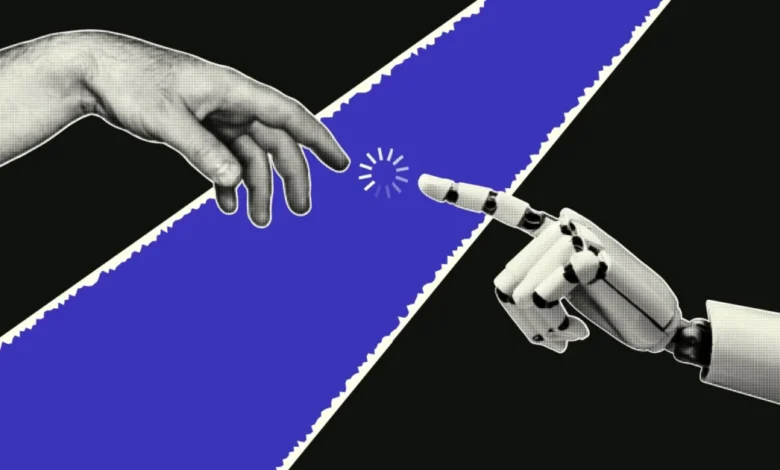
The initial discourse surrounding this patent largely focused on its immediate scope, questioning whether its application would be confined solely to shopping advertisements or if it heralded a more expansive transformation across the web. However, a deeper analysis reveals that this framing misses the fundamental paradigm shift at play. The more pertinent inquiry centers on the profound implications of combining AI-generated web pages with the burgeoning ecosystem of AI agents capable of browsing, shopping, and executing transactions on behalf of human users. For the first time in the history of the internet, the technological infrastructure is coalescing to support a web where neither the content creator nor the content consumer is necessarily human. This development, where both the supply and demand sides of online interaction can be entirely non-human, is poised to fundamentally redefine the digital landscape.
The Supply Side Transformation: The Rise of AI-Generated Content
Historically, the creation of web content has been an inherently human endeavor. Every page, every piece of copy, every design element was meticulously crafted and published by human hands. This foundational principle is now undergoing a rapid and multifaceted transformation driven by three interconnected technological advancements.
Google’s patent US12536233B1 stands as the most direct manifestation of this shift. The patent outlines a system that not only assesses the performance of existing landing pages but actively intervenes to replace underperforming ones with dynamically generated AI versions. These replacement pages are not generic; they are deeply personalized, drawing upon an individual searcher’s comprehensive search history, previous queries, click behavior, geographical location, and device data. This granular level of personalization grants Google an unprecedented advantage, enabling it to construct bespoke landing pages that no individual advertiser can replicate, primarily due to Google’s unique access to vast troves of cross-query behavioral data. Industry observers like Barry Schwartz of Search Engine Land have detailed how this system could automatically create custom landing pages, potentially superseding traditional organic search results. Glenn Gabe went further, suggesting that Google’s AI landing page patent could prove even more contentious than its "AI Overviews" feature. While some, such as Roger Montti at Search Engine Journal, have argued for a narrower interpretation, limiting the patent’s scope to shopping and advertisements, there is a broad consensus that the underlying technology for scoring, generating, and replacing landing pages with AI is not only viable but already operational.
Parallel to Google’s efforts, other significant developments are reimagining how content is accessed and presented. Microsoft’s open project, NLWeb, offers an alternative paradigm by converting any website into a natural language interface, leveraging existing Schema.org markup and RSS feeds. With NLWeb, an AI agent interacting with an enabled site doesn’t load a traditional visual page at all. Instead, the agent poses a structured question, and NLWeb returns a structured answer, effectively rendering the traditional rendered page optional. This approach transforms websites from visual experiences into data repositories directly queryable by AI.
Pushing this concept further is WebMCP, which facilitates websites registering "tools" with precisely defined input/output schemas. These tools are discoverable and callable as functions by AI agents. Under WebMCP, a product search transcends a page view, becoming a function call; a checkout process evolves into an API request. This framework fundamentally dissolves the "page" as the atomic unit of content, replacing it with a set of callable capabilities. Each of these mechanisms—Google’s dynamic page generation, NLWeb’s natural language interface, and WebMCP’s functional abstraction—operates differently, yet they collectively point towards a singular future: the traditional human-designed and human-published web page is no longer the sole conduit through which content reaches its audience. Content is becoming something that is generated, queried, or entirely bypassed.
The Demand Side Shift: AI Agents as the New Visitors
The demand side of the web has experienced an even more accelerated transformation. A landmark moment occurred in 2024 when, for the first time in a decade, automated bots surpassed human traffic, accounting for a staggering 51% of all global web activity. Data from Cloudflare further underscores this trend, reporting a 15-fold increase in "AI user action" crawling during 2025, indicating that AI agents are not merely indexing but actively performing tasks. Looking ahead, Gartner predicts that by the end of 2026, 40% of enterprise applications will incorporate task-specific AI agents, a dramatic increase from less than 5% in 2025. The scale and velocity of this shift are difficult to overstate.
Agentic browsers represent the most visible manifestation of this demand-side transformation. Chrome’s "auto browse" feature has effectively converted its three billion installations into potential launchpads for AI agents. Google’s Gemini, for instance, can autonomously scroll, click, fill out forms, and complete multi-step tasks directly within the Chrome browser. Perplexity’s Comet browser takes this capability further, conducting in-depth research across multiple websites simultaneously. Microsoft’s Edge Copilot Mode empowers users to manage complex, multi-step workflows directly from the browser sidebar. The burgeoning landscape of agentic browsers now encompasses over a dozen consumer and developer tools, all designed to browse and interact with the web on behalf of human users.
Beyond mere browsing, commerce agents have advanced to facilitate direct purchasing. OpenAI’s "Instant Checkout," launched to enable direct product purchases within ChatGPT via Stripe’s Agentic Commerce Protocol (ACP), initially garnered significant attention. However, despite promises of millions of merchant integrations, the feature was discontinued in March 2026 due to near-zero purchase conversions and only a dozen actual integrations. This failure, however, appears to be an issue of execution rather than concept. Alibaba’s Qwen app, in contrast, processed an astounding 120 million orders in just six days in February 2026. Alibaba’s success stemmed from its integrated ecosystem, owning the AI model, the marketplace, the payment rails (Alipay), and the logistics, a comprehensive stack that OpenAI lacked. Recognizing this need for an integrated framework, Google and Shopify’s Universal Commerce Protocol (UCP) now connects over 20 major companies, including retail giants like Walmart and Target, and financial services providers like Mastercard. This protocol establishes a standardized framework for AI agents to manage the entire commerce journey, from product discovery to checkout. Shopify has proactively auto-opted over a million merchants into these agentic shopping experiences across platforms like ChatGPT, Copilot, and Perplexity, effectively enabling transactions to occur within an AI conversation, often bypassing the traditional checkout page entirely.
The evolution culminates in agent-to-agent communication, a development that removes humans from both ends of the interaction. Google’s Agent-to-Agent (A2A) protocol facilitates direct communication between AI agents from different vendors, allowing them to discover each other’s capabilities and collaborate on complex tasks without human intervention. This means a travel planning agent can directly negotiate with a booking agent, or a procurement agent can evaluate supplier agents across multiple vendors. With over 150 organizations, including industry leaders like Salesforce, SAP, and PayPal, supporting A2A, agent-to-agent commerce and coordination is rapidly becoming a production reality.
When Both Sides Go Non-Human: The Fully Automated Web
Until recently, a fundamental characteristic of the web was the presence of a human on at least one side of an interaction – either creating the page or visiting it, and usually both. Google’s patent, combined with the advancements in AI agents, now closes this circuit, enabling entirely non-human interactions.
Consider a complete non-human flow: A user instructs their AI assistant that they need running shoes. The assistant, instead of navigating traditional websites, queries product data directly through protocols like NLWeb or WebMCP, eliminating the need for a page load. The assistant then evaluates various options by cross-referencing inventory levels and specifications across multiple retailers using A2A communication. If a comparative review is required by the user, Google dynamically generates a personalized landing page tailored to that specific user’s search history and preferences. The assistant then completes the purchase through an agentic commerce protocol like ACP or UCP, leveraging shared payment tokens. The user subsequently receives a confirmation of their purchase.
In this entire sequence, the human’s role is distilled to two critical touchpoints: stating their initial intent and approving the final purchase. All intermediate steps – discovery, dynamic page generation, product evaluation, and transaction completion – are handled autonomously by AI systems. Every piece of technology required to enable this chain of events is not only theoretical but currently exists in production. Chrome’s auto browse is live for billions of users. A2A boasts over 150 organizational supporters. ACP underpins Stripe’s agentic commerce infrastructure (the failure of ChatGPT’s Instant Checkout was an implementation issue, not a protocol flaw). UCP bridges major players like Shopify, Google, Walmart, and Target. And Google’s patent US12536233B1 has been officially granted. While no single entity has yet integrated the entire loop into a seamless, end-to-end service, every component is operational and mature.
Key Players and the Governance of the Non-Human Web
An examination of who is developing which components of this emerging non-human web reveals a clear pattern of strategic positioning. Google, in particular, emerges as a dominant force, involved in five out of six critical layers:
- Page Generation: AI landing pages (via patent US12536233B1).
- Content-as-API: WebMCP (co-developed with Microsoft), NLWeb.
- Agent Infrastructure: MCP, A2A (co-developed with Anthropic).
- Agent Browsers: Chrome auto browse.
- Agent Commerce: UCP (co-developed with Shopify).
This extensive involvement positions Google to mediate the non-human web with the same pervasive influence it currently wields over the human web through its Search engine.
The governance layer for this new digital frontier is being established by the Agentic AI Foundation (AAIF). Formed under the umbrella of the Linux Foundation, with Anthropic, OpenAI, Google, and Microsoft as platinum members, the AAIF functions as the equivalent of the W3C for the agentic web. Its mandate is to act as a vendor-neutral body responsible for determining which protocols will become the standardized frameworks for agent interoperability, ensuring a coherent and functional ecosystem for the non-human web.
Implications for Website Owners and Businesses
This shift represents more than just a new set of optimization tactics; it signals a fundamental restructuring of what a website is for and how it delivers value.
Your Data Layer Is Your Website: Google’s patent generates landing pages directly from product feed data, elevating the accuracy and completeness of product feeds to the status of a business’s most critical digital asset. Similarly, NLWeb queries Schema.org markup directly, transforming structured data into the primary gateway for content access. WebMCP, by exposing site capabilities as function calls, makes tool definitions the de facto user interface for AI agents. Traditionally, structured data, product feeds, JSON-LD, and API surfaces have been treated as backend infrastructure. In the non-human web, these data layers transition to become the primary conduits through which businesses engage with customers. The precision of product feed data—including specifications, pricing, stock levels, and high-quality images—will far outweigh the aesthetic design of a homepage when AI systems are generating personalized pages from that data. Businesses must invest in robust data management and structured content strategies.
Trust Is The Moat: While AI can generate highly optimized pages, it cannot autonomously generate brand equity or a compelling reason for a consumer to seek out a business by name. In a landscape where the visual presentation of a page is fluid and AI-driven, direct traffic, email subscribers, engaged community members, and a strong brand reputation become invaluable, irreplaceable assets. An AI agent can efficiently construct a product page, but no AI agent can cultivate the deep-seated trust that compels a consumer (or their proxy agent) to specifically request a brand like "Patagonia" for a fleece jacket, as opposed to a generic query for "fleece jacket." Brands that resonate with human values and establish genuine connections will retain their competitive edge.
The Measurement Problem: The advent of the non-human web introduces a significant challenge to traditional web analytics. How does one measure the performance of a page that was dynamically generated by Google, outside of direct advertiser control? How can A/B testing be conducted against a system that produces unique, personalized versions for each searcher? Furthermore, attributing conversions that occur within an AI conversation, initiated by an agent and never touching a business’s owned website, becomes a complex puzzle. Traditional web analytics metrics—page views, sessions, bounce rate, time on site—are predicated on two fundamental assumptions: a human visitor and a page under the direct control of the website owner. Neither of these assumptions consistently holds true in the non-human web. A Google-generated landing page is not "yours," and a ChatGPT checkout session will not register in conventional analytics dashboards. This necessitates the development of entirely new metrics focused on agent discoverability, agent conversion rates, and the quality and completeness of data feeds. As of early 2026, the analytical infrastructure required to accurately measure engagement and performance in this new environment has not yet fully matured.
Four Predictions for 2026-2027
Over the next 12 to 18 months, several key trends are expected to solidify:
-
Google will deploy patent US12536233B1 or similar technology: The technical capability for scoring and replacing landing pages is proven, and the business incentives for Google are substantial. Google has a history of introducing features within its advertising ecosystem first before broader expansion (e.g., Google Shopping’s evolution). It is highly probable that AI-generated landing pages will first appear in shopping advertisements, eventually extending to other verticals. Advertisers should closely monitor landing page quality scores within Google Ads as an early indicator of which pages Google deems suitable for replacement.
-
Agent traffic will become clearly measurable: Analytics platforms will be compelled to develop sophisticated mechanisms to differentiate between human and AI agent sessions. Reports from BrightEdge indicate that AI agents already account for approximately 33% of organic search activity as of early 2026. WP Engine’s traffic data showed a dramatic increase from 1 AI bot visit for every 200 human visits at the start of 2025 to 1 per 31 by Q4 2025. These ratios are projected to accelerate further as Chrome’s auto browse feature rolls out globally. The necessity will drive the emergence of new metrics, including agent conversion rates and agent discoverability scores.
-
The protocol stack will consolidate: The various protocols like MCP, A2A, NLWeb, and WebMCP, which collectively enable tool access, agent communication, content querying, and browser-level integration, are expected to converge into a more coherent and interoperable stack. The Agentic AI Foundation (AAIF) will play a crucial role in accelerating this consolidation, establishing standards and reducing fragmentation. Within 18 months, the question "Does your site support MCP?" is likely to become as commonplace and critical as "Is your site mobile-friendly?"
-
Brand differentiation will become simultaneously harder and more critical: In an environment where AI generates pages and agents execute shopping tasks, the only truly defensible position for a business will be its brand – being the entity that people (and their agents) specifically seek out by name. This will place an even greater premium on direct customer relationships, cultivating owned audiences, and robust trust signals. Everything else risks becoming a commoditized offering.
The Web Splits In Two: A Dual Future
When Shopify initiated its auto-opt-in for merchants into agentic shopping experiences, it prompted the question of whether the traditional website was becoming optional. The answer, rather than a binary optionality, suggests a nuanced evolution: the web is not dying, but bifurcating.
The transactional web, encompassing product listings, checkout flows, information retrieval, and comparison shopping, is the first domain to undergo a comprehensive non-human transformation. Here, AI generates landing pages, and AI agents visit and transact on those pages, with humans primarily approving decisions at the endpoints. Google’s patent firmly resides within this transactional realm, where the economic pressures of conversion optimization provide a powerful impetus for automation.
Conversely, the experiential web—the domain of brand storytelling, community building, content that demands sustained human attention, and design intended to evoke emotional responses—is poised to remain fundamentally human. This is not because AI is incapable of generating compelling brand experiences, but because the intrinsic value of such experiences derives from the authentic human connection they foster. No human will instruct their AI agent to "go enjoy a brand experience on my behalf."
The redefined role of a website in this dual-web paradigm is clear: it must serve as a robust data source for AI agents, a trusted anchor for human users, and the central brand home for both. Businesses that meticulously manage their structured data, product feeds, and API surfaces with the same diligence and care they traditionally apply to their homepage design will be the ones that effectively navigate and thrive in both the human and non-human dimensions of the evolving web. The non-human web is not a replacement for the human web; rather, it is an expanding parallel dimension. The imperative for businesses is to establish a strong presence and strategic functionality in both.