Unlocking Digital Growth: How Web Accessibility Drives SEO, Traffic, and Billions in Revenue

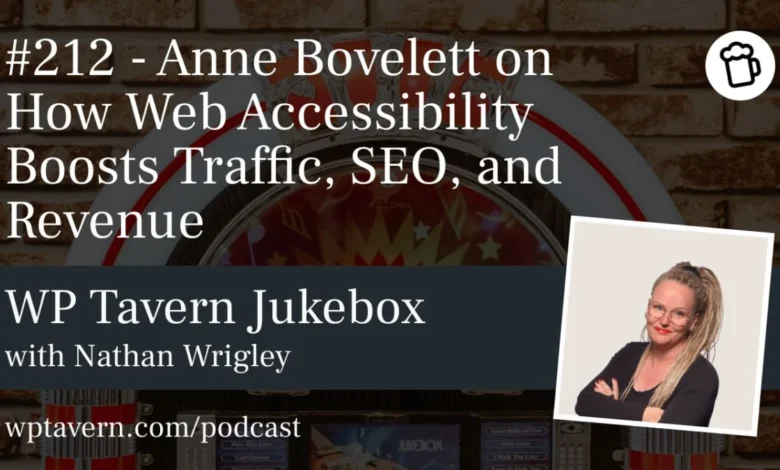
Web accessibility, once primarily viewed as a moral imperative or a regulatory compliance hurdle, is increasingly recognized as a potent strategic advantage for businesses operating in the digital realm. Recent studies and expert analysis reveal a direct correlation between accessible websites and significant improvements in organic traffic, search engine optimization (SEO), and ultimately, revenue. This paradigm shift emphasizes that neglecting accessibility translates directly into substantial financial losses, a point passionately articulated by seasoned accessibility strategist Anne Bovelett.
The Overlooked Economic Imperative of Accessibility
Bovelett, a vocal advocate for inclusive web design, contends that businesses often underestimate the tangible economic benefits of an accessible online presence. Speaking on the Jukebox Podcast from WP Tavern, she highlighted that while the social aspect of accessibility is crucial, the financial argument often resonates more powerfully with decision-makers. "I don’t care why someone makes whatever product, or whatever service they have accessible, I just care that they do. So if the stick that says money works, I’ll beat that," Bovelett stated, underscoring her pragmatic approach.
This perspective is supported by compelling research, notably a comprehensive study conducted by Semrush in collaboration with accessibilitychecker.org. This extensive analysis, which examined 10,000 websites, provided concrete data linking accessibility compliance to improved digital performance. The findings were stark: 70% of the sites surveyed were not compliant with accessibility standards, yet those that were demonstrated remarkable gains. Compliant sites experienced a 23% increase in organic traffic, ranked for 27% more keywords, and saw an impressive 90% boost in their authority score.
These figures represent a substantial competitive edge. For businesses struggling to differentiate themselves in crowded online markets, such gains in visibility and authority are not merely desirable but critical for sustainable growth. The implication is clear: accessibility is no longer an optional add-on but a fundamental component of effective digital strategy.
Historical Context: The Internet’s Accessibility Journey
The internet’s evolution presents a curious paradox regarding accessibility. In its nascent stages, the web, characterized by simpler, text-based pages built predominantly with semantic HTML, was, perhaps unintentionally, more accessible to assistive technologies. HTML elements like <header>, <nav>, <button>, and <a> inherently conveyed meaning and structure that screen readers and other assistive devices could interpret.
However, as web design advanced and developers sought more visual complexity and interactive features, the focus often shifted away from semantic structure. The rise of CSS for styling and JavaScript for dynamic interactions led to the widespread use of non-semantic elements like <div> and <span>. While these offered immense flexibility for visual layout, they lacked inherent meaning for assistive technologies. As Bovelett aptly put it, "Div is like tofu without seasoning," requiring extensive, often complex JavaScript to imbue them with accessible behavior. This "verschlimmbesserung" – a German term meaning to make something worse in an attempt to improve it – inadvertently created significant barriers for users with disabilities.
For decades, this technical drift, combined with a prevailing view of accessibility as a niche concern rather than a universal design principle, meant it was largely deprioritized. Unlike physical spaces, where a wheelchair user unable to enter a building makes an immediate and visible problem, digital barriers are often invisible to those unaffected. Users facing these issues have to "self-report," and without clear channels or legislative teeth, many problems remained unaddressed. This disconnect has only recently begun to close, driven by increased awareness, growing legal frameworks like the European Accessibility Act, and crucially, the undeniable economic arguments now being presented.
SEO and Traffic: The Hidden Dividends of Inclusive Design
The Semrush study’s findings on organic traffic and keyword rankings are particularly insightful for SEO professionals and website owners. A 23% average increase in organic traffic tied to higher accessibility compliance suggests that search engine algorithms are increasingly sophisticated in evaluating user experience. Search engines, particularly Google, prioritize content that is readable, navigable, and useful for all users.
Bovelett explains this synergy: "If assistive technology can’t read your site, the search engines probably can’t either." This highlights a fundamental truth: many accessibility best practices align perfectly with SEO best practices. Semantic HTML, clear headings, descriptive alt text for images, meaningful link text (avoiding generic "click here"), and logical content flow not only make a site usable for screen readers but also provide search engine crawlers with a clearer understanding of the page’s content and structure. When a website is built with accessibility in mind, it naturally becomes more machine-readable, leading to better indexing and higher rankings.
The 27% increase in ranked organic keywords further reinforces this. By structuring content semantically and providing clear, descriptive information, websites inadvertently broaden their reach for relevant search queries. This isn’t about keyword stuffing; it’s about making information genuinely discoverable and understandable, a goal shared by both accessibility and modern SEO.
Furthermore, the 90% boost in authority score for compliant sites is a powerful indicator of trustworthiness and quality. Authority, often influenced by factors like backlinks, user engagement, and site performance, suggests that accessible sites are perceived as more reputable and valuable by the broader web ecosystem, including search engines.
E-commerce: Billions Lost on the Table
The economic impact of inaccessible websites is even more pronounced in the e-commerce sector. Bovelett referenced the UK’s "Click Away Pound Report," a seminal study that quantifies the revenue lost due to inaccessible online shops. In 2016, this "click away pound" amounted to a staggering £11.75 billion. By 2019, it had surged to £17 billion. These figures represent the collective purchasing power of individuals with disabilities and age-related impairments who abandon online purchases because of inaccessible websites.
The global market of people with disabilities is immense, estimated to be over 1.3 billion individuals with a collective disposable income exceeding $8 trillion annually. When combined with the growing elderly population, who often face similar digital barriers, the market segment impacted by inaccessibility becomes colossal. Businesses that fail to cater to this demographic are effectively "thieving their own wallet," as Bovelett notes.
A particularly striking statistic from Bovelett’s own article, "The E-commerce Industry’s Billion Pound Mistake," published on her website, annebovelett.eu, reveals that "a shocking 75% of disabled customers have willingly paid more for a product from an accessible website, rather than struggle with a cheaper inaccessible one." This illustrates a profound user preference for ease of use and dignity over mere price. For many, the frustration and time expenditure associated with an inaccessible site outweigh any potential cost savings. This insight should serve as a wake-up call for e-commerce businesses: user experience, especially for those with disabilities, is a premium value that directly translates into customer loyalty and higher spending.
Bovelett shared an anecdote from a major Swiss supermarket chain where, after calculating the potential revenue gain from improved accessibility, the outcome was a seemingly modest 0.94% increase. However, this translated into an astounding 350 million Swiss Francs in additional annual revenue. This illustrates the critical importance of perspective when evaluating accessibility investments; even small percentage gains can yield massive financial returns for large enterprises.
Beyond Revenue: Enhancing User Experience and Reducing Support Costs
The benefits of accessibility extend beyond direct revenue and SEO. An accessible website inherently offers a better user experience for everyone. Clear navigation, well-structured content, high-contrast visuals, and keyboard operability benefit not only individuals with permanent disabilities but also those with temporary impairments (e.g., a broken arm), situational limitations (e.g., bright sunlight making a screen hard to read), or simply those navigating on a mobile device in a distracting environment.
Bovelett cited the example of a local tax office in the Netherlands that underwent a full accessibility redesign. The result was a significant reduction in support requests, estimated at around 30%. This demonstrates another powerful business benefit: accessible design empowers users to complete tasks independently, reducing the burden on customer support teams. When users can find information and complete transactions without assistance, it frees up resources, improves operational efficiency, and enhances overall customer satisfaction. The German statistic that 90% of users will try to solve problems themselves before walking away further underscores the value of self-service facilitated by accessibility.
Challenges and the Path Forward
Despite the clear economic advantages, the adoption of comprehensive accessibility practices remains a challenge for many organizations. Bovelett points to several systemic issues:
- Perception as a "Social Issue": Many still view accessibility solely through a social lens, failing to connect it to business outcomes.
- "Compliance-First" Mentality: A focus on meeting minimum compliance standards (like WCAG) can lead to a bare-minimum effort rather than true inclusive design.
- Organizational Silos: Design, development, and content teams often operate independently, lacking integrated accessibility workflows. Developers might implement a design that is inherently inaccessible, or content creators might use vague link text, without understanding the downstream impact.
- Short-Term Thinking: As Mark Weisbrod, CEO of Greyd, noted to Bovelett, many business leaders prioritize immediate returns over long-term strategic investments, making it harder to champion initiatives like accessibility that offer sustained, compounding benefits.
Bovelett advocates for a new role within companies – an "Accessibility Strategist" or similar – who can bridge the gap between high-level business objectives and technical implementation. This individual would possess the gravitas to engage with C-suite executives on economic arguments while also understanding the intricacies of design, development, and content creation to foster cross-functional collaboration. Such a role would shift accessibility from a reactive, compliance-driven task to a proactive, integrated business strategy.
Conclusion: A Mandate for Digital Inclusion
The conversation around web accessibility is undeniably evolving. What began as a moral plea has matured into a robust economic argument, bolstered by data and real-world examples. For WordPress users and developers, who power a significant portion of the web, understanding and implementing accessibility is no longer merely a "good thing to do" but a strategic imperative. It’s an opportunity to reach a larger market, enhance brand reputation, improve SEO rankings, boost organic traffic, and ultimately, secure billions in otherwise lost revenue. As the digital landscape continues to expand and diversify, embracing accessibility is not just about doing the right thing; it’s about ensuring a profitable and sustainable future in an increasingly competitive online world.