X Launches Standalone Chat App Amidst End-to-End Encryption Scrutiny and Broader ‘Everything App’ Ambitions

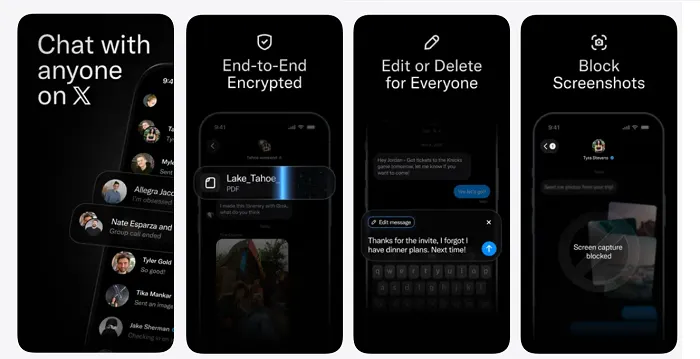
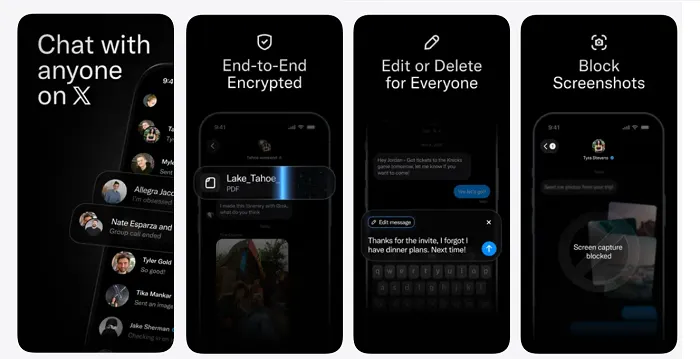
After a period of beta testing with select users over the past month, X, formerly Twitter, has officially rolled out its standalone X Chat application, providing a dedicated platform for direct messages (DMs) and a new avenue for user engagement. The launch, announced on Friday, introduces a separate iOS application designed to streamline private communications, with X promoting it as an ad-free and tracking-free environment. However, the move has immediately drawn sharp criticism and skepticism from cybersecurity experts regarding its central claim of robust end-to-end encryption (E2EE), raising questions about user privacy and the platform’s broader ambitions to become an "everything app" that integrates financial services.
The X Chat app is now accessible for download on iOS devices, presenting itself as a secure messaging solution. According to its description in Apple’s App Store, "Privacy is the foundation. Every message is end-to-end encrypted with a key pair unique to you, protected by a PIN that never leaves your device." This bold assertion is further emphasized with the statement, "No one can read your conversation. Not even X." These claims are designed to instill confidence in users, particularly in an era where data privacy is paramount, and major platforms are frequently scrutinized for their data handling practices.
Background: The Evolution of X and the "Everything App" Vision
The introduction of a dedicated chat application marks another significant, albeit complex, step in the ongoing transformation of the platform under Elon Musk’s ownership. Since acquiring Twitter for $44 billion in October 2022, Musk has embarked on an ambitious, and often tumultuous, journey to rebrand and reshape the social media giant into X, an "everything app" akin to China’s WeChat. This vision encompasses a broad spectrum of functionalities beyond traditional social networking, including payments, e-commerce, and various other integrated services. The rebrand from Twitter to X, executed in July 2023, signaled a departure from its microblogging roots towards a more expansive, multi-faceted platform.
Direct messaging has always been a core feature of Twitter, allowing users to engage in private conversations alongside public discourse. Over the years, Twitter DMs evolved, adding features like group chats, voice messages, and media sharing. However, they lacked the advanced security features, specifically true end-to-end encryption, that are standard in dedicated messaging apps like Signal or WhatsApp. Musk’s acquisition brought renewed promises of enhancing privacy and security, including the implementation of E2EE for DMs. This commitment was seen as crucial for building trust, especially if X were to handle sensitive financial transactions.
The X Chat App: Features and Initial Rollout
The new X Chat app aims to carve out a distinct space for DMs, separating them from the potentially overwhelming feed of public posts within the main X application. This strategic unbundling could appeal to users who desire a more focused and private messaging experience. The promise of "no ads and no tracking" is a significant draw, positioning X Chat as a privacy-centric alternative in a market saturated with ad-supported communication tools. The app’s design emphasizes user control, with claims of unique key pairs and PIN protection for encryption keys, theoretically ensuring that only the sender and intended recipient can access message content.
However, the integrity of these privacy claims has been immediately challenged by cybersecurity experts, echoing previous concerns regarding X’s development of E2EE. This skepticism stems from a history of issues and inconsistencies in the platform’s attempts to implement robust encryption protocols. The company has faced several hurdles in its E2EE journey, including pauses in development and criticisms from researchers highlighting potential vulnerabilities. This track record makes the current claims for X Chat particularly contentious.
Encryption Under Scrutiny: Expert Concerns and Technical Vulnerabilities
The core of the controversy revolves around the technical implementation of X Chat’s encryption. While the app claims to be end-to-end encrypted, experts argue that the underlying architecture may not meet the stringent standards required for true, uncompromisable E2EE.
In November 2023, software engineer David Nepozitek published a detailed analysis on his blog, providing an overview of X’s encryption system and outlining several critical security flaws. Nepozitek’s primary concern centers on the "conversation key" used to encrypt messages. He explained, "X Chat encrypts messages using a shared secret called a conversation key. This key is generated at the start of the conversation and then used to encrypt all messages in that conversation. The problem is that this conversation key basically never changes. That makes all the potential attacks way worse. If the conversation key is ever compromised, all past and future messages can be decrypted."
This flaw is significant because it contrasts sharply with best practices in modern E2EE protocols, such as the Signal Protocol, which employs forward secrecy. Forward secrecy ensures that even if a long-term encryption key is compromised, past communications remain secure because new, ephemeral session keys are generated for each message or short conversation period. If X Chat’s conversation key remains static, a single breach could expose an entire chat history, both past and future, rendering the E2EE claim effectively moot. This vulnerability means that if X, or any malicious actor gaining access to X’s systems, were to compromise this single key, the entire conversation would be readable.
Following the X Chat launch announcement, the iOS development team Mysk, known for its scrutiny of app privacy features, publicly reiterated these concerns. In an X post, Mysk stated that "XChat’s claim of ‘end-to-end encrypted’ chats is misleading at best," directly attributing this assessment to the fundamental weaknesses in its encryption structure. Mysk further elaborated that X Chat’s encryption is vulnerable to the "controlling entity," meaning that X itself could potentially read messages shared within the app if it chose to do so, despite its explicit assurances to the contrary. This implies that X retains a master key or has architectural control that bypasses the stated E2EE, a fundamental breach of trust for users seeking true privacy.
The technical criticisms from Nepozitek and Mysk highlight a critical distinction between what is merely encrypted and what is end-to-end encrypted in a truly secure manner. True E2EE, as implemented by leading secure messaging apps, prevents even the service provider from accessing the content of communications. The allegations against X Chat suggest that the platform might maintain some level of access or control, undermining the very premise of its privacy-focused marketing.
A Chronology of X’s Encryption and Payments Journey
The journey towards robust encryption and integrated financial services has been fraught with challenges for X.
- Pre-Musk Era: Twitter DMs lacked E2EE, making them vulnerable to internal access or external breaches.
- October 2022: Elon Musk acquires Twitter, immediately announcing plans for significant overhauls, including a strong emphasis on free speech and user privacy, which included promises for E2EE.
- Early 2023: Initial attempts and discussions about implementing E2EE for DMs begin, with varying degrees of success and public feedback.
- July 2023: Twitter officially rebrands to X, signifying the broader "everything app" ambition.
- November 2023: Software engineer David Nepozitek publishes his detailed analysis, exposing flaws in X’s then-in-development E2EE system. This raises early alarms about the security claims.
- Late 2023 – Early 2024: Musk reiterates plans for X Money, initially targeting a late 2024 launch.
- Ongoing Regulatory Hurdles: X begins applying for Money Transmitter Licenses (MTLs) across various U.S. states. While many states grant approval, key jurisdictions reject applications, citing concerns over funding partners and ownership structures. This significantly delays the rollout of X Money.
- More Recent Adjustments: Musk revises the definitive launch date for X Money to April 2026, indicating the complexity and regulatory challenges involved.
- May 2024: X launches the separate X Chat app for iOS, positioning it with strong E2EE claims, despite ongoing expert skepticism. Mysk’s team immediately flags the same encryption vulnerabilities identified earlier.
This timeline illustrates a pattern of ambitious pronouncements followed by technical and regulatory setbacks, particularly concerning the foundational elements of security and financial compliance.
The Strategic Play: X Chat’s Role in Payments Licensing
Despite the significant security concerns raised by experts, the launch of X Chat with its strong, albeit disputed, E2EE claims could be a calculated move in X’s larger strategy to secure payment licenses and fully realize the "everything app" vision. Elon Musk has consistently emphasized the integration of financial services, including payments and money transfers, as a cornerstone of X.com. To achieve this, X needs to obtain Money Transmitter Licenses (MTLs) in all U.S. states and eventually, globally.
Regulators, especially in the financial sector, demand stringent security and privacy protocols for any platform handling sensitive financial data. The ability to guarantee the confidentiality of communications is a critical component of building trust with both users and regulatory bodies. By launching a separate app explicitly marketed with "no ads, no tracking" and "end-to-end encryption," X might be attempting to demonstrate a commitment to user privacy and data security, even if the technical implementation remains debatable.
The original article notes that some key jurisdictions have rejected X’s MTL applications, citing concerns with its funding partners and ownership. These rejections underscore the high bar for regulatory approval in the financial sector. While a dedicated chat app might seem counter-intuitive to a unified "everything app," presenting X Chat as a highly secure, privacy-focused communication channel could serve as a strategic assurance to hesitant regulators. It might be framed as a step towards establishing a robust security infrastructure, a prerequisite for handling financial transactions. The argument could be that by securing private communications, X is laying the groundwork for securing financial data, even if the current encryption has flaws.
Without these critical approvals, X cannot launch X Money in the U.S., and Musk has indicated that international expansion for payments will not occur before a successful U.S. rollout. Therefore, winning over regulators is paramount. The X Chat app, even if imperfect in its security, might be part of a broader package of initiatives designed to project an image of responsibility and technical competence to financial authorities.
Implications for Users and the Future of X
The launch of X Chat carries several implications for its user base and the platform’s future trajectory.
- User Privacy vs. Convenience: For users, the app offers a dedicated space for DMs, potentially enhancing convenience by decluttering the main X feed. However, the controversy surrounding its E2EE claims introduces a significant trust dilemma. Users who prioritize genuine privacy might be hesitant to adopt X Chat, especially when more robust E2EE alternatives exist. The "no ads, no tracking" promise is appealing, but it rings hollow if messages are not truly private from the platform itself.
- Fragmentation vs. Unification: The decision to launch a separate app appears to run somewhat counter to the "everything app" philosophy, which aims to consolidate functionalities into a single interface. This fragmentation could confuse users or dilute the unified experience Musk envisions. It raises the question of whether this is a temporary strategic workaround to satisfy regulatory demands for payments, or a long-term pivot in the platform’s architectural approach.
- Impact on User Adoption and Trust: The success of X Chat, and by extension X Money, hinges heavily on user trust. If the E2EE claims continue to be debunked by experts, it could erode user confidence not just in the chat app, but in X’s broader commitment to privacy and security, potentially hindering adoption of future financial services.
- Competitive Landscape: The messaging app market is highly competitive, dominated by giants like WhatsApp, Signal, Telegram, and Apple Messages. Each has its own security features and user base. X Chat enters this arena with a significant disadvantage if its core privacy claim is compromised. Similarly, in the payments sector, X Money will face formidable competition from established players like PayPal, Apple Pay, Google Pay, and traditional banking apps. The integrity of its security framework will be a crucial differentiator.
- Long-Term Outlook for X’s Financial Services: The X Chat app’s true significance might lie less in its immediate utility as a messaging tool and more in its potential role as a regulatory enabler for X Money. If X can successfully navigate the regulatory labyrinth, leveraging components like X Chat as evidence of its security capabilities, it could unlock a massive new revenue stream beyond advertising and subscriptions. However, if the privacy concerns persist and regulators remain unconvinced, the "everything app" vision, particularly its financial component, could face indefinite delays or even outright failure.
In conclusion, the launch of X Chat represents a complex and somewhat paradoxical development for X. It introduces a dedicated messaging experience and touts enhanced privacy through end-to-end encryption, yet these very claims are immediately undermined by credible cybersecurity experts. This creates a critical trust deficit at a time when X is striving to convince regulators and users alike of its reliability, especially as it seeks to integrate sensitive financial services. Whether X Chat ultimately proves to be a genuine step towards a more secure and comprehensive "everything app" or merely another point of contention in X’s tumultuous transformation remains to be seen, heavily dependent on the platform’s ability to address the fundamental security flaws and win back user and regulatory confidence. For users who rely on X DMs, it offers another option, but one that comes with a significant asterisk regarding its foundational promise of privacy.