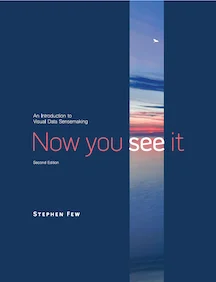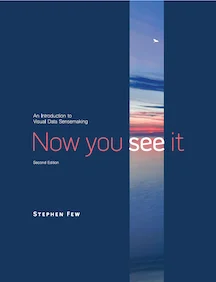
The announcement, made via Few’s Perceptual Edge platform, clarifies that the second edition is not a mere cosmetic update or a superficial revision. Instead, it is an architectural overhaul of the learning process for visual data sensemaking. The integration of Signal into the framework of Now You See It addresses a critical gap in data education: the transition from basic exploratory data analysis to the sophisticated identification of meaningful patterns amidst the increasing volume of digital "noise."
A Strategic Consolidation of Data Theory
The decision to combine the two volumes reflects a shift in the landscape of data science and business intelligence. When the first edition of Now You See It was published in 2009, the primary challenge for many organizations was simply the effective display of information. In the decade that followed, the challenge shifted toward discernment—knowing which data points constitute a "signal" (meaningful information) and which are merely "noise" (random variation).
By incorporating the contents of Signal, the second edition introduces readers to Statistical Process Control (SPC) and other rigorous analytical methods within the context of visual exploration. Few’s approach is rooted in the philosophy that before information can be presented to an audience, the analyst must first perform the cognitive labor of "sensemaking." This involves interactively using graphs to probe data for relationships, trends, and anomalies.
Despite the addition of significant new material, the author has refined the text to ensure the physical publication remains manageable. The second edition is approximately the same size as the original 2009 version, achieved through a process of rigorous editing and the removal of redundancies between the two source texts. This refinement is intended to make the learning curve more fluid and efficient for students and practitioners alike.
Chronology of Stephen Few’s Contributions to Data Literacy
To understand the impact of this new edition, it is necessary to examine the timeline of Stephen Few’s work and its influence on the field of data visualization:
- 2004: Few publishes Show Me the Numbers: Designing Tables and Graphs to Enlighten, which established fundamental rules for clear data presentation.
- 2006: Information Dashboard Design is released, critiquing the trend toward "flashy" but non-functional corporate dashboards and advocating for high-data-density displays.
- 2009: The first edition of Now You See It is published. It focused on exploratory data analysis, teaching users how to use their visual systems to "see" patterns in data.
- 2015: Signal: Understanding What Matters in a World of Noise is released as a more advanced companion to Now You See It, introducing statistical rigor and the concept of the "signal-to-noise" ratio in data analysis.
- February 2021: Few announces the second edition of Now You See It, signaling a unified approach to visual sensemaking.
- April 15, 2021: The official release date for the second edition, titled Now You See It: An Introduction to Visual Data Sensemaking.
This chronology illustrates a career-long commitment to data literacy, moving from how to show data to how to think about data.
The Growing Necessity for Visual Sensemaking Skills
The release of this updated text comes at a time of unprecedented growth in the data visualization market. According to industry reports, the global data visualization market was valued at approximately $8.85 billion in 2019 and is projected to reach $19.20 billion by 2027, growing at a CAGR of 10.2%. This surge is driven by the increasing adoption of cloud computing, the expansion of the Internet of Things (IoT), and the "Big Data" explosion.
However, industry experts often point to a "data literacy gap." While modern software tools like Tableau, Microsoft Power BI, and Qlik have made it easier than ever to create complex charts, the ability to derive accurate insights from those charts has not kept pace. Few’s work addresses this discrepancy directly. He argues that while vision is a natural human trait, the skill of visual data sensemaking is not intuitive; it is a learned discipline.
The volume of data created worldwide is also a factor. In 2021, it was estimated that 74 zettabytes of data would be created, captured, copied, and consumed globally. In such an environment, the ability to distinguish between "common cause variation" (noise) and "special cause variation" (signal) is no longer a niche statistical skill but a requirement for effective decision-making in business, healthcare, and governance.
Methodological Framework: Vision as an Analytical Tool
The core premise of Now You See It is the utilization of the human visual system as a powerful processor for quantitative analysis. Few’s methodology relies on the fact that the human brain is evolved to recognize patterns, such as lines, clusters, and outliers, much faster than it can process rows of numbers in a spreadsheet.
The second edition emphasizes that the most sophisticated statistical techniques are not always necessary for answering fundamental questions about data. Most operational and strategic questions can be answered through the skilled application of visual analysis. This approach democratizes data analysis, making it accessible to a broader audience who may not have advanced degrees in mathematics but who possess the "eyes to see" if trained correctly.
The inclusion of Statistical Process Control (SPC) in this edition is particularly noteworthy. SPC uses graphical methods to determine if a process is in a state of control. By integrating this into a book on visual sensemaking, Few bridges the gap between descriptive statistics (what happened) and inferential statistics (why it happened and what will happen next).
Industry Implications and Professional Standing
The announcement of the second edition has been met with interest from the data science community. Stephen Few is often viewed as a "purist" in the field, frequently contrasting his work with the trend of "infographics" that prioritize aesthetic appeal over functional clarity. His adherence to Gestalt principles of visual perception and his focus on cognitive efficiency have made his books required reading in many university curricula and corporate training programs.
Analysts suggest that the consolidation of Now You See It and Signal will likely become the standard textbook for introductory data analysis courses. By providing a comprehensive path from basic visualization to advanced signal detection in a single volume, the book simplifies the educational track for organizations looking to upskill their workforce.
Furthermore, the release highlights a broader trend in the tech industry: the move toward "Human-Centered Data Science." As Artificial Intelligence (AI) and Machine Learning (ML) become more prevalent, the role of the human analyst is shifting from performing calculations to interpreting results and identifying context—a task that remains fundamentally a "sensemaking" exercise.
Conclusion and Future Outlook
As the release date of April 15, 2021, approaches, the second edition of Now You See It: An Introduction to Visual Data Sensemaking stands as a testament to the enduring importance of foundational analytical skills. In an era dominated by automated dashboards and AI-driven insights, Few’s work serves as a reminder that the human element—specifically the human visual system—remains the most critical component in the data analysis pipeline.
The integration of advanced concepts like Statistical Process Control into a foundational text suggests that the bar for "basic" data literacy is being raised. Professionals in the 2020s are expected not only to read a chart but to interrogate the data behind it for validity and significance. By refining his previous works into this unified edition, Stephen Few provides a streamlined roadmap for navigating the complexities of the modern information landscape, ensuring that data remains a tool for enlightenment rather than a source of confusion.
Related posts: