Google Integrates Meridian Open Source Marketing Mix Modeling into Analytics 360 to Advance AI Driven Measurement Solutions

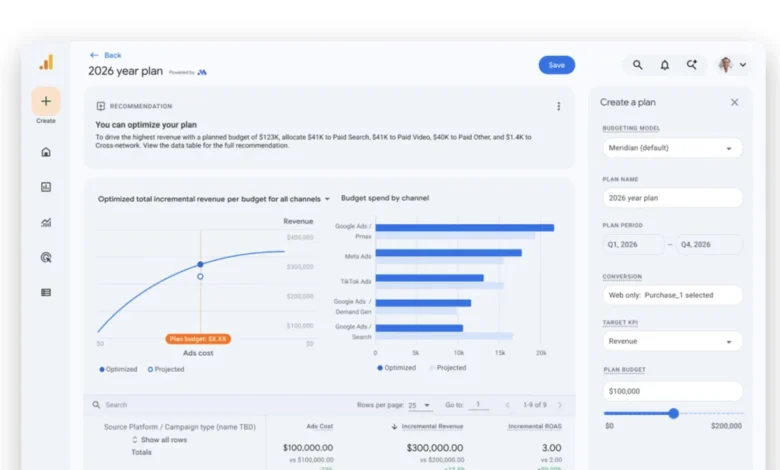
Google has announced a significant expansion of its measurement capabilities by integrating Meridian, its open-source Marketing Mix Model (MMM), directly into the Google Analytics 360 environment. This strategic move aims to provide enterprise-level marketers with a unified view of their data, combining granular digital analytics with high-level holistic modeling to better navigate the complexities of the modern advertising landscape. Alongside this integration, the company introduced Qualified Future Conversions (QFCs), a new feature in Google Ads powered by the Gemini generative AI model, designed to link top-of-funnel brand activity to long-term sales outcomes.
The announcement comes at a critical juncture for the digital advertising industry. As privacy regulations tighten and the availability of third-party cookies diminishes, traditional attribution methods—which track individual user journeys—are becoming less reliable. In response, many organizations are returning to Marketing Mix Modeling, a statistical technique developed in the mid-20th century that uses aggregate data to determine how various marketing inputs contribute to sales. By bringing Meridian into the Google Analytics 360 ecosystem, Google is attempting to modernize MMM for the AI era, making it more accessible, transparent, and actionable for large-scale advertisers.
The Strategic Shift Toward Open-Source Measurement
The decision to integrate Meridian into Google Analytics 360 represents a shift in how tech giants approach measurement transparency. Meridian was originally launched as an open-source tool to provide a "north star" for privacy-safe measurement. Unlike "black-box" attribution models, an open-source MMM allows data scientists and analysts to inspect the underlying code, adjust assumptions, and customize the model to fit specific business needs.
By embedding this capability within Analytics 360, Google is streamlining the data pipeline for its largest customers. Historically, building an MMM required manual data extraction from various platforms—including television, print, and multiple digital channels—and a lengthy period of statistical modeling. The new integration promises to automate much of this unification, allowing brands to see a more complete picture of performance without the technical hurdles that previously characterized MMM implementation.
Industry analysts note that this move is a direct response to the "measurement gap" created by the loss of granular tracking. As digital signals become noisier, the ability to analyze aggregate trends becomes the primary way to calculate Return on Investment (ROI). Google’s focus on "data as fuel for growth" underscores the necessity for businesses to move beyond descriptive analytics (what happened) toward prescriptive and predictive analytics (what should be done next).
Gemini-Powered Signals and Qualified Future Conversions
A core component of the update is the introduction of Qualified Future Conversions (QFCs) within Google Ads. Leveraging the Gemini AI framework, QFCs are designed to solve one of the oldest problems in marketing: quantifying the value of brand awareness. While performance marketing focuses on immediate clicks and sales, upper-funnel activities like video ads or display banners often take weeks or months to result in a conversion.
QFCs use predictive modeling to link these early-stage interactions to future revenue. For example, if a user views a brand’s YouTube advertisement and subsequently performs a brand-specific search on Google, the AI identifies this search as a "predictive signal." These signals indicate a high probability of a future purchase. By aggregating these signals, QFCs provide marketers with a real-time estimate of how their brand-building efforts are contributing to the bottom line.
Google has stated that these predictive signals will eventually be integrated directly into the Meridian MMM framework. This integration will likely refine the accuracy of the models, allowing the MMM to account for the delayed impact of advertising more effectively. This creates a feedback loop where real-time AI signals inform long-term strategic planning, helping advertisers uncover "missed revenue" that traditional attribution models might have overlooked.
Contextualizing the Evolution of Digital Measurement
To understand the significance of this integration, it is necessary to examine the chronology of Google’s measurement evolution over the past decade. The industry has moved through several distinct phases:
- The Last-Click Era (Pre-2015): Measurement was largely focused on the final interaction before a sale. This era relied heavily on cookies and simple tracking pixels.
- The Multi-Touch Attribution (MTA) Boom (2015–2020): Marketers attempted to assign value to every touchpoint in a consumer’s journey. However, this became increasingly difficult as cross-device usage grew and privacy protections like Apple’s Intelligent Tracking Prevention (ITP) were introduced.
- The Privacy-First Transition (2021–2023): With the rollout of GA4 and the announcement of the Privacy Sandbox, Google began moving away from individual tracking toward modeled conversions and data aggregation.
- The AI and MMM Renaissance (2024–Present): The launch of Meridian and its integration into Analytics 360 marks the current phase, where AI fills the gaps left by missing data and MMM provides a holistic framework for cross-channel measurement.
This transition reflects a broader trend in the $600 billion global digital advertising market. According to data from Gartner, nearly 75% of CMOs are currently under pressure to prove the ROI of their marketing spend amid economic uncertainty. Furthermore, a report from eMarketer suggests that spend on AI-driven marketing tools is expected to grow by nearly 30% annually as brands seek more sophisticated ways to optimize their budgets.
Technical Implications and Data Unification
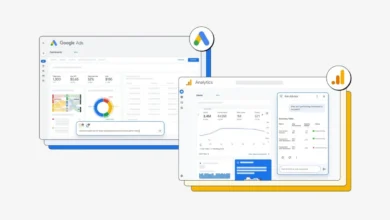
The technical synergy between Meridian and Analytics 360 is designed to reduce "data silos." In many enterprise organizations, the team managing Google Analytics is separate from the team managing the Marketing Mix Model. This disconnect often leads to conflicting reports on performance.
The integration aims to provide:
- Automated Data Ingestion: Directly pulling first-party data from Analytics 360 into the Meridian model.
- Granular Digital Insights: Using GA360’s detailed event tracking to inform the "digital" components of the MMM.
- Cross-Channel Visibility: Incorporating non-Google data (such as offline sales or social media spend from other platforms) into a single dashboard.
By utilizing Bayesian statistical methods—a core part of the Meridian architecture—the model can incorporate "prior" knowledge and expert opinions, which is particularly useful when data is sparse or when testing new markets. This makes the model more robust than traditional frequentist approaches that rely solely on historical data.
Industry Reactions and Market Analysis
The reaction from the marketing technology community has been largely positive, though some experts urge caution. Proponents of the integration argue that Google is finally providing the tools necessary to justify brand spend in a performance-driven world. "For years, brand marketing was treated as a luxury because it was hard to measure," says one digital strategy consultant. "By using Gemini to link brand searches to future sales, Google is giving brand managers the data they need to compete for budget with performance teams."
However, some independent measurement firms have raised questions regarding the "walled garden" effect. While Meridian is open-source, its deep integration with Google Analytics 360 and Google Ads signals may make it more difficult for advertisers to maintain a platform-agnostic view. There is a concern that Google’s models may inherently favor Google’s own advertising ecosystem, despite the transparency of the open-source code.
From a broader perspective, this update positions Google against other major players in the measurement space. Meta, for instance, has its own open-source MMM called "Robyn." The competition between these tech giants is no longer just about who has the best ad inventory, but who provides the most convincing measurement framework to prove the efficacy of that inventory.
Future Outlook: The Predictive Era of Marketing
The integration of Meridian into Analytics 360 and the rollout of QFCs are indicative of a future where marketing is less about looking in the rearview mirror and more about predictive forecasting. As these tools become more sophisticated, the role of the marketer will likely shift from manual optimization to strategic oversight of AI models.
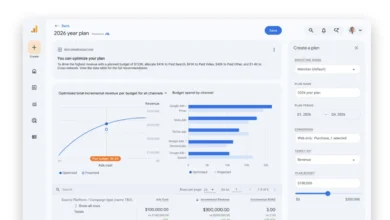
Google’s roadmap suggests that the accuracy of these models will continue to improve as more signals are fed into the system. The company has hinted at further updates that will allow for "what-if" scenario planning, where marketers can simulate the impact of budget shifts across different channels before committing the capital.
In conclusion, the unification of Meridian and Analytics 360 represents a pivotal moment in the democratization of high-level marketing science. By providing enterprise-grade tools that are both transparent and powered by advanced AI, Google is setting a new standard for how performance is measured in a privacy-conscious world. For brands, the challenge will be ensuring they have the data infrastructure and the analytical talent to leverage these new tools to their full potential. As the AI era progresses, the ability to turn raw data into actionable, predictive insights will likely be the primary differentiator between market leaders and those left behind.