MIT Alumni Sunshine Jiang and Rupert Li Awarded Prestigious Knight-Hennessy Scholarship


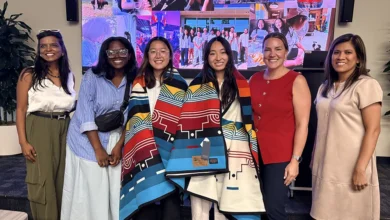
MIT master’s student Sunshine Jiang ’25 and Rupert Li ’24 are recipients of this year’s Knight-Hennessy Scholarship, a highly competitive award that provides up to three years of financial support for graduate studies at Stanford University. This marks the ninth year of the esteemed scholarship program.
A Beacon of Academic Excellence: The Knight-Hennessy Scholarship
The Knight-Hennessy Scholars Program, established in 2016 by philanthropists Phil Knight and John Hennessy, stands as one of the world’s most prestigious graduate scholarship programs. Its core mission is to identify and cultivate emerging leaders from diverse backgrounds who possess the intellectual capacity, curiosity, and collaborative spirit to tackle complex global challenges. The scholarship is not tied to any specific field of study, recognizing the interdisciplinary nature of innovation and problem-solving in the 21st century.
Each year, thousands of exceptionally qualified candidates from around the globe apply for this coveted award. The selection process is rigorous, evaluating applicants not only on their academic achievements and leadership potential but also on their commitment to public service, their ability to think critically and creatively, and their vision for making a positive impact on society. The scholarship covers tuition, fees, books, and living expenses for up to three years of graduate study at any of Stanford University’s seven graduate schools. This comprehensive support allows scholars to focus entirely on their academic pursuits and research, unburdened by financial constraints. The program also fosters a vibrant community among scholars, encouraging collaboration, mentorship, and the exchange of ideas through unique workshops, seminars, and networking opportunities.
Sunshine Jiang: Pioneering Accessible Embodied AI and Robotics
Sunshine Jiang, a graduating master’s student from Hangzhou, China, has demonstrated exceptional talent and dedication throughout her academic journey at MIT. She earned a dual bachelor’s degree in physics and electrical engineering and computer science, complemented by minors in mathematics and economics. This month, she will receive her master of engineering degree, a testament to her advanced studies and research prowess. This fall, Jiang will embark on her doctoral studies in computer science at the Stanford School of Engineering, where she intends to further her groundbreaking work in embodied artificial intelligence and robotics.
Jiang’s research centers on developing data-efficient, adaptive systems for general-purpose robots. Her focus is on creating AI systems that can learn and adapt quickly with minimal data, a critical challenge in making robots more versatile and accessible for a wider range of applications. This approach has the potential to significantly broaden the utility of robotics in various sectors, from manufacturing and healthcare to education and domestic assistance. Her work aims to overcome the current limitations of specialized robots that require extensive training for specific tasks. By developing more generalizable AI, Jiang’s research could pave the way for robots that can seamlessly integrate into diverse environments and assist humans in more intuitive ways.
Her contributions to the field have already garnered significant recognition. Jiang has presented her research at several leading international conferences, including the Conference on Robot Learning (CoRL), the International Conference on Robotics and Automation (ICRA), and the International Conference on Learning Representations (ICLR). These platforms are crucial for disseminating cutting-edge research and fostering collaboration among leading scientists and engineers. Her consistent presence at these top-tier events underscores the significance and impact of her work within the robotics and AI communities.
Beyond her technical achievements, Jiang has a profound commitment to using technology for social good. She played a pivotal role in leading the development of AI-powered systems designed to bring the rich heritage of traditional Chinese art into rural classrooms. This initiative aims to bridge educational disparities and expose students in underserved areas to cultural learning opportunities that might otherwise be inaccessible. Her efforts in this domain highlight a dedication to democratizing education and preserving cultural heritage through technological innovation.
Furthermore, Jiang has been instrumental in founding cross-country programs dedicated to expanding girls’ access to STEM education. Recognizing the persistent gender gap in science, technology, engineering, and mathematics fields, she has actively worked to create pathways and support systems for young women interested in pursuing STEM careers. These programs likely involve mentorship, hands-on activities, and exposure to role models, aiming to inspire and empower the next generation of female scientists and engineers.
Her commitment to amplifying marginalized voices was also evident in her creation of a COVID-19 documentary. This project aimed to capture and share the experiences and perspectives of communities grappling with the pandemic, providing a platform for their stories to be heard. The documentary’s feature on China Daily speaks to its impact and its ability to reach a broad audience, fostering understanding and empathy during a challenging global crisis. Jiang’s multifaceted approach to leadership and innovation, combining cutting-edge research with a deep commitment to social impact, makes her an exemplary recipient of the Knight-Hennessy Scholarship.
Rupert Li: A Prodigy in Mathematics and Interdisciplinary Exploration
Rupert Li, hailing from Portland, Oregon, is a remarkable individual whose academic trajectory is marked by a profound intellectual curiosity and a relentless pursuit of knowledge across multiple disciplines. He is currently engaged in a PhD in mathematics at the Stanford School of Humanities and Sciences, a testament to his advanced standing in the field. His undergraduate journey at MIT was equally impressive, culminating in a bachelor’s degree in 2024 with double majors in mathematics and computer science, alongside minors in economics and data science. Demonstrating an exceptional capacity for advanced study, he also earned a master’s degree in data science concurrently with his bachelor’s.
Li’s academic journey then took him to the United Kingdom, where he was awarded the prestigious Marshall Scholarship. This enabled him to pursue and successfully complete a master’s degree in mathematics at the University of Cambridge, further solidifying his foundational expertise in the discipline. His international academic experience highlights his global perspective and his ability to thrive in some of the world’s most esteemed academic institutions.
His research interests are deeply rooted in fundamental areas of mathematics, including probability, discrete geometry, and combinatorics. These fields are essential for understanding complex systems, modeling phenomena, and developing algorithms that underpin much of modern technology and scientific inquiry. Probability theory, for instance, is crucial in fields ranging from finance and statistical physics to machine learning. Discrete geometry explores the properties of shapes and spaces that are composed of discrete elements, which has applications in computer graphics, cryptography, and network theory. Combinatorics, the study of counting, arrangement, and combination, is fundamental to algorithm design and theoretical computer science. Li’s work in these areas suggests a focus on abstract mathematical principles with significant potential for real-world applications.
Li’s commitment to nurturing future talent is evident in his active involvement with educational initiatives. He has served as a mentor for MIT PRIMES-USA, a highly selective program that provides talented high school students with the opportunity to engage in advanced research under the guidance of university faculty and graduate students. This program is renowned for identifying and fostering mathematical prodigies, and Li’s role in it signifies his dedication to inspiring and guiding the next generation of mathematicians. He also previously served as an advisor for the Duluth REU (Research Experience for Undergraduates), another program designed to provide undergraduate students with intensive research opportunities in mathematics, further underscoring his commitment to academic mentorship and the advancement of mathematical education.
Li’s exceptional academic achievements and leadership qualities have been recognized through a remarkable array of prestigious accolades. In addition to the Knight-Hennessy Scholarship, he is a recipient of the Marshall Scholarship, the Hertz Fellowship, and the P.D. Soros Fellowship. The Hertz Fellowship is particularly noteworthy, as it is awarded to individuals who show exceptional promise for leadership and make significant contributions to the field of applied physical sciences and engineering. The P.D. Soros Fellowship supports immigrants and children of immigrants pursuing graduate studies in the United States, recognizing their unique perspectives and potential. Furthermore, he has been awarded the Goldwater Scholarship, one of the most competitive undergraduate awards for students in mathematics, natural sciences, and engineering. His receipt of honorable mention for the Frank and Brennie Morgan Prize for Outstanding Research in Mathematics by an Undergraduate is also a significant honor, acknowledging his early contributions to mathematical research. This consistent recognition across multiple highly selective national and international scholarships speaks volumes about his intellectual caliber, research potential, and leadership capabilities.
The Broader Implications and Impact
The selection of Sunshine Jiang and Rupert Li for the Knight-Hennessy Scholarship highlights a continued trend of exceptional MIT alumni being recognized for their outstanding potential. Their diverse academic backgrounds and commitment to impactful research and public service underscore the multifaceted nature of leadership in the 21st century.
For Sunshine Jiang, her focus on embodied AI and robotics, coupled with her passion for educational equity and cultural preservation, suggests a future where technology is not only advanced but also inclusive and beneficial to society. Her work in making AI more data-efficient could accelerate the development of robots capable of assisting in a wider array of human endeavors, from complex scientific research to everyday tasks. The potential implications of her research are vast, potentially leading to more accessible healthcare, more efficient agricultural practices, and more personalized educational tools. Her efforts to bridge the digital divide in STEM education also have the potential to inspire a new generation of diverse thinkers and innovators, ensuring that the future of technology is shaped by a wider range of perspectives.
Rupert Li’s deep dive into the fundamental principles of mathematics and his broad interdisciplinary engagement signal a scholar poised to make significant theoretical and applied contributions. His research in probability, discrete geometry, and combinatorics forms the bedrock of many advancements in computer science, data science, and artificial intelligence. His mentorship of younger students indicates a commitment to fostering a collaborative and supportive academic ecosystem. The breadth of his fellowships—spanning international study, engineering and science, and immigrant leadership—suggests a holistic approach to intellectual development and a vision for leveraging his knowledge to address complex societal challenges. His work could contribute to breakthroughs in areas such as secure communication, advanced algorithms for big data analysis, and the fundamental understanding of complex systems.
The Knight-Hennessy Scholarship’s investment in these individuals signifies confidence in their ability to become influential leaders and problem-solvers. By providing comprehensive financial support and fostering a vibrant community, the program aims to equip them with the resources and network necessary to translate their research and ideas into tangible positive change on a global scale. The success of scholars like Jiang and Li in securing such prestigious awards not only validates their individual merits but also reflects positively on the caliber of education and research fostered at institutions like MIT, while simultaneously underscoring the vital role of visionary philanthropy in nurturing future global leaders.