Unlock Lifetime Access to 14 Languages With Babbel for $159 During Extended Deal Days Sale

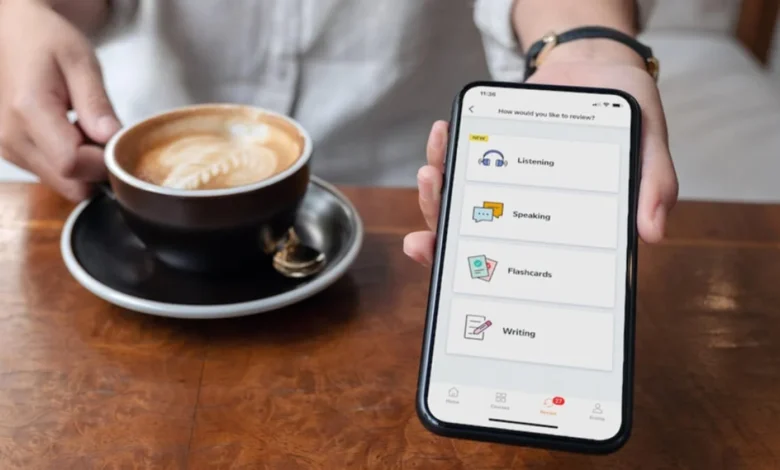
The opportunity to master a new tongue has never been more accessible as online learning platforms continuously adapt to meet the modern demand for flexible, bite-sized education. During the final hours of an extended Deal Days promotion, consumers can secure a lifetime subscription to Babbel for $159 by applying the exclusive StackSocial discount code LEARN. This steep reduction brings down the cost from its standard retail value, granting lifetime access to a comprehensive suite of courses covering 14 distinct global languages. In an era where digital self-improvement tools are a booming market, this offer provides a compelling option for professionals, travelers, and lifelong learners aiming to acquire practical linguistic skills without committing to recurring subscription fees.
Main Facts and the Deal Overview
The core of the current promotion centers on a lifetime pass to Babbel, one of the pioneering digital language instruction platforms. Typically valued at significantly higher rates depending on promotional cycles, the StackSocial offer prices the lifetime tier at $159 exclusively when using the designated promo code LEARN.
Unlike subscription models that charge monthly or annual fees, a lifetime license ensures perpetual access to the platform’s entire current and future catalog for the 14 languages offered. These include major global tongues such as Spanish, French, German, Italian, Portuguese, Russian, Polish, Turkish, Norwegian, Danish, Swedish, Dutch, Indonesian, and English.
The platform distinguishes itself in a crowded edtech marketplace by focusing on real-world conversational readiness rather than gamified mechanics like repetitive word matching or purely visual associations. Developed by a team of over 150 linguists, educators, and methodologists, Babbel’s curriculum is rooted in cognitive science and practical application. Lessons are explicitly designed to integrate into hectic modern schedules, averaging roughly 10 to 15 minutes per session. This micro-learning structure allows users to study during a daily commute, between professional meetings, or while preparing for an upcoming international relocation.
Chronology and Evolution of Digital Language Learning
The landscape of language acquisition has undergone a dramatic transformation over the past three decades. In the late 20th century, learning a foreign language largely required enrollment in academic classrooms, intensive multi-week immersion programs, or the purchase of bulky cassette tape and compact disc audio series such as Pimsleur or Rosetta Stone.
As internet infrastructure matured in the early 2000s, desktop-based software introduced interactive multimedia elements. However, the true democratization of language learning arrived in the early 2010s with the proliferation of smartphones. This mobile revolution enabled application-based learning, allowing millions of users to carry a localized classroom inside their pockets.
Babbel launched in 2007 as one of the earliest subscription-based language learning applications, preceding the founding of several of its major gamified competitors. Over the subsequent seventeen years, the platform evolved from a vocabulary-building website into a multi-device ecosystem. Key milestones in its corporate chronology include:
- 2007: Babbel is founded in Berlin, Germany, by Thomas Holl, Lorenz Bogaert, Markus Witte, and Petersen Pleple, introducing a novel web-based approach to vocabulary and grammar.
- Early 2010s: The company pivots heavily toward mobile technology, releasing dedicated applications for iOS and Android devices to capture the burgeoning smartphone demographic.
- Mid-2010s: Expansion of the curriculum beyond basic European languages to include Scandinavian and Asian languages, alongside the introduction of specialized business-oriented modules.
- Late 2010s to Early 2020s: Integration of proprietary speech recognition technology to provide real-time feedback on user pronunciation, bridging the gap between digital self-study and human tutoring.
- Recent Years: Implementation of artificial intelligence conversation partners, enabling learners to simulate realistic dialogue exchanges without the pressure of speaking directly to a human tutor.
Curriculum Structure and Technological Integration
The modern iteration of Babbel relies on a blend of structured pedagogical theory and advanced digital tooling. Central to its instructional design is the concept of "didactic method," which emphasizes cognitive psychology principles like spaced repetition and contextualized learning.
Instead of forcing users to memorize disconnected lists of vocabulary, Babbel structures its courses around realistic scenarios. Modules cover practical topics such as navigating public transportation, ordering food in a foreign restaurant, conducting a business negotiation, discussing cultural nuances, and handling emergency medical situations.
Technological advancements have significantly enhanced the user experience. The inclusion of advanced speech recognition software evaluates a user’s spoken input against native audio recordings, providing immediate, granular feedback on pronunciation accuracy. Furthermore, the recent integration of AI-powered conversation partners allows learners to engage in text- and voice-based roleplay simulations. This feature addresses one of the most persistent hurdles in language acquisition: overcoming the psychological barrier of speaking aloud in a foreign tongue.
Cross-device synchronization ensures that progress is seamlessly tracked whether a user begins a lesson on a desktop computer during work hours and finishes it on a smartphone while traveling. Additionally, an offline mode enables learners to download comprehensive lesson packages ahead of time, ensuring uninterrupted study sessions during flights, in remote areas, or when data connectivity is limited.
Supporting Data and Industry Context
The global language learning market represents a multi-billion-dollar industry driven by globalization, remote work trends, and international travel recovery. According to market research reports by firms such as Technavio and Grand View Research, the global online language learning market is projected to expand significantly throughout the decade, propelled by increasing smartphone penetration and the rising demand for multilingual professionals in multinational corporations.
Demographic data regarding language learners reveals diverse motivations:
- Professional Advancement: Approximately 40% of adult learners cite career progression, international business opportunities, or the necessity to communicate with global colleagues as their primary motivation.
- Travel and Tourism: Roughly 35% of users pursue language acquisition to enhance personal travel experiences, seeking deeper cultural immersion and local navigation capability.
- Cognitive Health: A growing segment of older adults engages in language learning as a mental exercise to maintain cognitive acuity, memory retention, and neuroplasticity.
Within this competitive ecosystem, lifetime subscription offerings like the one currently facilitated via StackSocial represent a strategic consumer choice. While monthly subscriptions offer low initial barriers to entry, long-term costs can accumulate substantially over years of study. A one-time purchase model appeals directly to dedicated learners who plan to sustain their educational journey over a prolonged period.
Official Responses and Industry Perspectives
Edtech analysts and digital learning experts generally view the shift toward lifetime licensing models as a mutually beneficial mechanism for platforms and consumers alike, though with distinct caveats.
Representatives from consumer technology and deal aggregation outlets frequently emphasize the economic value of upfront discounts for software that demands consistent, long-term engagement. Industry commentators note that while a lifetime subscription eliminates the financial friction of monthly renewals, the primary challenge for the consumer shifts entirely to personal motivation.
"The most sophisticated software, the most advanced artificial intelligence, and the most comprehensive curriculum are ultimately ineffective if the user does not commit the necessary daily time," noted an independent digital education analyst who monitors subscription models. "Promotional sales drastically lower the financial barrier, but the psychological commitment to daily micro-learning remains the definitive variable in language acquisition success."
Babbel’s own pedagogical framework consistently stresses that fluency is not an overnight achievement, but rather the cumulative result of consistent, low-friction habits. Company executives have frequently emphasized in public presentations that language learning should be treated as a lifestyle habit akin to physical fitness rather than an academic subject with a definitive end date.
Broader Economic and Societal Implications
The widespread availability of affordable, high-tech language learning tools carries profound implications for global mobility and cross-cultural communication. As remote work normalizes distributed international teams, the ability to communicate across linguistic boundaries transitions from an elite executive skill to a baseline professional competency.
Furthermore, digital platforms democratize access to linguistic education. Historically, acquiring fluency in a second or third language required substantial financial resources for private tutors, expensive software packages, or immersive travel abroad. By packaging 14 languages into a mobile-accessible format priced at a one-time rate of $159, companies like Babbel and promotional partners like StackSocial lower the threshold for entry, making education accessible to a broader socioeconomic demographic.
At the same time, the integration of artificial intelligence into language instruction points toward a future of hyper-personalized education. Traditional classrooms rely on standardized curricula that move at the pace of the average student. AI-driven platforms, conversely, can analyze individual error patterns, adjust vocabulary repetition intervals, and simulate conversational contexts tailored precisely to a user’s professional field or personal interests.
Conclusion and Purchasing Details
As the extended Deal Days sale draws to its conclusion, prospective learners have a limited window to secure the Babbel Lifetime Language Learning Subscription at the promotional price of $159. The offer requires the manual application of the StackSocial discount code LEARN at checkout.
With lifetime access spanning 14 languages, offline downloading capabilities, multi-device synchronization, speech recognition, and AI-assisted conversation tools, the package offers a robust technological toolkit for anyone seeking to bridge linguistic divides. Whether motivated by upcoming international travel, career advancement, or personal intellectual enrichment, users equipped with these resources possess a comprehensive foundation to embark on a sustainable, long-term language learning journey.