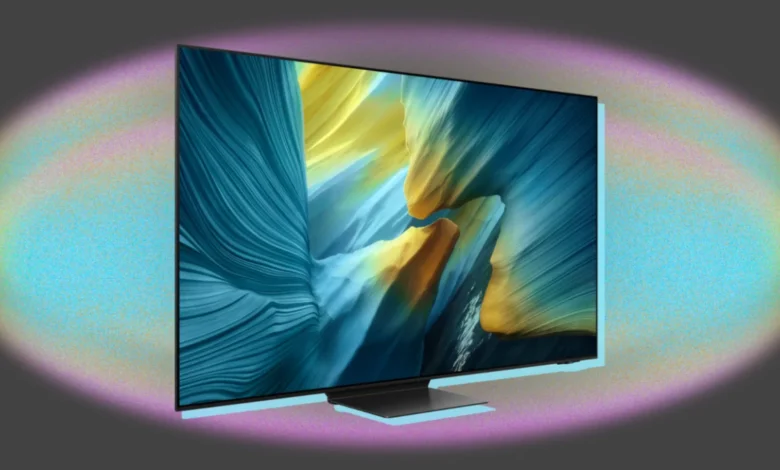
Choosing a new television has historically been one of the most intellectually taxing consumer electronics purchases for households worldwide. Unlike standardized appliances or smaller gadgets, buying a flat-screen television requires navigating a dizzying array of competing panel technologies, acronyms, and backlight architectures. Consumers wading into the marketplace frequently encounter terms like QLED, OLED, MicroRGB, and Mini LED, making retail showroom floors more disorienting than informative.

Industry experts have long designated the 65-inch screen size as the optimal sweet spot for most modern living spaces. A 65-inch display is large enough to deliver a genuinely cinematic, immersive viewing experience for movies and sports, yet compact enough to integrate practically into standard living room layouts, whether mounted on a wall or resting on a media console. To cut through the technical noise, extensive consumer testing and consultations with industry specialists from prominent tech testing labs have yielded a definitive ranking of the top eight 65-inch televisions available to shoppers in 2026.
Market Trends and the Optimal Purchasing Window
Unlike many sectors of the consumer electronics industry where inflation continuously drives up prices, the market for flat-screen televisions has demonstrated a remarkable downward trend in cost relative to performance. Consumers today can access levels of picture fidelity, peak brightness, and color saturation that were previously exclusive to commercial post-production studios just a few years ago. Nevertheless, flagship models equipped with cutting-edge panels can still command retail prices upwards of $3,000, placing financial optimization at the forefront of the buying process.

Timing plays a critical role in mitigating these costs. Market data consistently indicates that October and November represent the most financially advantageous months to purchase a new television. Major electronics retailers—including Amazon, Best Buy, Walmart, and Target—deploy aggressive discount strategies during this autumn window. Major promotional events, starting with early-October retail holidays and extending through Black Friday and Cyber Monday, frequently introduce price cuts reaching up to $1,200 on premium displays. Furthermore, direct-to-consumer manufacturers such as Samsung frequently offer substantial seasonal rebates during the fall and winter months, providing secondary avenues for significant savings.
Industry Shifts: Strategic Alliances and Technological Evolution
The television manufacturing landscape underwent a significant structural realignment in January 2026, altering the competitive dynamics of the home entertainment sector. TCL assumed operational control of Sony’s historic home entertainment division, encompassing both television manufacturing and home audio development. While the revered "Bravia" brand name and Sony’s proprietary picture-processing algorithms remain intact, TCL has taken charge of the underlying manufacturing infrastructure and pricing strategies. Industry analysts suggest this partnership could bridge a long-standing market gap, merging Sony’s elite cinematic processing with TCL’s renowned manufacturing efficiency to deliver more competitively priced high-end displays.

Simultaneously, 2026 has witnessed the broad commercialization of advanced backlighting architectures, most notably the rise of true RGB and Super Quantum Dot technologies. These innovations replace traditional white or blue LED filters with dedicated microscopic red, green, and blue light sources, achieving unprecedented color volume and precision without sacrificing the deep black levels traditionally reserved for organic light-emitting diode (OLED) panels.
The Top 8 65-Inch Televisions of 2026
1. TCL QM6K: The Value Benchmark
For consumers seeking an entry point into premium television technology without crossing into four-figure pricing, the TCL QM6K stands out as the definitive middle-ground option. Operating significantly above standard LED sets while remaining comfortably below the $1,000 threshold, the QM6K utilizes a Precise Dimming system spanning 500 distinct local dimming zones. This architecture prevents the washed-out contrast typical of edge-lit budget displays. With robust daytime brightness and low input lag, it serves as an exceptional all-purpose set for sports enthusiasts and casual gamers alike.

2. TCL QM8L: Supreme Peak Brightness
For living rooms heavily impacted by ambient natural light, the TCL QM8L offers a compelling solution through its integration of Super Quantum Dot (SQD) technology. By shrinking nanocrystals down to five nanometers, the QM8L refines spectral purity and achieves a staggering peak brightness of up to 6,000 nits. This immense luminous output ensures vibrant HDR performance and exceptional glare management. Despite offering performance tiers comparable to much pricier flagships, the QM8L frequently appears at deep discount pricing, making it a favorite for buyers who prioritize daytime visibility.
3. LG C6 Series OLED: The Accessible Cinephile Choice
LG’s C-series OLED televisions remain the benchmark for dark-room performance, and the 2026 C6 iteration continues this legacy while improving accessibility. Utilizing self-lit pixels that achieve infinite contrast and absolute black levels, the C6 delivers an uncompromising home theater experience. The 2026 model improves upon its predecessor with a boosted native refresh rate of 165Hz, enhanced peak brightness, and a more natural color palette. Positioned significantly below the price points of competing luxury flagships, the C6 provides premier OLED fidelity at a more attainable investment level.

4. Samsung S95H OLED: The Uncompromised Flagship
Shoppers with flexible budgets looking for absolute peak performance across movies, sports, and competitive gaming will find few rivals to the Samsung S95H OLED. Praised widely by technical review bodies as a leading display of 2026, the S95H pushes peak brightness for OLED technology up to 2,500 nits. It features an advanced anti-glare matte coating that largely neutralizes reflections in sunlit environments. Physically, the television adopts an art-adjacent aesthetic, swapping traditional black bezels for a refined silver frame and incorporating a flush wall-mount system that mimics a framed canvas.
5. Samsung The Frame (2025 Model): The Gallery Standard
Samsung’s lifestyle television line continues to serve a distinct consumer base prioritizing interior design integration over pure cinematic specifications. While cinephiles may find its contrast ratios surpassed by dedicated OLED or Mini LED alternatives, The Frame excels at its primary function: displaying digital artwork with a convincing matte, non-reflective finish. Market analysis indicates that the 2025 iteration of the 65-inch model represents the optimal value proposition within the lineup, offering the essential slim-profile aesthetic and access to the Samsung Art Store at a significantly lower price point than the newly introduced 2026 variants.

6. Hisense UR9: The Mixed-Usage RGB Contender
As part of the broader industry pivot toward advanced backlighting, the Hisense UR9 leverages RGB technology to achieve extraordinary color saturation, hitting 100 percent coverage of the human color gamut. By sourcing light directly from thousands of microscopic red, green, and blue LEDs, the UR9 delivers rich hues and robust local dimming performance that approaches OLED-level shadow detail. Furthermore, the inclusion of full DisplayPort Alt Mode functionality makes the UR9 a rare and powerful option for high-end PC gamers seeking refresh rates up to 180Hz at 4K resolution.
7. Hisense CanvasTV: The Value-Driven Art Display
Positioned as a direct lifestyle competitor to Samsung’s offerings, the Hisense CanvasTV offers a compelling alternative for consumers wanting an art-frame television without the accompanying premium tax. Beyond its aesthetic appeal as a gallery piece, the CanvasTV outperforms traditional art displays in technical categories, featuring a 144Hz refresh rate, multiple HDMI 2.1 ports for modern gaming consoles, and lower input lag. Utilizing the VIDAA Art App to provide access to an extensive digital gallery, the CanvasTV combines home decor functionality with high-performance specs at a highly competitive price point.

8. Sony True RGB Bravia 9 II: The Next-Generation Smart Display
Representing the cutting edge of Sony’s post-reorganization lineup, the True RGB Bravia 9 II showcases the company’s proprietary approach to micro-LED backlighting. Eschewing traditional color filters in favor of direct RGB mini-LED sources, the Bravia 9 II produces vivid color fidelity and exceptional luminance. Integrated tightly with the Google TV ecosystem and powered by Google Gemini, the television functions as an advanced smart home hub alongside its primary duties. Backed by low input lag and robust spatial audio, it stands as a forward-looking investment for high-end entertainment enthusiasts.
Conclusion and Buying Guidance
Navigating the 2026 television market ultimately requires balancing environmental lighting conditions with intended usage patterns. Buyers contending with sun-drenched living rooms will find optimal results in high-brightness Mini LED or RGB models such as the TCL QM8L or Hisense UR9. Conversely, cinephiles dedicated to dark-room movie viewing will continue to benefit most from the infinite contrast and pixel-level precision offered by OLED displays like the LG C6 or Samsung S95H. By evaluating these technical distinctions and leveraging seasonal retail discounts during the fall shopping window, consumers can secure a high-performance 65-inch display tailored precisely to their household needs.
Related posts: