The Evolution of Marketing Analytics Shifting from Vanity Metrics to Profit-Based Accountability in the AI Era

Digital marketing strategies are undergoing a fundamental transformation as global corporations move away from traditional engagement metrics toward a rigorous framework of financial accountability. For decades, marketing departments have relied on "top-of-funnel" data—such as impressions, views, and sessions—to justify multi-million dollar budgets. However, a growing consensus among industry analysts and chief financial officers (CFOs) suggests that these metrics often mask underlying inefficiencies. The shift, described by experts as moving from "activity" to "accountability," is becoming a survival necessity as search engines transition into AI-driven ecosystems that prioritize user intent over raw traffic volume.
The Problem with Activity-Based Metrics
In the early stages of digital advertising, the industry lacked the sophisticated tracking tools available today. This led to the adoption of "activity metrics" as a proxy for success. Metrics like Cost Per Session (CPS) became standard in many global marketing organizations, some operating in as many as 75 countries. CPS measures the total cost of a campaign divided by the number of sessions generated on a website. While this provides a clear view of traffic volume, it fails to account for the quality of that traffic or its eventual contribution to the company’s bottom line.
Industry data suggests that high-volume traffic often correlates with high bounce rates. A "bounce" occurs when a user visits a single page and exits without further interaction. In many AI-driven campaigns, bounce rates can exceed 50%, meaning that half of the paid traffic is essentially non-productive. When marketing teams focus solely on lowering the CPS, they may inadvertently incentivize agencies and internal teams to pursue the cheapest possible traffic, regardless of its propensity to convert into a sale.
From Activity to Outcomes: The First Shift in Maturity
The first step in modernizing marketing analytics involves moving from Activity to Outcomes. Instead of reporting on how many people clicked an ad, mature organizations report on what those people did after arriving. This involves tracking Revenue and Conversion Rates (CVR).
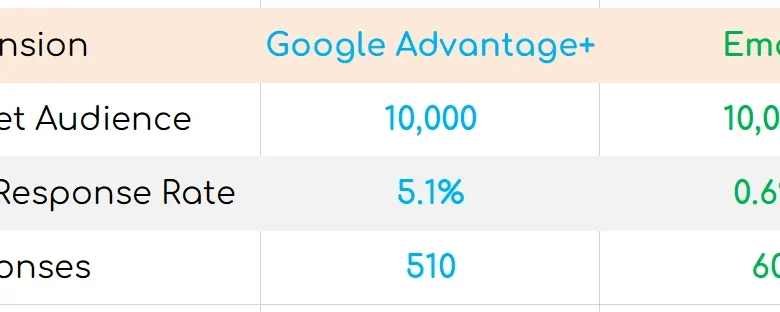
For example, a comparison between AI-powered automated campaigns, such as Google’s Advantage+ features, and traditional channels like email marketing reveals a stark contrast in outcome-based performance. In many case studies, automated AI campaigns generate significantly higher volumes of orders and revenue compared to email. However, looking at outcomes alone is still considered an incomplete view of business health.
While a campaign may generate $17,000 in revenue, that figure does not account for the cost of the advertising or the cost of the goods sold (COGS). For a B2B company with long sales cycles or a pharmaceutical company where the final "sale" is a doctor’s prescription, measuring outcomes requires more nuance. Analysts recommend using "Micro-Conversions"—such as whitepaper downloads or webinar sign-ups—and multiplying them by an average "Lead to Offline Conversion Rate" to estimate a working value. This approach, even if only 85% accurate, provides a more robust foundation for decision-making than raw activity data.
The Accountability Ladder: ROI, POAS, and POI
The most significant tension in modern corporate structures often exists between the Chief Marketing Officer (CMO) and the Chief Financial Officer (CFO). To bridge this gap, marketing must adopt a language of accountability. This involves a hierarchy of metrics that subtract costs from revenue to reveal true profitability.
- Return on Ad Spend (ROAS): This is the most common "accountability" metric, calculated as Revenue divided by Ad Spend. While it provides more insight than CPS, it is often criticized for inflating marketing’s impact because it does not account for the cost of producing the goods sold or the overhead of the marketing team.
- Return on Investment (ROI): This metric subtracts the campaign cost from the revenue before dividing by the campaign cost. This provides a clearer picture of the efficiency of the marketing spend itself.
- Profit on Ad Spend (POAS): POAS takes the Gross Profit (Revenue minus COGS) and divides it by the Ad Spend. This allows the CFO to see how much actual profit is generated for every dollar spent on advertising.
- Profit on Investment (POI): Considered the "gold standard" of marketing accountability, POI is calculated as (Gross Profit minus Campaign Cost) divided by Campaign Cost.
A recent analysis of a global marketing campaign highlighted the danger of ignoring POI. In the study, a Google Advantage+ campaign generated $17,300 in revenue from $7,200 in spend. While the ROAS looked acceptable at 2.4, the POI was -0.7. This means that for every $1 sent to the advertising platform, the company lost $0.70 in profit. In contrast, an email marketing campaign with much lower revenue volume delivered a POI of 5.7, meaning it returned $5.70 in profit for every $1 spent.
The Role of AI in Search and the Death of the "One-Night Stand" Visit
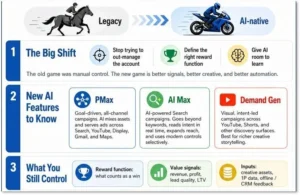
The urgency to move away from session-based metrics is exacerbated by the evolution of search engines. Google and other major players are increasingly integrating "AI Overviews" and "AI Mode" into their search results. This shift changes the nature of the user journey.
In traditional search, users might click multiple links to find information, leading to high session counts but low engagement. In an AI-centric search environment, the search engine provides context and answers directly on the results page. When a user does eventually click through to a website from an AI Overview, that user is typically better informed and further along in the decision-making process.
Google’s own developer guidance suggests that these clicks are of higher quality, with users spending more time on the site. Consequently, companies that continue to optimize for "Cost Per Session" are likely to see their metrics decline as raw click volume drops, even as the value of each individual visit increases. The industry is moving away from "one-night stand" visits toward "engaged relationships." Focusing on sessions in an AI world is not only inefficient; it is counterproductive to the way modern algorithms reward site quality and user satisfaction.
Strategic Recommendations for Global Marketing Teams
To survive this shift, analysts recommend a five-step "Profit Recovery" strategy for organizations currently trapped in low-POI cycles:
Step 1: Immediate Budget Reallocation
Organizations must identify campaigns with negative POI and pause them immediately. While this often leads to an internal "alarm" regarding dropping traffic and revenue, it is a necessary step to stop the "sucking sound" on company profits.
Step 2: The Intent Reset
Once unprofitable spend is paused, marketing teams should reassess the intent available on various platforms. This involves analyzing whether the current audience, creative assets, and offers align with the high-intent users that AI-driven search now prioritizes.
Step 3: Leveraging AI for Tactics, Not Just Traffic
Rather than using AI simply to "shovel traffic" as cheaply as possible, companies should use AI-powered features to optimize for conversion and profit. This includes using machine learning to identify the most profitable customer segments rather than the largest ones.
Step 4: Redefining Success Metrics with the CFO
The CMO and CFO must agree on a "Minimum Acceptable POI." This ensures that marketing is not just an expense line but a profit center. If a platform like TikTok, Meta, or Google cannot deliver a green (positive) POI after optimization, the budget should be moved to channels that can.
Step 5: Transitioning to "Cost Per Non-Bounced Session"
If an organization is culturally unable to immediately shift to profit-based metrics, a "suck less" middle ground is to measure the Cost Per Non-Bounced Session. By removing the cost of users who "came, puked, and left," marketers get a more realistic view of what they are paying for actual engagement.
Broader Economic Implications
The transition to accountability-based marketing has broader implications for the global digital economy. For years, the "growth at all costs" model favored platforms that could deliver massive scale, even if the efficiency was low. As interest rates remain high and capital becomes more expensive, investors are demanding profitability over raw growth.
Advertising agencies, too, are facing a reckoning. The traditional model of taking a percentage of ad spend incentivizes agencies to increase spend, even if it harms the client’s POI. Forward-thinking agencies are shifting toward performance-based models tied to the client’s actual profit.
Furthermore, the rise of AI Search means that the "moat" for many businesses is no longer their ability to buy traffic, but their ability to convert it. As AI provides more answers on the search results page, websites must provide unique value—such as proprietary data, expert analysis, or superior product experiences—to earn a click.
Conclusion
The era of "vanity metrics" is effectively over. For marketing professionals, the path forward requires a deep dive into the financial realities of the business. By prioritizing Outcomes over Activity and Accountability over Outcomes, marketers can protect their budgets and their careers from the disruptions of AI and the scrutiny of the finance department. The goal is no longer to be the biggest spender on the platform, but the most profitable one. In the words of industry leaders, the objective is to "Carpe Diem"—to seize the day by mastering the data that truly matters to the survival of the enterprise.