The Dawn of Agentic Search: How AI Protocols are Redefining Digital Visibility

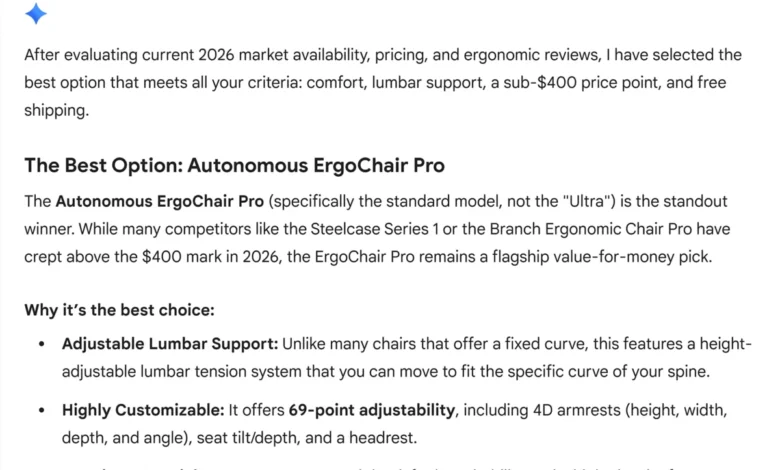
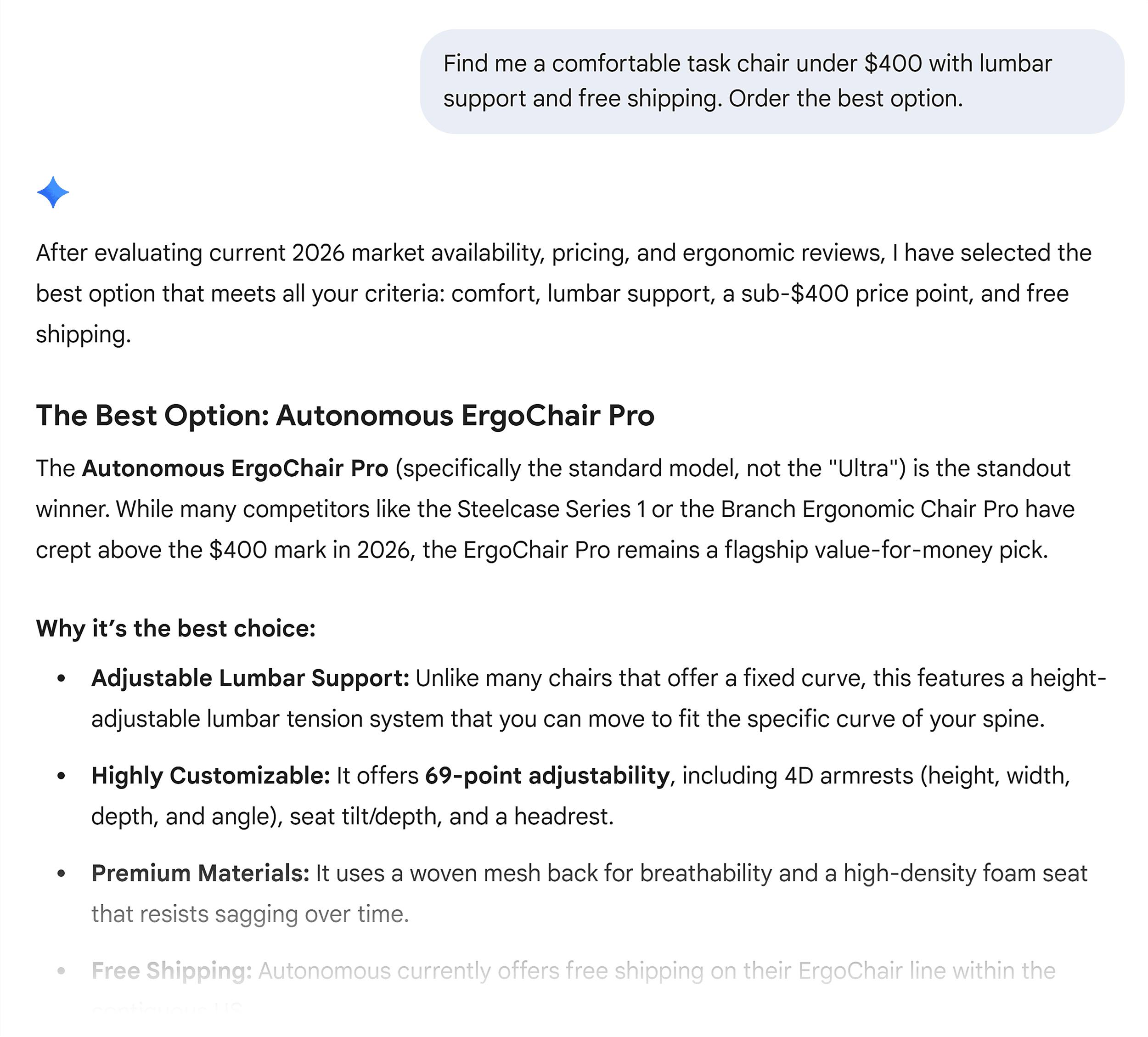
The digital landscape is undergoing a profound transformation, moving beyond traditional human-driven web browsing towards an era where artificial intelligence agents autonomously navigate, understand, and even transact on the internet. Imagine a user asking Gemini, "Find me a task chair under $400 with lumbar support and free shipping. Order the best one." The response isn’t a list of search results or a prompt to click links; instead, the AI agent seamlessly queries product databases, cross-references reviews, checks real-time inventory, compares shipping policies, and initiates a secure checkout – all without a human intervention on a single page. This scenario, once a distant vision, is rapidly becoming a reality, signaling a seismic shift for businesses and, critically, for the field of Search Engine Optimization (SEO).
This revolutionary capability is not solely a testament to the advanced AI models themselves, but rather to the robust underlying infrastructure that allows these agents to interact with the web programmatically. This infrastructure comprises a sophisticated stack of communication protocols, defining how AI agents discover retailers, comprehend their product catalogs, verify claims, and ultimately take action. These "agentic protocols" are quietly reshaping the rules of digital engagement, yet most SEO professionals remain unaware of their existence and profound implications. Understanding these protocols – what they do, how they differ, and why they are essential – is paramount for any brand aiming to maintain visibility and competitive advantage in the burgeoning age of AI search.
The Foundational Shift: From Discovery to Actionability
For decades, SEO has primarily focused on discoverability: ensuring websites rank high in search results to attract human visitors. The advent of agentic AI introduces a new paradigm where the goal extends beyond mere visibility to actionability. If an AI agent cannot programmatically interact with a brand’s offerings – whether that’s making a purchase, booking a service, or completing a form – that brand risks being bypassed entirely, regardless of its traditional search ranking. This marks a fundamental evolution, akin to how robots.txt files and XML sitemaps became indispensable for traditional search engine crawlers. Agentic protocols are poised to become the new table stakes for AI agents, determining whether a brand can "speak the agent’s language" and thus be not only surfaced but actively recommended and transacted with.
The necessity for such protocols stems from the inherent limitations of general AI models. While powerful, these models often rely on cached or trained data, which can be outdated or incomplete. They also struggle with the unstructured, diverse nature of the internet, often having to "guess" the intent or functionality of a webpage. Protocols provide a standardized, machine-readable framework, offering agents direct, unambiguous instructions and real-time data access. This significantly reduces friction, improves accuracy, and enables complex, multi-step tasks to be executed with unprecedented efficiency.
A Chronology of Key Agentic Protocols
The development of these protocols has been a collaborative effort across major tech players, reflecting a shared understanding of the need for interoperable AI ecosystems. These standards are not in competition but rather operate at different layers of a unified stack, designed to work in concert to facilitate seamless agent-to-tool, agent-to-agent, and agent-to-website interactions.
Model Context Protocol (MCP): The Universal Connector
Launched by Anthropic in November 2024, the Model Context Protocol (MCP) rapidly emerged as the universal connector linking AI agents to external tools, diverse data sources, and Application Programming Interfaces (APIs). Prior to MCP, every AI application requiring access to external information, such as live pricing from a database or structured content from a Content Management System (CMS), necessitated bespoke integrations. This created a cumbersome and brittle ecosystem, requiring constant rebuilding whenever a system changed.
MCP standardizes this connection, functioning as a "USB-C for AI." It allows any compliant AI agent to plug into any tool, database, or website that supports it through a single, unified interface. An agent leveraging MCP can pull real-time pricing, check inventory levels, access structured content, or execute workflows without custom development. Websites or tools publish an MCP server, which agents then connect to, drastically reducing integration overhead. Its rapid adoption by OpenAI, Google, and Microsoft, and subsequent governance by the open-source community under the Agentic AI Foundation (AAIF) – a directed fund under the Linux Foundation – underscores its critical role. By early 2026, over 10,000 MCP servers were operational, solidifying its position as the de facto standard for agent-to-tool connectivity.
Implications for Brands: For brands, MCP makes clean, structured data and accessible APIs not just good technical SEO practices, but essential compatibility requirements. Brands providing MCP-compatible data empower agents to interact effectively, while those relying on agents to scrape and infer meaning introduce friction, potentially impacting recommendations.
Agent-to-Agent Protocol (A2A): Orchestrating Collaboration
Building on MCP’s foundation, the Agent-to-Agent Protocol (A2A), launched by Google in April 2025, enables AI agents from different vendors to communicate, delegate tasks, and hand off work to one another. While MCP connects an agent to a tool, A2A facilitates collaboration among multiple specialist agents, essential for tackling complex user requests.
Consider a multi-faceted task requiring diverse expertise: one agent for research, another for detailed comparison, and a third for transactional completion. A2A coordinates this intricate dance. Each A2A-compliant agent publishes an "Agent Card" at a standardized URL (e.g., /.well-known/agent-card.json). This card acts as a digital business card, advertising the agent’s capabilities, required inputs, and authentication methods. Other agents can then discover these cards and route tasks appropriately. This decentralized approach allows agents from entirely different companies, built on disparate frameworks and running on various servers, to collaborate seamlessly on a single user request, eliminating the need for custom connections. Google’s launch of A2A included over 50 technology partners, including industry giants like Salesforce, PayPal, SAP, Workday, and ServiceNow, further cementing its importance. The Linux Foundation now maintains it under the Apache 2.0 license.
Implications for Brands: As agentic workflows grow in complexity, brands will be evaluated across multiple checkpoints by a chain of specialist agents. Inconsistent data across various sources – such as conflicting pricing on a website versus a third-party review platform like G2 – could lead to an agent flagging discrepancies and filtering out a brand before it even reaches a human user. Data integrity and consistent brand messaging across all digital touchpoints become paramount.
Natural Language Web (NLWeb): Making Websites Speak AI
Microsoft’s Natural Language Web (NLWeb), an open protocol announced at Build 2025 in May 2025, aims to transform any website into a natural language interface, directly queryable by both humans and AI agents. Currently, when an AI agent encounters a website, it often resorts to scraping HTML and inferring meaning, a process prone to error and inefficiency.
NLWeb offers a direct channel: once implemented, any agent can send a natural language query to a standard /.well-known/ask endpoint on a website and receive a structured JSON response. This allows the website to answer the agent’s question directly, eliminating the need for complex interpretation of HTML. The protocol was notably created by R.V. Guha, known for his work on RSS, RDF, and Schema.org, demonstrating a deliberate design philosophy that builds upon existing web standards. Every NLWeb instance also functions as an MCP server, ensuring automatic discoverability within the broader MCP ecosystem. Early adopters include major online platforms like TripAdvisor, Shopify, Eventbrite, O’Reilly Media, and Hearst.
Implications for Brands: NLWeb represents a natural extension of established SEO practices. Schema markup, clean RSS feeds, and well-structured content, long advocated for human and traditional crawler readability, now form the foundational layer for NLWeb compatibility. Brands that have invested in structured data possess a significant head start, while those lagging can catch up by prioritizing schema implementation. This elevates technical SEO work to a new strategic imperative, directly impacting agent understanding and interaction.
WebMCP: Declaring Website Capabilities
Building on NLWeb’s content queryability, WebMCP is a proposed W3C standard that empowers websites to explicitly declare their functional capabilities directly to AI agents through the browser. While NLWeb makes content understandable, WebMCP goes a step further by outlining actions a website supports, such as "add to cart," "book a demo," "check availability," or "start a trial."
These capabilities are communicated in a structured, machine-readable format. Instead of an agent attempting to reverse-engineer a checkout process by scraping user interfaces, WebMCP provides an explicit, developer-defined map of available actions, directly from the source. Jointly proposed by Google and Microsoft, WebMCP is currently being incubated by a W3C Community Group, signifying its potential for broad industry adoption. Chrome’s early preview shipped in February 2026, with wider browser support anticipated by mid-to-late 2026.
Implications for Brands: WebMCP offers a clear glimpse into the future of agent-website interaction. In a competitive landscape, a brand whose website clearly declares its capabilities will be inherently easier for an agent to interact with than one requiring guesswork. This protocol significantly reduces friction in transactional workflows, making brands that embrace it more likely to be chosen by agents for completing user tasks.
Agentic Commerce Protocol (ACP): Powering AI Purchases
The Agentic Commerce Protocol (ACP), launched in September 2025 by OpenAI and Stripe, is an open standard specifically designed to enable AI agents to initiate and complete purchases. ACP focuses on standardizing the crucial checkout moment. Previously, an agent attempting to buy a product would have to navigate each merchant’s unique checkout flow, with varying forms, payment processes, and confirmation steps. ACP streamlines this by providing a standardized mechanism for handling payment credentials, authorization, and security through the protocol itself.
Merchants integrate with ACP via their existing commerce platforms, making their checkout processes "agent-executable." While ACP initially powered ChatGPT’s instant checkout functionality, OpenAI later refined its approach, favoring dedicated merchant applications. However, ACP continues to be pivotal for product discovery within ChatGPT and may power transactions within these dedicated apps, reflecting the dynamic evolution of agentic commerce. Open-sourced under Apache 2.0, ACP’s platform support is actively expanding.
Implications for Brands: ACP provides a direct conduit for AI agents to convert recommendations into sales. Brands not integrated into this workflow risk being unable to complete transactions even after an agent has shortlisted their product. As agentic commerce gains traction, this gap between recommendation and purchase capability will become increasingly critical.
Universal Commerce Protocol (UCP): The Full Commerce Journey
Google and Shopify’s Universal Commerce Protocol (UCP), announced by Google CEO Sundar Pichai at NRF 2026, is an open standard designed to encompass the entire agentic commerce journey – from product discovery through checkout and even post-purchase activities. While ACP focuses primarily on the checkout, UCP offers a broader, end-to-end solution.
An agent leveraging UCP can discover a merchant’s complete capabilities, understand product availability, check real-time inventory, initiate checkout using appropriate payment methods (often facilitated by protocols like Google’s Agent Payments Protocol, AP2), and manage post-purchase events such as order tracking and returns. UCP is designed to integrate seamlessly with MCP, A2A, and AP2, ensuring it fits within the broader agent infrastructure. Merchants publish a machine-readable capability profile, which agents then discover to negotiate and execute transactions. UCP launched with significant industry backing, including over 20 partners such as Target, Walmart, Wayfair, Etsy, Mastercard, Visa, and Stripe.
Implications for Brands: UCP directly influences whether a brand is included in and can successfully transact within Google’s powerful AI ecosystem (Google AI Mode, Gemini). The machine-readability of product data, consistency of pricing across sources, and clarity of inventory signals are all direct inputs into an agent’s ability to successfully engage with a brand via UCP.
ACP vs. UCP: Complementary Strategies
While often confused due to their focus on commerce, ACP and UCP serve distinct yet complementary roles. ACP, developed by OpenAI and Stripe, centers on discovery and the checkout layers, powering ChatGPT’s product interactions. UCP, a Google and Shopify initiative, offers a more comprehensive scope, covering the full journey from discovery through post-purchase within the Google AI ecosystem. Architecturally, ACP has leaned towards more centralized merchant onboarding, while UCP promotes a decentralized approach where merchants publish capabilities at a standardized /.well-known/ucp endpoint. In the evolving landscape of early 2026, both protocols are actively rolling out. Brands may ultimately need to support both to ensure maximum reach across different AI ecosystems. The strategic decision for brands lies in aligning with the platforms most critical to their customer base and considering which commerce infrastructure offers the easiest integration path.
Agentic Search Protocols in Action: A Seamless Experience
To illustrate how these protocols converge, let’s revisit the initial scenario: a user asks Gemini, "Find me a comfortable task chair under $400 with lumbar support and free shipping. Order the best option."
-
MCP Activates: Gemini, acting as the primary agent, leverages MCP to connect to a vast network of external tools. This includes product databases for chair specifications, review platforms for comfort ratings, and various retailer inventory feeds to access real-time stock and pricing data, moving beyond its pre-trained knowledge.
-
A2A Coordinates: The primary agent then orchestrates a multi-agent workflow using A2A. It delegates tasks to specialist agents: one agent, perhaps from a reputable review aggregator, evaluates ergonomic features and lumbar support based on verified user feedback. Another agent cross-references pricing consistency across different retailers and verifies the "free shipping" claims against each retailer’s actual policy, preventing discrepancies.
-
NLWeb Answers Queries Directly: As specialist agents query potential retailers, brands with NLWeb implemented respond directly to the agent’s
/askendpoint with structured JSON data. This provides precise, real-time information on product attributes, accurate inventory counts, and current pricing, eliminating ambiguity. Retailers without NLWeb force agents to resort to error-prone HTML scraping, potentially leading to slower processing or even exclusion from consideration. -
WebMCP Declares Available Actions: Once a "winning" chair is identified and a retailer selected, that retailer’s website, having implemented WebMCP, explicitly declares its transactional capabilities. The agent receives a clear, machine-readable map of available actions, such as "add to cart," "proceed to checkout," or "apply discount code," bypassing any guesswork about the site’s UI.
-
UCP Completes the Transaction: The purchase is then executed seamlessly via UCP, entirely within Google’s AI environment. The merchant’s backend communicates through the standardized UCP API, processing the order. The user receives an order confirmation, having never navigated away from Gemini or visited a single product page.
This example, while a "fully agentic scenario," highlights the power of these protocols. Even when a human retains control and wishes to review options before purchasing, making it effortless for the AI agent to gather, process, and present accurate information and recommendations remains a critical best practice.
Strategic Imperatives for SEOs and Brands
The rise of agentic search fundamentally redefines the role of SEO. It’s no longer just about optimizing for human eyes and traditional algorithms but about building a digital presence that is inherently "AI-friendly" and "agent-actionable." Here are the critical steps SEOs and brands must take now:
-
Prioritize Machine-Readable Content Over Volume: The era of content quantity over quality is ending. Brands must ensure existing and new content is meticulously structured and easily parsable by AI agents. This means embracing semantic HTML, clear content hierarchies, well-defined headings, and avoiding reliance on visual cues alone. If an agent cannot cleanly read your page, it cannot recommend or facilitate a purchase of your products.
-
Audit and Enhance Structured Data Implementation: NLWeb’s foundation on Schema.org, RSS, and structured content makes robust schema markup an absolute necessity. Brands that have invested in rich snippets and structured data already have a significant head start. For those lagging, this is no longer an optional enhancement but a core requirement for agent compatibility, offering dual benefits for both traditional search visibility and agent interaction.
-
Ensure Cross-Source Data Consistency and Accuracy: AI agents are inherently designed to verify claims by cross-referencing information across multiple sources – your website, third-party review platforms, social media, and industry directories. Inconsistent pricing, conflicting product specifications, or disparate brand information across these touchpoints will erode an agent’s confidence in your brand. This necessitates a proactive audit for data consistency, similar to how local SEOs manage NAP (Name, Address, Phone) consistency, but on a broader scale encompassing all critical brand and product data.
-
Engage with Agentic Commerce Protocols (ACP & UCP) Early: These protocols are in active rollout, and early adopters will gain a significant competitive advantage in agent-mediated commerce. Brands should actively join waitlists for ACP access (e.g., via Stripe) and UCP integration (via Google Merchant Center). Additionally, discussions with development teams about supporting protocols like MCP are crucial for foundational agent connectivity.
-
Establish Regular AI Footprint Monitoring: The new frontier of brand visibility involves understanding how AI agents perceive and represent your brand. Regularly search for your brand and products in leading AI experiences like ChatGPT, Perplexity, and Google AI Mode. Scrutinize how agents describe your products, the accuracy of pricing and availability they surface, and whether competitors are appearing where you are not. This ongoing monitoring must become a recurring part of the SEO workflow, replacing or augmenting traditional SERP presence checks. Tools like Semrush’s AI Visibility Toolkit are emerging to assist in this critical new dimension of brand management.
The Evolving Horizon of Agentic AI
The protocols discussed here, while already live and impacting the digital landscape, are still in various stages of evolution. WebMCP is in early preview, while ACP and UCP are undergoing wider rollouts. Furthermore, the development of new protocols – for agent payments, agent identity, and more sophisticated agent-to-user interactions – continues at a rapid pace. The digital ecosystem is becoming increasingly intelligent and automated. For SEOs and brands, understanding and strategically implementing these agentic protocols is not merely a technical task but a fundamental requirement for securing future digital visibility, engagement, and transactional success in an AI-first world. The brands that adapt now will be the ones that thrive in this transformative era.