Wispr Flow Scales AI Voice Technology in India with Hinglish Support and Hyper-Local Pricing Strategy

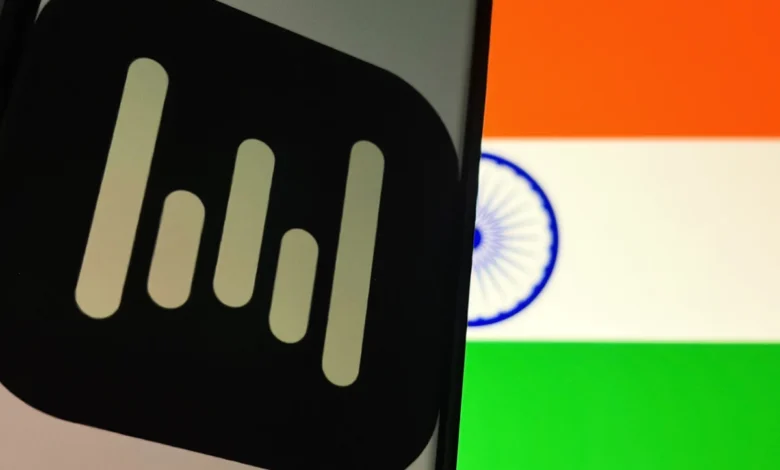
The digital landscape in India is undergoing a profound transformation as artificial intelligence begins to interface with the country’s unique linguistic habits. India’s internet users, who have long favored voice notes, voice search, and multilingual messaging over traditional text input, are now the primary target for a new generation of generative AI startups. Leading this charge is Wispr Flow, a Bay Area-headquartered startup specializing in AI-powered voice input software. The company has identified India as its fastest-growing market, prompting an aggressive expansion strategy designed to navigate the country’s linguistic complexity and uneven monetization patterns. By prioritizing "Hinglish"—a hybrid of Hindi and English—and implementing a radical pricing model, Wispr Flow is betting that India will become the global epicenter for voice-based computing.
The transition from simple voice messaging to sophisticated AI dictation represents a significant leap in how users interact with technology. While previous waves of voice technology, such as Amazon’s Alexa or WhatsApp’s ubiquitous voice notes, focused primarily on convenience and hands-free operation, Wispr Flow aims to turn voice into a comprehensive computing layer. This shift is particularly relevant in India, where the diversity of accents and the frequent switching between languages often render standard Western-centric AI models ineffective.
The Strategic Importance of the Indian Market
India has emerged as Wispr Flow’s second-largest market globally, trailing only the United States in terms of both user base and revenue. This growth has been catalyzed by a deliberate "India-first" product roadmap. According to Tanay Kothari, co-founder and CEO of Wispr Flow, the startup saw its month-over-month growth in India jump from 60% to 100% following a targeted regional launch campaign. This surge underscores a latent demand for tools that can accurately interpret the nuances of Indian speech.
Initially, adoption in India was concentrated among white-collar professionals, including software engineers, project managers, and executives who utilized the software to streamline documentation and email correspondence. However, recent data suggests a broadening demographic. Wispr Flow is increasingly being used by students for academic purposes and by older users who find voice dictation more intuitive than typing on small mobile keyboards. This "intergenerational onboarding," where younger family members introduce the tool to elders, is a hallmark of technology adoption in the South Asian nation.
To support this expansion, Wispr Flow has moved beyond its origins as a desktop-centric tool for Mac and Windows. Recognizing that India is a mobile-first economy, the company launched on Android—the country’s dominant mobile operating system—after a 2025 release on iOS. Interestingly, while the U.S. market remains heavily skewed toward desktop usage (80% desktop vs. 20% mobile), the usage split in India is a balanced 50:50, reflecting the versatile ways Indian professionals and consumers integrate AI into their daily workflows.
Overcoming the Linguistic "Stress Test"
Industry analysts often describe India as the "ultimate stress test" for voice AI. Neil Shah, vice president of research at Counterpoint Research, notes that linguistic diversity, varying accents, and contextual friction remain the primary hurdles for global AI firms. Unlike the relatively uniform English spoken in North America, Indian English is influenced by dozens of regional mother tongues, and the colloquial use of "Hinglish" presents a significant challenge for natural language processing (NLP) models.
Wispr Flow has addressed this by employing two full-time linguistics PhDs to refine its multilingual voice models. The startup’s Hinglish model, which began beta testing earlier this year, allows users to switch seamlessly between Hindi and English in a single sentence without the AI losing context or accuracy. This capability is critical for personal communication on platforms like WhatsApp and social media, where code-switching is the norm rather than the exception.
The company’s roadmap for the next 12 months includes expanding support to other major Indian languages, such as Tamil, Telugu, Bengali, and Marathi. By building a robust multilingual framework, Wispr Flow aims to reduce the "friction of expression," allowing users to dictate thoughts as they naturally occur, regardless of the language or dialect used.
Chronology of Expansion and Market Entry
The trajectory of Wispr Flow’s entry into the Indian market follows a structured timeline of technical milestones and strategic hires:
- Late 2024: Wispr Flow establishes a presence on Mac and Windows, gaining initial traction among global remote workers and developers.
- Early 2025: The company launches on iOS, targeting the premium segment of the Indian smartphone market.
- Mid-2025: Beta testing for the Hinglish voice model begins, specifically optimized for Indian accents and colloquialisms.
- October 2025 – April 2026: Sensor Tower data indicates a massive scaling phase, with the app surpassing 2.5 million downloads globally. India accounts for 14% of these installs.
- February 2026: Wispr Flow officially launches its Android application, unlocking access to the vast majority of Indian smartphone users.
- December 2026 (Projected/Current Phase): The company introduces India-specific pricing and appoints Nimisha Mehta to lead local operations, signaling a shift from a remote product to a localized business entity.
The appointment of Nimisha Mehta as the head of India operations is a pivotal move. The startup plans to grow its local team to approximately 30 employees over the coming year. This team will focus on consumer growth, strategic partnerships with Indian enterprises, and localized engineering support to ensure the product remains responsive to regional needs.
The Economics of Localized Pricing
One of the most significant challenges for Silicon Valley startups entering India is the "monetization gap." While India provides massive user volume, the average revenue per user (ARPU) is typically much lower than in Western markets. Sensor Tower data reveals that while India accounted for 14% of Wispr Flow’s downloads, it contributed only 2% of in-app purchase revenue during the same period.
To bridge this gap, Wispr Flow has implemented a hyper-local pricing strategy. In December, the startup introduced a subscription tier for Indian users at ₹320 (approximately $3.40) per month for annual plans. This is a steep discount compared to the standard global pricing of $12 per month. However, CEO Tanay Kothari’s ambitions go even further. He has expressed a desire to eventually lower costs to as little as ₹10–₹20 (10–20 cents) per month.
This "sachet-style" pricing—a term borrowed from the Indian FMCG sector where products are sold in small, affordable packets—is designed to make Wispr Flow accessible to the "next billion" users. By lowering the barrier to entry, the company hopes to transition from a niche productivity tool for elite professionals to an essential utility for every Indian household.
Competitive Landscape and Industry Implications
Wispr Flow is not operating in a vacuum. The Indian voice AI sector is becoming increasingly crowded with both global giants and well-funded local players. ElevenLabs, a leader in AI audio research, has also identified India as a top growth market, noting that Hindi has become one of its most used languages globally.
On the domestic front, startups like Gnani.ai, Smallest AI, and Bolna are leveraging their deep understanding of local contexts to build enterprise-grade voice solutions. These companies are attracting significant venture capital as Indian enterprises—ranging from banks to e-commerce platforms—seek to automate customer service and internal documentation using voice AI.
The broader implication of Wispr Flow’s success is the validation of voice as the primary interface for the future of the internet in emerging markets. In a country where literacy rates vary and typing in Indic scripts can be cumbersome, voice AI offers a more democratic form of digital access. If Wispr Flow can maintain its 70% user retention rate while scaling its linguistic capabilities, it could set the blueprint for how generative AI companies scale in non-English speaking markets.
Future Outlook
As Wispr Flow continues its expansion, the focus will likely shift toward deeper integration with the Indian digital ecosystem. This includes potential partnerships with local smartphone manufacturers to pre-install the software, as well as integrations with the "India Stack"—the country’s digital public infrastructure.
The startup’s commitment to offline marketing campaigns in tech hubs like Bengaluru suggests a move toward building a recognizable consumer brand. By combining high-end linguistic research with a pragmatic approach to the Indian economy, Wispr Flow is positioning itself not just as a software provider, but as a fundamental layer of the Indian digital experience.
The ultimate goal, as stated by Kothari, is to ensure that every person in the country, regardless of their socio-economic status or primary language, can use voice AI to interact with the world. While the road to universal adoption is fraught with technical and economic hurdles, Wispr Flow’s early momentum suggests that the voice revolution in India is well underway.