Designing Against the Gallery: A Two-Year Journey to a Layered Portfolio Experience Demo

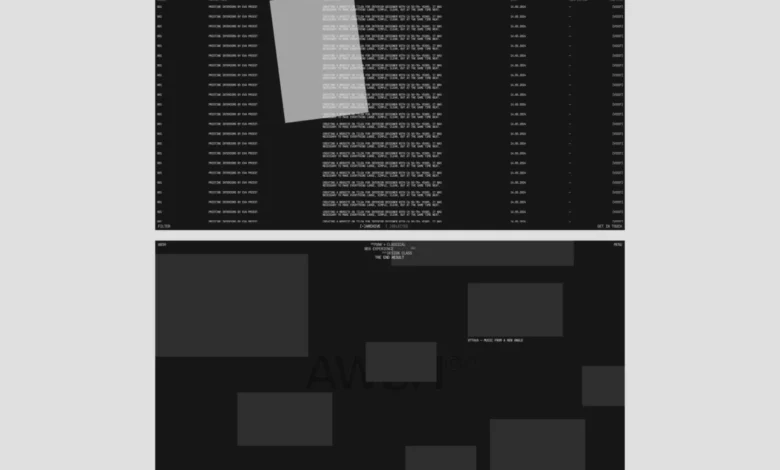
The digital design landscape is currently undergoing a period of intense introspection, as creative professionals seek to distinguish themselves in an increasingly saturated market. For designer Artem Shcherban, this challenge manifested as a two-year odyssey to redefine the traditional online portfolio. Shcherban’s project, which officially culminated in a highly sophisticated "layered" digital experience, serves as a significant case study in the rejection of standardized user interface (UI) tropes. By moving away from the ubiquitous "gallery" format—where projects are often reduced to a grid of static thumbnails—Shcherban has introduced a system that prioritizes depth, narrative, and cognitive focus.

The Problem of the Standardized Gallery
In the modern professional design community, the portfolio serves as both a resume and a proof of concept. However, a common critique of the standard gallery layout is that it creates a "scattered attention" effect. When a user is presented with a dozen high-contrast images simultaneously, the individual merit of each project is often diluted. Shcherban identified this as the primary hurdle in his creative process. He argued that the traditional format leads to a loss of project identity, where the viewer’s eye wanders without engaging deeply with the specific problem-solving and craft behind the work.
To address this, Shcherban spent twenty-four months experimenting with alternative navigation models. The project was not merely an exercise in self-promotion but a psychological and technical challenge to push the boundaries of what a personal brand can communicate. The resulting platform is a testament to iterative design, having undergone six complete conceptual overhauls before reaching its final state.

A Chronology of Iteration: From 3D Experiments to Layered Modals
The development of the portfolio followed a non-linear path, marked by radical pivots and technical reassessments. Shcherban’s initial experiments were centered on extreme user experiences, including a list-based system designed to be intentionally "inconvenient" to browse, as well as a complex 3D gallery environment.
The 3D gallery concept was ultimately abandoned due to two critical factors: technical overhead and scalability. Developing a performant 3D environment that remains accessible across various devices is a significant undertaking, and Shcherban noted that such a system would complicate the periodic updates required as new projects are completed. This realization led to a shift toward a more functional, yet still unconventional, list-based system.

The "turning point" in the project occurred when Shcherban began investigating the concept of "layering." Inspired by modal windows and the way physical objects are stacked, he sought a way to present content without the "mixing" of information and imagery that characterizes classic web layouts. This led to the development of a 2D depth system where information panels act as layers over the visual content, allowing the user to process visual and semantic information in parallel without one overwhelming the other.
Technical Architecture and Stack
The implementation of Shcherban’s vision required a robust technical foundation capable of handling complex animations while maintaining high performance. The project was developed in collaboration with Shcherban’s brother, focusing on a modern web stack that balances ease of content management with high-end frontend capabilities.

The site was built using Webflow, a professional web design and development platform that allows for rapid prototyping and deployment. However, to achieve the specific "wow" factors and unique interactions Shcherban envisioned, the team integrated GSAP (GreenSock Animation Platform) and custom JavaScript. GSAP is widely regarded as the industry standard for high-performance web animations, providing the precision needed for the site’s signature transitions and hover effects.
A key technical highlight is the use of SVG (Scalable Vector Graphics) masks. These masks are utilized to present "selected works" with a distinct visual flair, creating a sense of depth and movement that distinguishes top-tier projects from the general archive. The development team also prioritized responsiveness, ensuring that the intricate layering and micro-animations translate seamlessly from large desktop monitors to mobile devices.

Detailed Breakdown of the User Experience
The final version of the portfolio is structured as a "hub," moving away from the traditional multi-page scroll. Each section of the site is designed to serve a specific strategic purpose:
The Homepage as a Hub
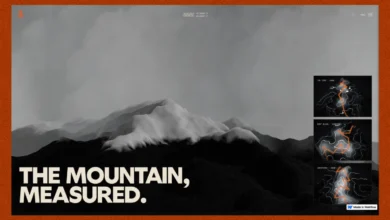
The entry point of the site is a minimalist screen featuring a single video and a navigation menu. Shcherban consciously rejected the "long-scroll" homepage, opting instead for a "two-click" navigation system. This puts the agency back in the hands of the user, requiring them to make a conscious choice about what content to explore. The homepage also features a carousel for context and a contact modal that allows for immediate communication.

The Dual-System Gallery
The project gallery utilizes two distinct mechanisms to categorize work. The standard archive is presented as a clear, intuitive list with pop-up cards. This allows users to preview multiple images and project details without fully committing to a new page. For "selected projects," the site employs SVG masks to create a more immersive, high-impact presentation. This dual approach allows for both efficient browsing and high-concept storytelling.
The Information Layering
Information about each project is contained within dropdown menus that follow a consistent algorithm. On mobile devices, this is handled via a persistent button at the bottom of the screen, ensuring that the technical details of a project are always accessible but never obstructive. This "layered" approach ensures that the visual impact of the design remains the focal point.

The Professional Utility: CV and Blog
Recognizing the practical needs of HR professionals and potential clients, Shcherban included a streamlined CV section. This area is designed for maximum legibility, centering all text to prevent eye fatigue and providing a one-click download for a physical document. The blog section follows a similar logic, utilizing a split-screen layout with navigation on the left and content on the right, supplemented by a table of contents for rapid scanning.
Branding Synergy and Physical Integration
A unique aspect of the project is the bridge between the digital and physical worlds. Shcherban’s branding strategy incorporates a minimalist yet bold aesthetic that is applied to both the website and a range of physical merchandise, including caps, candles, and lighters.

The branding features two logo formats: a simplified version for digital focal points and a full-scale version for physical media. By utilizing four distinct fonts and a high-contrast color palette, Shcherban has created a brand identity that reflects his multifaceted approach to design. This synergy suggests that a portfolio is not just a website, but a comprehensive ecosystem that defines a professional’s creative philosophy.
Analysis of Broader Industry Impact
Shcherban’s two-year journey highlights a growing trend among elite designers to move toward "experiential" portfolios. As standard UI frameworks make it easier for non-designers to create clean, functional websites, professionals are forced to innovate through custom interactions and unique narrative structures to prove their value.

The project also underscores the psychological toll of self-branding. Shcherban’s reflections on the "psychological barriers" of the project resonate with many in the creative industry. The pressure to create something "perfect" often leads to paralysis; Shcherban’s success in launching the sixth iteration of his site serves as a reminder that a portfolio is a living document that must evolve alongside the creator.
Industry analysts suggest that the "layered" approach championed by Shcherban may become more prevalent as users become increasingly fatigued by traditional grid layouts. By treating the browser window as a space with depth rather than just a flat surface, designers can create more engaging, memorable experiences that stand out in a competitive job market.

Conclusion and Reflections
The completion of this two-year project represents more than just a new website for Artem Shcherban; it is a manifestation of a design philosophy that values depth over breadth and individual narrative over standardized presentation. While Shcherban admits the portfolio is not "perfect" and will continue to adapt, it achieves its primary goal: proving that it is possible to design against the gallery and create a layered experience that captures the complexity of modern creative work.
The project stands as an inspiration for other professionals grappling with the "portfolio paradox." It demonstrates that by embracing technical challenges—such as GSAP integration and SVG masking—and by being willing to iterate through multiple failures, a designer can create a digital presence that is not just a gallery of past work, but a significant project in its own right. As the digital space continues to evolve, the lessons learned from Shcherban’s journey will likely inform the next generation of immersive, user-centric portfolio design.