The Push Toward Universal Interoperability: Baseline Status
One of the most significant themes of April 2026 is the advancement of "Baseline" features. The concept of Baseline, a metric established by the WebDX Community Group, serves as a clear indicator for developers regarding which features are safe to use across all major browser engines—Chromium, Gecko, and WebKit. When a feature reaches "Baseline Newly Available" status, it implies that the feature is supported by the most recent stable versions of all major browsers.
In April, the contrast-color() CSS function and the Math.sumPrecise JavaScript method officially achieved this status. This achievement reflects a coordinated effort by Google, Mozilla, and Apple to reduce the "fragmentation tax" that has historically plagued web development. By ensuring that these tools work identically across different platforms, the industry is moving toward a future where "write once, run anywhere" is a practical reality rather than a theoretical goal.
Enhancing Web Accessibility Through Native Functions
Accessibility has transitioned from an optional enhancement to a core requirement for modern web applications, driven both by ethical considerations and increasingly stringent international regulations like the European Accessibility Act and the Americans with Disabilities Act (ADA). The releases in April provide developers with more robust tools to meet these standards with less friction.
The Emergence of the contrast-color() Function
With Chrome 147 shipping the contrast-color() function, this utility has now achieved cross-browser support. This CSS function addresses a common design challenge: ensuring that text remains legible regardless of the background color it sits upon. Traditionally, developers had to manually calculate contrast ratios or use complex Sass functions to determine if text should be black or white based on a dynamic background.
The contrast-color() function automates this by taking a specified color and returning the color with the highest contrast (typically black or white). This is particularly vital for user-generated content or applications with dynamic theming, where background colors can change based on user preference or system settings. By moving this logic into the CSS engine, browsers can ensure that accessibility is maintained at the rendering level, reducing the likelihood of human error in color selection.
Revolutionizing Screen Reader Communication with ariaNotify()
Firefox 150 introduced support for the ariaNotify() method on the Document and Element interfaces. This is a significant departure from the traditional use of ARIA live regions. For years, developers relied on aria-live attributes to communicate changes in content to screen reader users. However, live regions are often criticized for being "brittle"—they require a physical update to the DOM to trigger an announcement, and their behavior can be inconsistent across different screen reader and browser combinations.
The ariaNotify() method allows developers to queue a specific string of text to be announced by assistive technology without needing to manipulate the DOM. This provides a more ergonomic and reliable way to handle notifications, such as "File saved" or "Network disconnected," that do not necessarily require a visual change in the interface. Industry experts suggest that this method will eventually become the preferred standard for non-persistent notifications, significantly improving the experience for visually impaired users.
Advanced Visual and Layout Capabilities
The April releases also pushed the boundaries of what is possible with native CSS and SVG, reducing the need for external graphical assets or complex workarounds.
The Introduction of CSS border-shape
Chrome 147’s introduction of the border-shape property represents a major shift in how developers think about container boundaries. For decades, the web has been a world of rectangles. While border-radius allowed for rounded corners, creating non-rectangular shapes often required complex clip-path applications or background images.
The border-shape property allows for the creation of borders in shapes like polygons and circles directly on the element. This opens new doors for creative layout design, allowing for more organic, non-grid-aligned interfaces. This feature is expected to be particularly popular in high-end marketing sites and creative portfolios where unique visual identities are paramount.
Scoped View Transitions for Seamless UX
Chrome 147 also expanded the View Transition API by exposing element.startViewTransition(). Previously, view transitions were largely global, affecting the entire document during a navigation or state change. By allowing transitions to be scoped to specific elements, developers can now run multiple, concurrent transitions in different parts of the UI without them interfering with one another. This allows for more granular control over "app-like" animations, such as a list item expanding while a separate sidebar collapses, all while maintaining high performance by leveraging the browser’s internal animation pipeline.

SVG TextPath Enhancements
The addition of the path attribute to the SVG <textPath> element in Chrome 147 simplifies the process of rendering text along complex curves. Historically, developers had to reference an external or separate <path> element via an ID. The ability to define the geometry inline makes SVG code more portable and easier to generate dynamically via JavaScript, streamlining the workflow for data visualization and custom typography.
Performance Optimization and Resource Loading
Performance remains a critical metric for web success, directly impacting user retention and search engine rankings. The April updates introduced several features designed to optimize how resources are loaded and rendered.
Automated Sizes for Lazy-Loaded Images
Firefox 150’s support for the auto keyword in the sizes attribute of <img> elements is a major win for responsive design. When using the srcset attribute, developers were previously required to provide a sizes hint to tell the browser how large the image would be at various breakpoints. This was often a manual and error-prone process.
With the auto keyword, the browser waits until the layout is calculated to determine the actual size of the image on the screen and then selects the most appropriate source from the srcset. When combined with the loading="lazy" attribute, this ensures that the user only downloads the exact number of pixels needed for their specific device and layout, saving bandwidth and improving Largest Contentful Paint (LCP) scores.
Modulepreload for JSON and Styles
Chrome 147 added support for JSON and style module types within the <link rel="modulepreload"> destination. As web applications move toward a more modular architecture, preloading these dependencies becomes essential. By preloading JSON data and stylesheets as modules, developers can eliminate the "waterfall" effect where the browser discovers these dependencies late in the loading process. This ensures that data and styles are ready as soon as the JavaScript modules that depend on them are executed, leading to a snappier, more responsive initial load.
Mathematical Precision in JavaScript
JavaScript has long faced criticism for its handling of floating-point arithmetic, where simple operations like 0.1 + 0.2 do not always equal 0.3 due to the way numbers are stored in memory. While this is a standard behavior of IEEE 754 floating-point numbers, it can lead to significant issues in financial or scientific applications.
Chrome 147’s implementation of Math.sumPrecise addresses this by providing a way to calculate the sum of an iterable of numbers with higher precision. This method is part of a broader TC39 proposal aimed at improving the mathematical capabilities of the language. By reaching Baseline status, this method provides a standardized way for developers to perform accurate summations without needing to import large library dependencies like BigNumber.js for basic precision tasks.
Beta Insights: A Glimpse into the Summer Cycle
The beta releases of Chrome 148, Firefox 151, and Safari 26.5 provide a roadmap for the features that will define the web platform in the coming months.
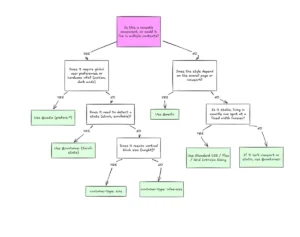
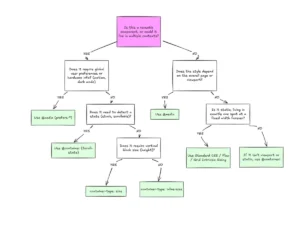
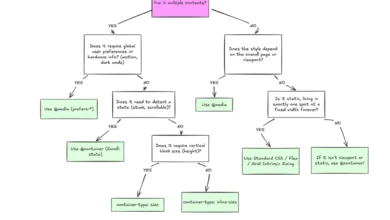
- Container Queries: Chrome 148 and Firefox 151 are both iterating on container queries. Chrome is introducing "name-only" container queries, while Firefox is testing style queries. These represent the next evolution of responsive design, moving away from viewport-based media queries to component-based logic where an element responds to the size or style of its parent container.
- The :open Pseudo-class: Safari 26.5 is testing the
:openpseudo-class, which will allow developers to easily style elements like<details>,<dialog>, and<select>specifically when they are in their open state. This provides a more declarative way to handle UI states that previously required toggling classes via JavaScript. - Feature Detection: Chrome 148 is experimenting with the
at-rule()function within@supports, which will allow developers to detect if a browser supports specific CSS at-rules (like@containeror@keyframes) before applying certain styles.
Broader Implications for the Industry
The rapid pace of development seen in April 2026 highlights a broader shift in the technology industry. The web platform is no longer just a document-sharing system; it is a highly sophisticated application runtime that rivals native operating systems in its capabilities.
For businesses, these updates mean that the "cost of quality" is decreasing. Native features like contrast-color() and auto sizes reduce the amount of custom code that must be written, tested, and maintained. For users, these changes translate to a web that is faster, more accessible, and more visually engaging.
The coordination between browser vendors through the Interop project and the Baseline initiative is perhaps the most significant structural change in recent years. By prioritizing a common set of features, vendors are ensuring that the web remains an open, accessible, and competitive platform. As we move into the middle of 2026, the focus will likely remain on refining these powerful new tools and ensuring that the gap between "experimental" and "standard" continues to shrink.