Rhumb Studio, a boutique creative agency operating between the cultural hubs of Bristol and Paris, has officially entered the digital design market with a focus on immersive, three-dimensional web experiences. Founded by creative professionals Jack and Maël, the studio represents a growing trend in the technology sector: the rise of the "micro-agency" that prioritizes technical craftsmanship and experimental interaction over traditional, high-volume corporate structures. Formally launched at the conclusion of 2024, Rhumb Studio is positioned at the intersection of high-end web development and spatial design, aiming to redefine how users navigate the digital landscape.
The emergence of Rhumb Studio comes at a pivotal moment for the web design industry. As standard 2D layouts become increasingly commodified through automated builders and AI-driven templates, a niche has opened for bespoke "spatial" websites that utilize WebGL, 3D modeling, and complex motion physics. By operating as a lean, two-person team with a direct line of communication between the founders, the studio aims to bypass the bureaucratic overhead common in larger agencies, offering clients a high-fidelity, high-touch alternative for digital storytelling.
The Evolution of a Partnership: A Chronology of Collaboration
The foundations of Rhumb Studio were laid not in a boardroom, but through the digital medium of podcasting and professional curiosity. The partnership began in the summer of 2023 when Jack, then the host of the industry-focused podcast Webflail, interviewed Maël about his work as a freelance developer. At the time, Jack’s professional background included significant stints at creative firms such as Crafted Studios and the marketing-focused agency Edgar Allan. Maël, conversely, brought a deep technical pedigree honed through years of work at Tambien Studio and various white-label agency collaborations.
What began as a single interview evolved into a consistent professional dialogue. Throughout late 2023 and early 2024, the two creators maintained a schedule of weekly calls, initially designed to troubleshoot individual freelance challenges and share insights into content creation and development. This period of informal mentorship allowed the duo to align their design philosophies before committing to a formal business structure.
By mid-2024, the collaboration shifted from peer support to active project development. Jack leveraged his background in marketing and content strategy to showcase Maël’s technical capabilities, building digital traction through social media and industry networks. This strategic visibility resulted in a steady stream of project inquiries, prompting the decision to formally incorporate as Rhumb Studio in the fourth quarter of 2024. The studio’s structure—one founder in Bristol and one in Paris—reflects the modern, decentralized nature of the creative economy, utilizing a one-hour time difference to maintain a continuous workflow.
Technical Methodology: Bridging the Gap Between Blender and the Browser
The primary differentiator for Rhumb Studio is its commitment to "spatial" web design—an approach that treats the browser window as a three-dimensional environment rather than a flat document. Achieving this level of immersion without compromising performance requires a sophisticated technical pipeline.
The studio’s workflow typically begins in Blender, the open-source 3D creation suite. Unlike traditional web design, which focuses on CSS and HTML layouts, Rhumb’s projects involve full-scale 3D modeling, texturing, and "baking." In the context of 3D web development, baking is the process of pre-calculating complex lighting, shadows, and ambient occlusion and "printing" them onto the textures of the 3D models. This technique is critical for performance; by shifting the heavy computational load of lighting from the user’s GPU (real-time) to the development phase (offline), the studio ensures that high-fidelity environments can run smoothly on standard mobile and desktop browsers.
Once the assets are optimized, they are integrated into the web environment using a dual-stack approach:
- High-Complexity Builds: For projects requiring deep customization and high-performance interactivity, the studio utilizes Next.js paired with React Three Fiber (R3F). This allows for the seamless integration of Three.js—the industry-standard JavaScript library for 3D graphics—into the React ecosystem. By utilizing a headless Content Management System (CMS), Rhumb enables clients to update text and media within a 3D space without needing to interact with the underlying code.
- Agile Webflow Integration: For smaller, faster-turnaround projects, the studio employs Webflow. To overcome the limitations of standard low-code platforms, they use a custom Vite-based template that allows for the injection of bespoke code and 3D shaders into the Webflow environment. This hybrid approach offers the speed of a visual builder with the power of custom-coded interactions.
Furthermore, the studio utilizes custom GLSL (OpenGL Shading Language) shaders to add dynamic effects such as normal mapping and specular highlights in real-time. These layers of technical polish are what transform a static 3D model into an "atmospheric" environment that reacts to user input and movement.

The Studio as a Living Portfolio: Analysis of rhumb.co
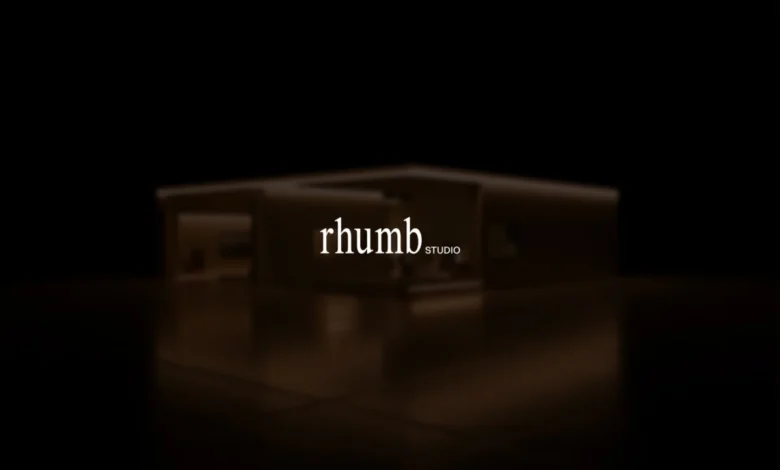
The studio’s own digital headquarters, rhumb.co, serves as the primary case study for their "spatial navigation" philosophy. Rather than a traditional menu-driven interface, the website presents a 3D architectural environment. Users approach a building, transition into a warmly lit interior, and navigate through rooms that represent different facets of the studio’s work and identity.
This design choice is a direct response to the "sameness" that has plagued web design in the era of mobile-first minimalism. By utilizing color, light, and depth, Rhumb Studio attempts to create a sense of "place" within the digital realm. This approach aligns with broader industry movements toward the "Spatial Web" (or Web 3.0 in a visual sense), where the user’s journey is guided by intuition and discovery rather than just efficiency.
Industry analysts note that this type of "experiential" web design is particularly effective for luxury brands, architecture firms, and high-tech startups—sectors where the emotional resonance of the brand is as important as the information being conveyed. By treating the website as a world to be inhabited, Rhumb Studio provides a form of digital architecture that distinguishes its clients from competitors using standard grid-based templates.
Economic Implications: The Rise of the Micro-Agency
The formation of Rhumb Studio highlights a significant shift in the creative professional landscape. The "Micro-Agency" model—typically consisting of two to five highly specialized individuals—is becoming a formidable competitor to traditional mid-sized agencies.
There are several factors driving this trend:
- Direct Access: Clients increasingly prefer working directly with the individuals executing the work. In a two-person setup like Rhumb, there is no "account manager" layer, which reduces the risk of miscommunication and ensures that the creative vision remains intact from conception to delivery.
- Lower Overhead: Without the need for a central physical office or a large administrative staff, micro-agencies can invest more heavily in research and development and high-end tools, often delivering superior technical results at a more competitive price point.
- Agility: Rhumb Studio’s commitment to staying small allows them to pivot quickly between technologies. As Jack and Maël noted in their launch communications, they are focused on "resisting the pull" of every passing trend to focus on craft and sustainable growth.
This model, however, is not without its challenges. Micro-agencies are heavily dependent on the health and availability of their founders. To mitigate this, Rhumb Studio emphasizes a "sustainable" work model, focusing on quality over quantity and selecting clients who value the experimental nature of their work.
Future Outlook and Industry Impact
As Rhumb Studio moves into its first full year of operation in 2025, the digital design industry will be watching to see how their 3D-first approach scales. The studio’s focus on "curiosity and craft" suggests a rejection of the high-growth, venture-backed agency model in favor of a more artisanal approach to software and web development.
The broader implications for the web are clear: the boundary between gaming, architectural visualization, and web design is blurring. As hardware acceleration becomes more consistent across devices, the demand for "atmospheric" web spaces like those created by Rhumb Studio is expected to rise. The studio’s successful launch serves as a signal that there is a viable market for high-concept, technically demanding web experiences that prioritize human interaction over algorithmic optimization.
For the founders, the journey is just beginning. By maintaining a footprint in both the UK and France, they tap into two distinct but complementary creative ecosystems—Bristol’s reputation for independent, rebellious creativity and Paris’s long history of high-end design and luxury branding. This cross-cultural synthesis, combined with a rigorous technical pipeline, positions Rhumb Studio as a significant new voice in the global creative community. Their goal remains focused: finding people who love what they do and building digital environments that both the studio and the client can be proud of. In an era of disposable digital content, Rhumb Studio is making a case for the web as a permanent, crafted, and deeply immersive space.