HubSpot CRM vs. ActiveCampaign: A Comprehensive Analysis for E-commerce Growth

For e-commerce businesses navigating the complex landscape of customer acquisition and retention, a robust Customer Relationship Management (CRM) system is not just a tool; it’s a strategic imperative. The right CRM can significantly amplify sales and streamline operations, while a poorly chosen one can become a drain on resources and productivity. This in-depth analysis delves into two leading contenders in the CRM space, HubSpot CRM and ActiveCampaign, examining their capabilities, particularly for growing e-commerce brands, and ultimately highlighting why HubSpot CRM often emerges as the superior choice for comprehensive, integrated growth.
The Genesis of CRM in E-commerce
The evolution of e-commerce has been intrinsically linked to the development of sophisticated customer management tools. Initially, businesses relied on spreadsheets and rudimentary contact lists to track customer interactions. However, as online sales channels proliferated and customer expectations for personalized experiences grew, the limitations of these basic methods became starkly apparent. The need for a centralized platform that could manage leads, track sales, automate marketing efforts, and provide actionable insights became paramount. This demand fueled the growth of CRM software, transforming it from a simple database into an intelligent engine for business development.
HubSpot CRM and ActiveCampaign represent two distinct philosophies in this evolving market. HubSpot, with its comprehensive ecosystem of integrated "hubs" for marketing, sales, service, and commerce, aims to provide an all-in-one solution. ActiveCampaign, conversely, excels in powerful marketing automation, particularly for email-driven strategies, and offers a robust CRM layer that can be integrated into existing workflows. Understanding their core strengths and weaknesses is crucial for any e-commerce business seeking to optimize its operations and drive sustainable growth.
A Comparative Overview: Key Features at a Glance
To provide a clear snapshot, a comparative table illustrates the core differences and similarities between HubSpot Marketing Hub and ActiveCampaign:
| Feature | HubSpot Marketing Hub | ActiveCampaign |
|---|---|---|
| Setup & Onboarding | Guided onboarding, free CRM available in minutes, unified workspace | Quick campaign setup, CRM integration required for full tracking |
| AI Tools | Breeze AI Agents (Content, Social, Prospecting), AI CPQ, Data Hub Intelligence | Predictive Sending, Content Optimization, Active Intelligence agents |
| Marketing Automation | Full inbound engine (email, ads, SEO, landing pages, workflows) | Strong email automation and branching; solid CRM layering |
| Omnichannel Messaging | Email, social, ads, SMS (via integration) | Native email + SMS + WhatsApp + transactional email |
| CRM & Pipeline Mgmt. | Native Smart CRM; pipelines capped by plan | Built-in CRM with unlimited pipelines on all plans |
| Reporting & Analytics | Multi-touch attribution, custom dashboards, Data Hub warehouse integration | Campaign-level analytics; excellent for email flows, limited cross-channel view |
| Integrations & Ecosystem | 2,000+ apps; deep two-way data sync (Shopify, Slack, Stripe etc.) | 1,000+ apps; good email integrations, heavier reliance on Zapier |
| Pricing & Cost | Free CRM, tiered hubs (users + features) | Contact-based pricing; cheaper start but scales rapidly |
| Onboarding & Support | HubSpot Academy, docs, partner network, optional paid migration | Free 1:1 migration (Pro +), good support for email teams |
| Deliverability & Localization | Strong deliverability; web content translation via DeepL | Excellent deliverability; native support for 75 languages |
| Best For | Growing e-commerce or B2B brands needing unified data + automation | Email-driven teams needing fast, powerful flows on a budget |
HubSpot vs. ActiveCampaign: Core Design Philosophies
At their core, HubSpot and ActiveCampaign approach CRM with distinct philosophies. HubSpot Marketing Hub is an integral part of HubSpot’s expansive Smart CRM ecosystem, designed for seamless integration across all customer-facing departments. The architecture prioritizes a unified data flow, where every interaction—from a form submission to a sales deal to a customer service ticket—is logged, analyzed, and used to trigger subsequent actions. This creates a holistic view of the customer journey, enabling sophisticated lead scoring, automated workflows, and proactive task assignments for sales representatives. The integration of Breeze AI further enhances this by not only tracking activity but also assisting in acting upon it, providing a clear, chronological narrative from initial ad click to final purchase.
ActiveCampaign, conversely, operates with a more focused, agile energy, catering particularly to marketing professionals deeply invested in automation. It allows for rapid campaign setup and the deployment of personalized automations within a short timeframe. Its strengths lie in precisely timed marketing sequences, such as post-purchase follow-ups, nurture campaigns, and time-sensitive offers. Features like Predictive Sending and Active Intelligence are designed to optimize engagement by leveraging data to determine the most opportune moments for communication. While powerful for email-centric strategies, its CRM capabilities, though present, often require more integration effort to achieve the same level of interconnectedness as HubSpot.
The E-commerce Journey: From Setup to Sophistication
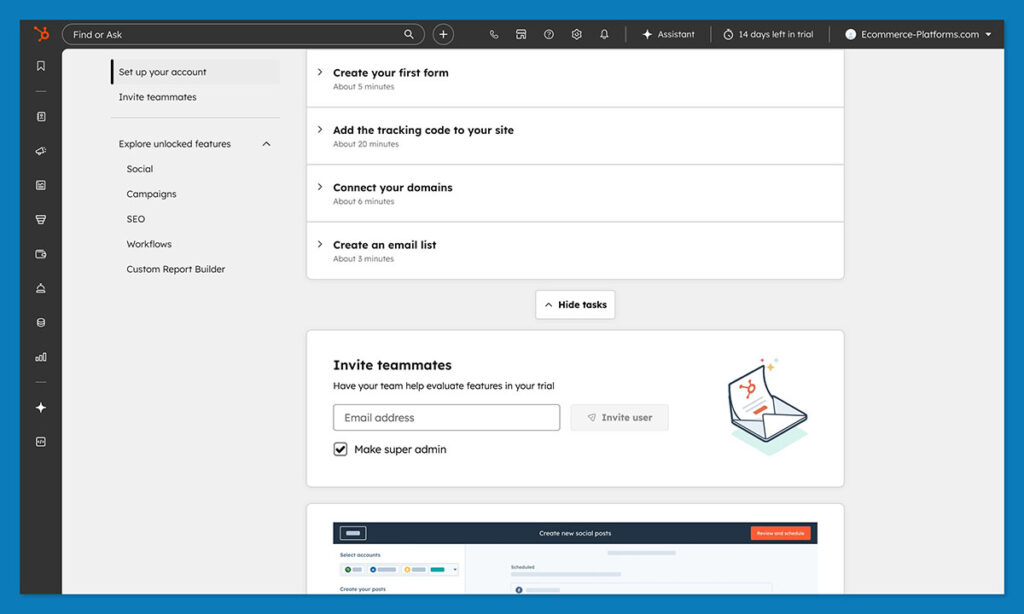
The initial implementation of a CRM can be a critical determinant of its long-term success. HubSpot excels in this regard by offering a guided onboarding process and a readily available free CRM that can be operational within minutes. The system is designed to intuitively pull in data from various sources, including e-commerce platforms, email services, and advertising channels. This seamless data aggregation allows businesses to quickly gain insights into lead origins, conversion pathways, and customer retention patterns. The practical onboarding steps, coupled with the ability to customize dashboards and sales pipelines, empower teams to tailor the platform to their specific needs. The shared data model across HubSpot’s Marketing, Sales, and Commerce hubs eliminates the need for cumbersome data exports and re-imports, ensuring a consistent and up-to-date view of customer information.
ActiveCampaign offers a more streamlined approach to campaign creation, enabling users to launch marketing initiatives rapidly. Its automation builder is intuitive, making it easy to construct complex email sequences. However, the platform’s integrated CRM capabilities may require more manual configuration and troubleshooting when integrating deep e-commerce data, such as purchase history. Mapping store fields and syncing historical purchase data can involve a degree of trial and error to ensure that triggers function as intended, potentially slowing down the comprehensive data integration process.
AI and Automation: Driving Efficiency and Personalization
Artificial intelligence is rapidly becoming a cornerstone of modern CRM, and both HubSpot and ActiveCampaign leverage it to enhance their offerings. HubSpot’s AI capabilities are woven into the fabric of its platform, appearing as helpful suggestions within content creation tools, aiding in subject line optimization, and refining paragraph structure. The Breeze AI suite, including agents for content, social media, and prospecting, operates directly within the user interface, enabling seamless adjustments to tone, translation, and message performance without leaving the workflow. The Social Agent, for instance, offers timely recommendations on post timing and wording to maximize audience engagement. This pervasive AI integration, supported by HubSpot’s Data Hub, facilitates the creation of sophisticated automations, such as automatically escalating lead scores based on website activity, assigning sales tasks, and triggering personalized follow-up emails. The goal is to empower users to focus on strategic planning rather than manual data manipulation.
ActiveCampaign’s AI, while perhaps more focused, is highly effective within its domain. Predictive Sending analyzes individual contact behavior to determine optimal email send times, maximizing open rates. Predictive Content dynamically tailors headlines and calls-to-action based on past performance. The platform’s automation workflows are exceptionally user-friendly, allowing for rapid development and execution of email-based marketing strategies. For businesses whose primary marketing channel is email, ActiveCampaign’s AI and automation features provide a powerful and efficient solution. However, for a broader view that encompasses pre- and post-email customer interactions, HubSpot’s integrated automation offers a more comprehensive perspective.
Marketing Automation and Campaign Building: A Tale of Two Approaches
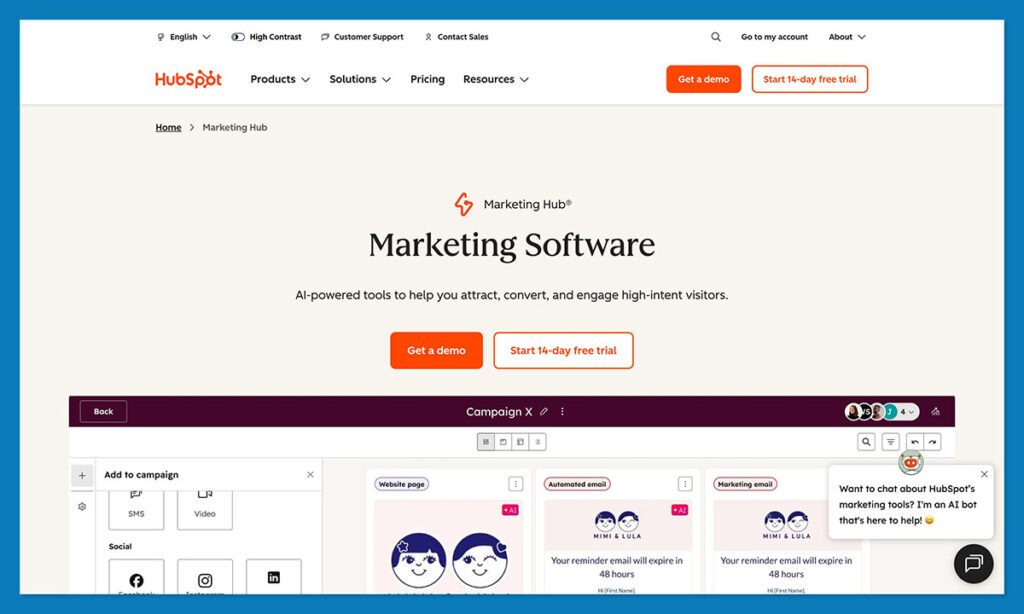
The process of building marketing campaigns reveals the distinct personalities of HubSpot and ActiveCampaign. HubSpot’s approach emphasizes the interconnectedness of all marketing efforts. A campaign can be designed to trigger a series of actions across multiple channels. For example, a customer viewing a product multiple times without purchasing could initiate an AI-generated email, a sales task, and even a targeted social media ad, all orchestrated within a single, visual workflow. The recent updates to Marketing Studio further simplify this by allowing users to drag and drop actions onto a visual map, creating a clear representation of customer journeys. Features like Living Segments ensure that audience lists dynamically update based on real-time customer behavior, eliminating manual segmentation. Moreover, the Content Hub allows for the creation of landing pages and blog posts directly within the platform, ensuring seamless tracking and integration without the need for external tools or manual code insertion.
ActiveCampaign, on the other hand, offers a leaner and more direct automation builder, particularly optimized for email marketing. Its visual interface allows for the quick construction of sequences where, for instance, users who open a specific campaign and click a product link receive a discount, while non-openers receive a gentler reminder. This channel-specific efficiency is a significant advantage for email-centric marketing. However, for activities beyond email, such as managing ad campaigns, building landing pages, or conducting SEO analysis, ActiveCampaign often necessitates the integration of additional tools. This can lead to a fragmented workflow, requiring users to toggle between multiple applications. HubSpot’s integrated approach, conversely, consolidates these activities into a single platform, streamlining operations and reducing the cognitive load associated with managing disparate tools.
Sales and CRM Integration: The Backbone of Growth
The true test of a CRM’s efficacy for e-commerce lies in its ability to integrate sales and customer data seamlessly. HubSpot’s Smart CRM serves as the central nervous system of its platform. A contact record provides a comprehensive view of the customer’s entire journey, from the initial ad click and website visits to email interactions, sales deals, and even payment transactions via Commerce Hub. This unified data stream updates in real-time, allowing sales teams to manage pipelines, assign tasks, and move deals through the sales cycle with complete visibility. The ability to send quotes and process payments directly within the CRM significantly streamlines the sales process, saving valuable time. While pipeline management may be tiered based on plan level, most e-commerce businesses find the available options sufficient for their needs.
ActiveCampaign’s CRM functionality, while present, can feel more like an add-on. It supports basic pipeline management, note-taking, and deal tracking. However, achieving a fully integrated view of e-commerce data, including detailed order information and comprehensive site behavior, often requires additional integrations and careful configuration. This can lead to a less cohesive experience compared to HubSpot’s native integration capabilities.
Reporting, Analytics, and Data Intelligence
The quality of reporting and analytics is a critical indicator of a CRM’s ability to provide actionable insights. HubSpot offers an effortless data experience, consolidating information from all customer touchpoints into unified dashboards. Users can readily identify which marketing campaigns are driving revenue, which web pages are converting effectively, and which emails are leading to actual purchases, not just clicks. Recent advancements in HubSpot’s Data Hub allow for automatic syncing with platforms like Shopify, Google Ads, and data warehouses, enabling sophisticated reporting features such as drag-and-drop dashboards, multi-touch attribution, and AI-powered trend analysis. This eliminates the need for manual data exports and provides a clear, digestible view of business performance.
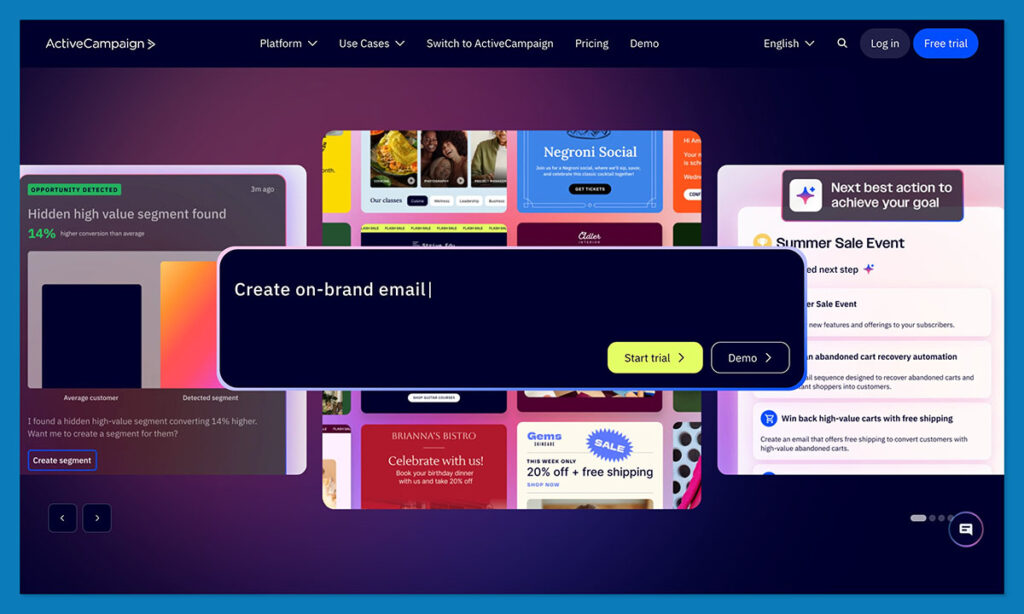
ActiveCampaign excels in providing clear, campaign-level analytics, offering detailed insights into email opens, clicks, and goal completions. This data is invaluable for optimizing email marketing performance. However, when it comes to connecting these email metrics to broader sales outcomes or repeat purchase behavior, ActiveCampaign’s reporting capabilities become less comprehensive. For businesses seeking a holistic view of the customer journey that extends beyond email engagement, HubSpot’s integrated reporting offers a more connected and insightful perspective.
Integrations and Ecosystem: Building a Connected Business
The ability of a CRM to integrate with other essential business tools is crucial for operational efficiency. Both HubSpot and ActiveCampaign offer extensive integration marketplaces. HubSpot boasts over 2,000 integrations, including deep, native connections with major platforms like Shopify, Slack, and Stripe. These integrations feel seamless, with data flowing naturally between systems. For instance, connecting QuickBooks automatically populates invoices within the CRM timeline, and integrating Meta Ads directly links campaign conversions. This cohesive ecosystem minimizes the need for manual data manipulation and ensures a smooth operational flow.
ActiveCampaign provides approximately 1,000 integrations, covering most common e-commerce and marketing tools. While essential integrations like Shopify and WooCommerce are readily available, achieving deeper data synchronization often necessitates the use of middleware like Zapier or requires more intricate field mapping. While not inherently problematic, this can translate to more setup time and ongoing maintenance. For businesses prioritizing a single, well-integrated system that minimizes external dependencies, HubSpot’s robust and intuitive ecosystem offers a distinct advantage.
Email and Messaging Performance: Reaching the Customer Effectively
Email remains a vital channel for e-commerce, but modern customer engagement extends across multiple platforms. ActiveCampaign has a strong reputation for deliverability and email performance. Its platform is optimized for sending campaigns quickly and reliably, with features that help maintain high open rates and minimize spam filter issues. For brands that rely heavily on rapid follow-ups and timely reminders, ActiveCampaign’s native support for SMS, WhatsApp, and transactional emails within its automation builder is a significant benefit. This allows for a unified approach to multichannel communication directly from the automation workflow.
HubSpot, while also offering excellent deliverability, takes a broader approach to messaging. Its strength lies in intelligent audience segmentation, leveraging rich CRM data to target customers based on behavior, purchase history, and service interactions rather than just engagement metrics. This often results in fewer, more impactful sends, leading to higher click-through rates and improved conversion. While SMS and WhatsApp integration may rely on third-party connections, HubSpot consolidates all customer conversations into a unified inbox, providing a single thread for every interaction across channels. This comprehensive approach ensures that customer communication is not siloed but rather a continuous, informed dialogue.
Pricing and Total Cost of Ownership: A Strategic Investment
Understanding the pricing models of CRM platforms is essential for long-term financial planning. HubSpot offers a genuinely free CRM, providing essential contact management, email tools, and reporting capabilities without any upfront cost. The paid "Hubs" (Marketing, Sales, Service) are tiered based on user count and feature sets. While the Starter tiers are affordably priced per user per month, the transition to Professional or Enterprise levels, which unlock advanced automation and AI features, can represent a significant investment. However, this cost often proves justifiable as the integrated nature of HubSpot allows businesses to consolidate multiple subscriptions into a single platform, leading to potential cost savings over time. The initial sticker price may appear higher, but the value derived from an all-in-one solution often offsets this.
ActiveCampaign employs a contact-based pricing model, making it attractive for businesses with smaller contact lists. Initial costs can be significantly lower, with plans starting around $39 per month for 2,500 contacts. However, as contact lists grow, the price can escalate rapidly, potentially becoming more expensive than HubSpot for larger databases. Furthermore, while ActiveCampaign provides core marketing automation and CRM functionality, businesses often find themselves needing to invest in additional tools for landing pages, advanced CRM features, or deeper analytics, which adds to the overall cost of ownership. In the long run, a single, integrated platform like HubSpot can often prove more cost-effective by reducing the need for multiple disparate subscriptions.
Conclusion: HubSpot CRM – The Integrated Advantage for E-commerce
While ActiveCampaign excels as a powerful and agile tool for email-centric marketing automation, HubSpot CRM emerges as the more comprehensive and strategic solution for growing e-commerce brands. ActiveCampaign’s strength lies in its speed and focus on email workflows, offering a budget-friendly entry point. However, its limitations become apparent when businesses require a truly integrated ecosystem that connects marketing, sales, and customer service seamlessly.
HubSpot’s strength lies in its unified platform approach. The Smart CRM serves as the central hub, intelligently linking all customer data and interactions across various departments. This creates a cohesive operational environment, where data flows effortlessly, automations are sophisticated and interconnected, and reporting provides a holistic view of the customer journey. The platform’s AI capabilities are broadly applied, supporting content creation, sales prospecting, and data analysis. While the initial investment in HubSpot’s paid hubs may seem higher, the long-term benefits of reduced complexity, increased efficiency, and a consolidated technology stack often make it the more cost-effective and strategically advantageous choice for e-commerce businesses aiming for sustainable growth and a streamlined operational future. The ability to manage all aspects of customer engagement within a single, intelligent system ultimately empowers e-commerce businesses to focus on what they do best: selling and delighting their customers.