The Evolving Ecommerce Product Page: Conversion, Ranking, and the Rise of AI-Driven Discovery

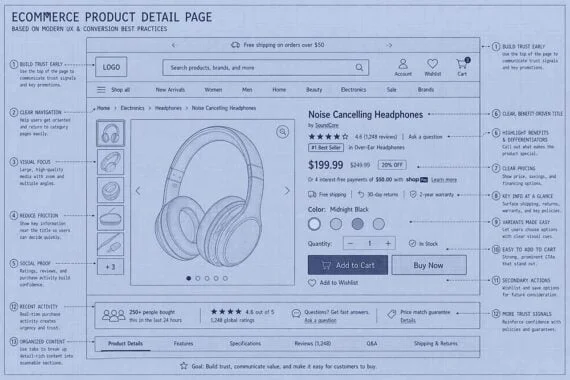
The fundamental purpose of an ecommerce product page has long been to facilitate conversion – to turn a browser into a buyer. For years, a close second priority was its ability to rank highly in traditional search engine results. However, the landscape of online product discovery is undergoing a seismic shift in 2026, driven by the rapid integration of artificial intelligence, which is fundamentally altering how consumers find and purchase everything from high-end luxury goods to everyday necessities. This evolution necessitates a reevaluation of product page strategy, demanding that these digital storefronts excel not only at conversion but also at being discoverable and understandable by a new generation of AI-powered tools.
The current year, 2026, marks a near-cliché turning point in how consumers engage with online retail. The advent of AI Overviews, AI Mode within search engines, sophisticated answer solutions, conversational AI chat interfaces, and the emerging class of autonomous shopping agents are collectively redefining the customer journey. These technologies are moving beyond simply presenting lists of links; they are actively synthesizing information, providing direct answers, and even initiating transactions on behalf of users. This paradigm shift means that the traditional search engine optimization (SEO) that once dominated ecommerce page design is no longer sufficient. A new trifecta of optimization is emerging: traditional SEO for ranking, Answer Engine Optimization (AEO) for extraction by AI, and Generative Engine Optimization (GEO) for AI systems to understand and utilize product data effectively.
The AI Imperative: Making Product Pages "AI Consumable"
In this new information ecosystem, product detail pages must transcend their traditional role as static repositories of product information and become dynamic, "AI consumable" entities. This means presenting information in a way that AI systems can readily parse, interpret, and leverage to answer user queries, generate summaries, and even recommend products. For AI systems to effectively model products as structured entities, the content on these pages needs to be clear, concise, and logically organized.
This imperative translates into a multi-faceted approach to product page content. The pages must be optimized for:
- Ranking: Traditional SEO principles still hold weight, ensuring visibility in established search engine results. This involves keyword optimization, high-quality content, and robust internal linking.
- Extraction: With the rise of AI-powered answer engines, product pages must be designed to be easily "extracted" from. This means presenting key information – such as product features, benefits, specifications, and pricing – in a clear, digestible format that AI can isolate and present as direct answers to user questions.
- Understanding: Generative AI systems need to comprehend products as distinct entities with specific attributes. This requires consistent and clear definitions of product names, variants, specifications, brand information, and relationships to other products.
Ultimately, a single product page must now effectively address all three of these critical optimization layers to ensure maximum visibility and efficacy in the evolving digital marketplace.
Content Analysis: A Data-Driven Look at Current Product Pages
To assess how current ecommerce product pages are performing in this new AI-centric environment, an in-depth analysis was conducted using AI to review a diverse range of product detail pages. This review encompassed major online marketplaces like Amazon, large retailers such as Walmart and Target, specialty retailers like L.L.Bean, a selection of direct-to-consumer (D2C) brands exhibiting varied content strategies (structured, hybrid, and aesthetic-focused), and numerous smaller ecommerce merchants operating on platforms like Shopify.
The primary focus of this AI-driven content review was not on structured data markup (like Schema.org), but on the intrinsic quality and organization of the content itself – how it addresses the crucial aspects of ranking, extraction, and AI understanding. Based on this analysis, a subjective scoring system was applied to different retail segments across these three key areas.
| Segment | Example Sources | Rankable | Extractable | Understandable as Entity |
|---|---|---|---|---|
| Marketplaces | Amazon | Very High | Medium | Very High |
| Large Retailers | Walmart, Target | High | Medium–High | High |
| Specialty Retail | L.L.Bean | Medium | High | Medium–High |
| D2C (Structured) | AG1, Beekman 1802 | Low–Medium | High | Medium |
| D2C (Hybrid) | Casper, Allbirds | Medium | Medium | Medium |
| D2C (Aesthetic) | Vuori, Glossier | Low | Low | Low–Medium |
| Small Merchants | Mixed Shopify stores | Low | Low–Medium | Low–Medium |
This data reveals distinct performance patterns across different types of online retailers, highlighting both strengths and significant areas for improvement as AI continues to reshape product discovery.
Rankable: The Enduring Power of Traditional Search
Traditional search engines remain a vital channel for driving traffic to ecommerce sites, and most product detail pages passed a basic search-optimization content audit. However, the analysis indicated that larger retailers and marketplaces generally demonstrated superior performance in this regard.
Marketplaces and enterprise retailers like Amazon, Walmart, and Target consistently leverage expansive product titles, detailed attribute listings, and strong internal linking strategies. These pages are designed to match a wide array of potential search queries, not just a single, narrow term. For instance, Amazon’s product pages often include:
- Comprehensive Titles: Incorporating keywords, brand names, product types, and key features.
- Detailed Bullet Points: Highlighting benefits and essential specifications.
- Rich Product Descriptions: Elaborating on features, use cases, and brand story.
- Customer Reviews: A significant source of user-generated content that adds depth and keywords.
- "Frequently Bought Together" Sections: Suggesting related products and enhancing internal linking.
- "Customers Who Viewed This Item Also Viewed" Sections: Further aiding navigation and discovery.
- Q&A Sections: Addressing common customer queries and adding more keyword-rich content.
In some instances, the sheer volume of composite product information on these pages, largely driven by extensive customer reviews, can reach upwards of 10,000 words, although the average hovers around 2,000 words. This wealth of content provides ample material for search engines to index and rank.

In contrast, many D2C brands often opt for cleaner, more minimalist product titles and language that aligns closely with their brand aesthetic. While this approach enhances readability and brand consistency, it can inadvertently limit organic search reach by reducing the keyword density and breadth of topics covered. Smaller merchants frequently exhibit similar content strategies to D2C brands, suggesting that they too could benefit from adopting the more expansive, information-rich approach seen on major platforms like Amazon to improve their organic visibility.
Extractable: Clarity is Key for AI Answers
The ability for product pages to be easily "extracted" by AI is becoming increasingly critical as AI-driven answer engines gain prominence. For a product page to be extractable, it must clearly and concisely explain what the product is, what it does, and who it is intended for. These answers need to be easily isolatable, ideally through discreetly labeled sections, clear feature lists, and well-structured question-and-answer formats.
The analysis revealed that many product pages underperform in this crucial area. The exceptions were, once again, the large retail marketplaces, which often provide extensive sections dedicated to answering potential customer questions and detailing product benefits. This suggests that while these platforms may not always be perfectly optimized for AI understanding at a deep entity level, they are generally structured to provide readily extractable information.
Even for smaller retailers and D2C brands, incorporating a dedicated FAQ section or ensuring that key product information is presented in clearly delineated feature blocks would significantly improve their extractability for AI systems. This simple organizational change can make a substantial difference in how effectively AI can pull relevant details to answer user queries.
Understandable: Building Product Entities for AI
Data, in its structured and understandable form, is increasingly determining visibility, especially with advanced AI systems. Search engines and AI models are moving towards treating products as distinct entities or objects, complete with attributes such as brand, category, price, detailed specifications, and relationships to other products.
While structured data markup (like Schema.org) plays a vital role in communicating these attributes to AI systems, the content on the product page itself is also a significant factor. For a product to be "understandable as an entity," its content must consistently and clearly define these attributes. This includes using normalized naming conventions for product variants (e.g., "Small," "Medium," "Large" rather than "S," "M," "L" in one place and "Small," "Medium," "Large" elsewhere), providing consistent specifications across all product variations, and clearly articulating brand and category information.
Product pages from large retailers, particularly marketplaces, consistently excel in this area. They tend to describe products with clear, normalized attributes, consistent variant handling, and a structured approach to specifications. This robust data presentation allows their products to be accurately represented in a wide range of AI-driven shopping results, comparison tools, and structured data listings. This makes them more valuable to AI systems that are building comprehensive product knowledge bases.
The Synergistic Power of Three Layers
The convergence of these three optimization layers – ranking, extraction, and understanding – is essential for driving traffic from both traditional search engines and the rapidly expanding generative AI channels.
The AI-driven site review identified clear patterns related to these layers and their individual goals. However, it also highlighted a significant gap in the market. Marketplaces, by virtue of their scale and data management practices, generally lead the pack in providing comprehensive and AI-friendly product information. This pronounced difference underscores a critical need for all merchants, regardless of size, to re-evaluate their product content strategies.
The implications of this shift are profound. In 2026, a successful ecommerce product page can no longer afford to be a one-dimensional tool focused solely on conversion or a single aspect of search. It must be a multi-dimensional asset, expertly crafted to satisfy the demands of traditional search algorithms, the direct answering capabilities of AI, and the structured data needs of generative AI models. This integrated approach is no longer a competitive advantage; it is a fundamental requirement for sustained visibility and sales in the increasingly AI-driven world of online commerce. Merchants who fail to adapt risk being overlooked by both human consumers and the intelligent systems that are becoming their primary gateways to discovery.
The path forward for ecommerce businesses involves a strategic content overhaul. This includes:
- Enhancing Titles and Descriptions: Incorporating a broader range of relevant keywords and descriptive phrases to improve ranking potential.
- Structuring Content for Clarity: Utilizing clear headings, bullet points, and Q&A formats to make information easily extractable by AI.
- Standardizing Product Attributes: Ensuring consistent naming conventions and detailed specifications for variants, brands, and categories to improve AI understanding.
- Leveraging User-Generated Content: Encouraging and strategically integrating customer reviews and Q&As to enrich content and add valuable keywords.
- Investing in Content Audits: Regularly assessing product page content for SEO, AEO, and GEO performance.
By embracing this holistic content strategy, businesses can ensure their product pages are not only effective conversion tools but also highly visible and understandable assets in the dynamic landscape of AI-powered ecommerce. The future of online retail belongs to those who can effectively communicate with both humans and machines.