Pressable Unveils AI-Powered Control Panel, Redefining Managed WordPress Hosting

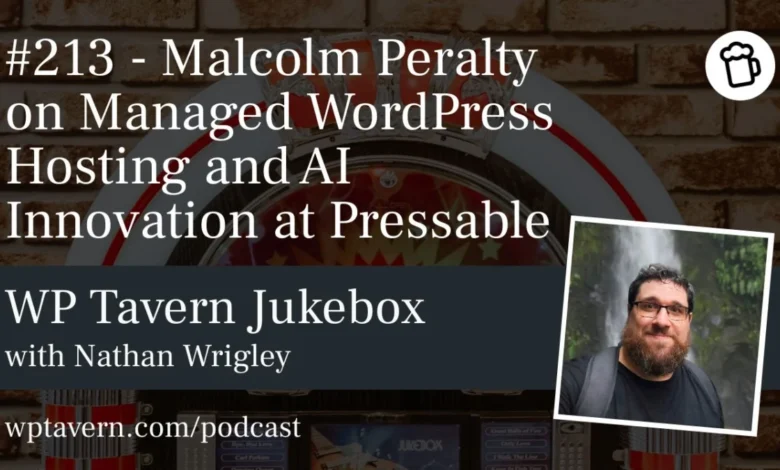
Pressable, a prominent managed WordPress hosting provider, is poised to revolutionize the hosting experience with the introduction of its AI-powered Control Panel (MCP). This innovation, detailed by Malcolm Peralty, a Technical Account Manager at Pressable, during a recent Jukebox Podcast interview with Nathan Wrigley, promises to allow users to deploy and manage WordPress sites using natural language commands. The move signifies a significant shift in how managed hosting services interact with clients, aiming to streamline complex operations and enhance performance in an increasingly AI-driven digital landscape.
Pressable’s Strategic Shift and Malcolm Peralty’s Role
Pressable stands as a specialized managed hosting company exclusively dedicated to WordPress, differentiating itself by leveraging its proprietary WP Cloud infrastructure, rather than relying on third-party cloud providers like AWS or Google Cloud. This strategic choice provides Pressable with granular control over its server environment, enabling tailored optimizations for WordPress. At the forefront of this innovation is Malcolm Peralty, whose two decades of immersion in the WordPress ecosystem, ranging from full-time blogging to project management and technical roles, uniquely positions him to navigate this evolving landscape.
Peralty’s journey is a testament to the dynamic nature of the web industry. Starting with WordPress version 0.72 before its 1.0 release, he witnessed the platform’s foundational growth. His career path led him through various tech roles, including a notable stint in the Drupal ecosystem, working with Acquia—often considered the enterprise counterpart to Automattic in the Drupal space. This experience, particularly as a Technical Account Manager at Acquia, provided him with invaluable insights into large-scale hosting environments and client strategy. He candidly admitted that the lure of higher compensation in the Drupal world initially drew him away, but Pressable’s competitive offer and commitment to innovation ultimately brought him back to his WordPress roots.
As a Technical Account Manager (TAM) at Pressable, Peralty’s role transcends traditional sales or support functions. Instead, TAMs act as strategic partners, guiding clients through long-term hosting strategies, performance optimization, and bridging the gap between customer needs and the underlying WP Cloud infrastructure. This includes proactively monitoring client sites, identifying bottlenecks, and suggesting optimizations—even advising clients to downgrade their plans if improved efficiency reduces their resource needs. This approach not only benefits clients by ensuring cost-effectiveness but also optimizes Pressable’s internal resources, allowing for greater resilience during traffic surges.
The Evolving Landscape of WordPress Performance
The discussion underscored the inherent complexities of achieving optimal performance for WordPress sites. While WordPress is fundamentally performant, the common practice of accumulating numerous plugins, often including heavy page builders like Elementor or Divi, or running resource-intensive applications such as WooCommerce (e-commerce) or Learning Management Systems (LMS), can significantly impact speed and efficiency. Peralty highlighted the constant challenge of educating clients about these trade-offs.
He noted that many competing hosts often mask performance issues with heavily configured caching solutions (e.g., Redis) or by deploying the fastest CPUs, which might give an impression of speed during single-user tests but fail under high load. Pressable, in contrast, prioritizes resilience and consistent performance at scale. Their unique worker model, allocating one worker per VCPU (Virtual Central Processing Unit), ensures dedicated processing power, akin to a multi-lane highway, rather than a single lane congested with multiple processes. This architectural choice is crucial for sites experiencing high transactional loads where consistent performance is paramount to avoid data loss or user frustration during peak events like product launches.
Peralty explained that sites with high cacheability, such as brochure or marketing sites with minimal user interaction, perform exceptionally well on Pressable without extensive handholding. However, for dynamic sites involving user accounts, shopping carts, or tracked learning modules, which frequently generate uncached requests, consultative engagement becomes essential. The goal is to optimize these complex setups, sometimes by identifying and replacing problematic plugins (like a Facebook for WooCommerce plugin that might break cache on every page load), to ensure they remain within expected resource utilization.
Pioneering Hosting Innovation: Beyond Current Capabilities
Looking to the future, Peralty outlined several bleeding-edge trends poised to reshape the hosting landscape. One intriguing development is web assembly, exemplified by projects like WordPress Playground, which allows WordPress to run directly in a browser without installation. This technology could fundamentally alter how developers and users interact with WordPress, enabling ephemeral, client-side installations for testing or quick prototyping.
Beyond this, advancements in caching technology, database technology, and replication technology are critical. WordPress’s reliance on a database necessitates robust solutions for high availability. Current database replication, while functional, often introduces latency between primary and secondary databases. Pressable aims for real-time streaming, minimizing data loss to mere seconds in the event of a primary database failure. This is particularly vital for high-transaction sites where even a few seconds of data loss can equate to hundreds of lost transactions and significant financial implications.
The concept of virtual clusters—multiple data centers operating as a single, local server—is another area of innovation. This would further enhance resilience and reduce the perceived latency of data synchronization across geographical locations, ensuring near-instantaneous failover and continuous service even during regional outages.
A significant challenge, and an area ripe for AI intervention, is improved auditing and logging. Current logging systems, while comprehensive, are often difficult for humans to parse effectively, especially when attempting to reconstruct a precise sequence of events (e.g., identifying who, when, and how a plugin was deleted). Peralty envisions AI transforming this, providing clear, actionable insights from vast log data, enabling quicker diagnostics and reversals. This would move beyond relying solely on backups and human interpretation, offering a more granular and efficient approach to incident response and security.
Introducing Pressable’s AI-Powered Control Panel (MCP)
The most immediate and transformative innovation discussed is Pressable’s upcoming AI-powered Control Panel (MCP). This initiative aims to integrate artificial intelligence directly into the hosting management experience, allowing users to interact with their sites using natural language commands. The rollout will be phased, but the ultimate vision is for the AI to perform any action a user could undertake manually within the control panel.
Peralty offered compelling examples: an agency developer could command the AI, "Spin up another sandbox site, push this code, update the database, pull from production, all the files, and let me know when this is complete." The MCP would then autonomously create a new WordPress installation with a unique domain, deploy the specified code, sync production files, and notify the user upon completion. Similarly, users managing multiple sites could ask, "Tell me all the websites that need a Gravity Forms plugin update," receive a list, and then issue a command to "update them for me please."
Crucially, Pressable is implementing stringent guardrails to manage the power of AI. This includes human-in-the-loop approvals for destructive actions and reliance on robust backup solutions (hourly database backups, daily file system backups). Furthermore, Pressable’s core WordPress installations are symlinked, preventing direct modification of core files, thus limiting the potential for catastrophic AI-induced damage. Users will also be encouraged to integrate their own AI tools (e.g., Claude, Ollama) and implement system prompts for additional safety layers, such as requiring confirmation before any destructive operations. The MCP essentially acts as an API for AI, translating natural language commands into actionable instructions for the hosting platform.
Implications for the WordPress Ecosystem and Client Relationships
The advent of AI in hosting presents both profound opportunities and significant challenges for the WordPress ecosystem and the traditional client-host relationship. The ability to rapidly generate proof-of-concept websites through natural language prompts, as described by Peralty (e.g., creating a staging site with a theme and content matching a client brief during a coffee shop meeting), will dramatically accelerate development timelines. This "five-minute website" paradigm contrasts sharply with the historical "five-minute install" that once defined WordPress’s ease of use.
This acceleration, however, could lead to a less standardized and more fragmented WordPress experience. AI could generate entirely new themes, plugins, or blocks on demand, moving beyond the existing marketplace of pre-built solutions. While offering unparalleled customization, this also raises questions about the performance, security, and long-term maintainability of AI-generated code. Peralty acknowledged that initial AI-generated solutions might not always be "super performant or super secure," necessitating further AI-driven maintenance and optimization. The notion that "AI is going to maintain and update all this AI code" suggests a future where human developers’ roles shift from direct code maintenance to overseeing and refining AI-driven processes.
The increasing automation and AI integration also raise questions about the human element in hosting support. While Pressable commits to an "human first, AI enhanced" approach, there’s an acknowledgment that AI will handle routine tasks, freeing human support for more complex issues, particularly for smaller clients who require more handholding. However, this could alter the perception of hosting providers, potentially diminishing client loyalty if interactions become primarily robotic.
Economically, the proliferation of AI bots, constantly crawling and interacting with websites (e.g., adding and removing products from carts millions of times, as experienced by Pressable), is driving up operational costs. These bots consume significant bandwidth and server resources, creating a dilemma for hosting providers: absorb these costs or pass them on to customers who may not directly benefit from or even desire AI interaction. This "hidden cost" of the AI era is a nascent but critical challenge for the entire hosting industry, potentially leading to a reevaluation of pricing models and the necessity for "Luddite toggles" to opt out of AI-driven traffic.
Ultimately, Pressable’s MCP initiative represents a bold step into a future where managed WordPress hosting is not just about server uptime and speed, but about intelligent, automated site management. While promising unprecedented efficiency and customization, it also ushers in a new era of technical, ethical, and economic considerations that the WordPress community and hosting industry will collectively need to address.