Sprout Social Embraces WCAG 2.1 AA Mandate with Unified Navigation, Championing Inclusive Digital Experiences

Effective April 24, 2026, the United States government will enforce a mandate requiring Web Content Accessibility Guidelines (WCAG) 2.1 Level AA compliance for digital platforms. This significant regulatory shift, announced with the aim of ensuring equitable access to information and services for individuals with disabilities, is being proactively embraced by Sprout Social, a leading provider of social media management software. The company views this impending deadline not merely as a compliance obligation, but as a powerful catalyst to deepen its long-standing commitment to inclusive design principles. Sprout Social’s mission is to ensure that every social media practitioner, irrespective of their physical or cognitive abilities, has equal and unfettered access to the comprehensive insights and powerful tools its platform offers.
The recent launch of Sprout Social’s unified navigation system marks a pivotal cornerstone in this transition, establishing the structural foundation and modernized technical framework necessary to support a truly accessible interface. This initiative underscores a broader industry trend where accessibility is shifting from a niche concern to a fundamental requirement, particularly for businesses operating within or serving regulated sectors.
Understanding WCAG 2.1 AA: The Gold Standard for Accessible Technology
WCAG 2.1 AA compliance represents the global benchmark for digital accessibility in the functionality of web platforms. Developed and maintained by the World Wide Web Consortium (W3C), these guidelines provide a comprehensive set of recommendations for making web content more accessible to people with disabilities. While Level A compliance addresses basic accessibility needs, Level AA strikes a crucial balance, ensuring a sophisticated level of functionality while upholding legal and ethical inclusivity in today’s interconnected digital landscape.
To achieve Level AA status, software must adhere to the POUR principles: Perceivable, Operable, Understandable, and Robust. This means that the platform must be designed so that users with a wide spectrum of disabilities—including visual, auditory, physical, and cognitive impairments—can perceive, operate, understand, and interact with the content and functionality. In practical terms, this translates to specific technical requirements, such as a minimum color contrast ratio of 4.5:1 to ensure text is legible, full keyboard accessibility with consistent and predictable navigation elements, and robust support for assistive technologies like screen readers.
The Imperative of Accessible Technology in Regulated Industries
For industries such as healthcare, finance, and government, software accessibility is not merely a best practice; it is a legal imperative. These sectors are subject to stringent mandates, including Section 508 of the Rehabilitation Act in North America and the European Accessibility Act (EAA) across the European Union. These regulations compel government agencies and organizations that receive federal funding to procure technology that is accessible to individuals with disabilities.
A key procedural element in the procurement process for these regulated entities often involves a Voluntary Product Accessibility Template (VPAT) during the Request for Proposal (RFP) stage. A VPAT, or its successor, the Accessibility Conformance Report (ACR), serves as a detailed document outlining how a software product meets specific accessibility standards. Without a comprehensive ACR demonstrating compliance with standards like WCAG 2.1 AA, regulated organizations are legally prohibited from purchasing software from vendors, as doing so would violate their own compliance obligations and expose them to potential legal challenges and financial penalties.
The implications of non-compliance extend beyond market access. Companies failing to meet these accessibility standards risk not only limiting their market reach but also facing significant legal liabilities, substantial financial penalties, and the loss of crucial government and enterprise contracts. While regulatory mandates drive adoption in certain sectors, the principles of accessible design offer universal benefits, fostering a more inclusive and user-friendly experience for all users, regardless of ability.
The Strategic Importance of Software Accessibility for Brands
Software accessibility transcends mere compliance; it is a fundamental pillar of brand equity and market reach in the digital age. Companies that prioritize accessibility signal a strong ethical commitment to social responsibility, cultivating trust and goodwill among consumers who increasingly value equity and inclusion. This, in turn, can foster greater customer loyalty.
Bill Foehring, Senior Staff Design Engineer at Sprout Social, articulates this sentiment: "Software accessibility matters because it creates an environment where everyone, regardless of device or ability, can not only use the product but have a great experience doing so, fostering a more inclusive experience for all."
Accessible software often translates into a cleaner user interface (UI) and a more intuitive user experience (UX) for every user. This leads to tangible business benefits, including higher user retention rates and lower bounce rates. In a digital-first economy that moves at the speed of social media, a brand that is inaccessible to even a portion of its potential audience is inherently at a competitive disadvantage.
Sprout Social’s Vision for Inclusive Design: The Unified Navigation Initiative
Beyond championing social media compliance, Sprout Social has consistently positioned itself as a forward-thinking accessibility partner. This commitment manifests in various ways, from empowering brands to create accessible content to enhancing platform accessibility.

Enhancing Content Accessibility
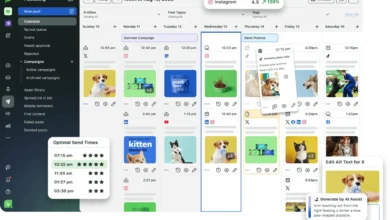
Sprout Social has integrated AI-powered tools to facilitate content accessibility. The "Generate Alt Text" tool within AI Assist enables users to add or edit alternative text for Instagram and Pinterest image posts directly within the Sprout platform. This includes using AI to generate accurate image descriptions, a critical feature for visually impaired users who rely on screen readers.
Similarly, the "Generate Subtitles by AI Assist" feature allows users to quickly create subtitles for videos, making them more accessible to individuals who are deaf or hard of hearing, as well as those watching with sound off. Furthermore, "Generate Translations by AI Assist" helps break down language barriers, enabling brands to connect with global audiences more effectively by translating posts, composing outbound content, and replying to incoming messages in multiple languages.
Sprout Social also supports the direct upload of SubRip Subtitle (SRT) files, ensuring videos are accessible to a broader audience. Moreover, the platform’s community resources on social media best practices advocate for the use of "CamelCase" in hashtags (e.g., #SocialMediaMarketing), a simple yet effective method that allows screen readers to distinguish individual words, preventing them from being read as a jumbled mess.
Advancing Platform Accessibility
Sprout Social’s approach to platform accessibility has been intentional and integrated. The company maintains a VPAT to document its compliance for government, education, and other regulated industries. Accessibility has been built directly into Sprout’s proprietary design system, with built-in checklists guiding design decisions from color contrast and responsive layouts to touch targets. This ensures that accessibility is considered from the earliest stages of development, making every new feature inclusive by default.
The introduction of unified navigation is a strategic evolution aimed at creating a cohesive, multi-product ecosystem that harmonizes cutting-edge innovation with universal usability. By streamlining Sprout’s various tools into a simplified navigation structure, the platform not only meets WCAG 2.1 AA standards but also enhances cross-device accessibility. This modernized framework provides a robust foundation for future AI integrations, such as Sprout’s agentic AI, Trellis, and its predictive media intelligence tool, NewsWhip by Sprout Social.
The updated left navigation is the most visible change, but it represents a company-wide effort to overhaul the platform’s underlying code for WCAG 2.1 AA compliance. This foundational transformation synchronized every team and feature, ensuring the application is more inclusive, stable, and future-ready.
Bill Foehring elaborates on the project’s significance: "This project delivered a cross-product component ecosystem that balances shared efficiency with sub-brand identity. It also established the foundation for future scalability, identifying exactly where we can make our framework more product-agnostic as we continue to expand into different parts of our business."
Delivering a Powerful User Experience for All
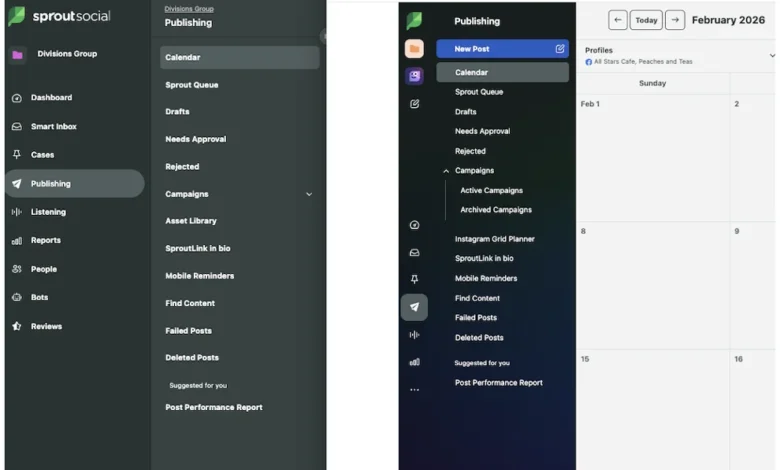
Sprout Social’s shift to a unified navigation aims to deliver a seamless user experience, streamlining the user journey and reducing cognitive load. By consolidating all tools—including Compose, Notifications, Team Conversations, and the Resource Center—into a single, cohesive left sidebar, the Sprout interface has been transformed into a unified command center.
Key Accessibility Features in Action
The latest accessibility improvements at Sprout Social feature a simplified layout, high-contrast themes, and intuitive focus states for keyboard-only users. This redesign goes beyond merely achieving WCAG 2.1 AA compliance; it is a significant technical upgrade ensuring the platform functions flawlessly on any screen size.
By modernizing the underlying code, Sprout has made the application faster to navigate via keyboard or screen reader, while simultaneously creating a flexible layout that automatically adjusts to the user’s workspace.
Mike Trumbell, Senior Engineering Manager at Sprout Social, highlights the broader impact: "The true value for our customers extends beyond the immediate improvements our new navigation provides, such as cohesive screen reader integration, intuitive placement, and seamless keyboard navigation. This framework represents a significant evolution; rather than just a repositioning of navigation elements, it introduces modernized breakpoints and fully responsive content blocks and headers."
Trumbell further notes, "Consequently, our content is more adaptable, providing users with a unified and cohesive application experience."
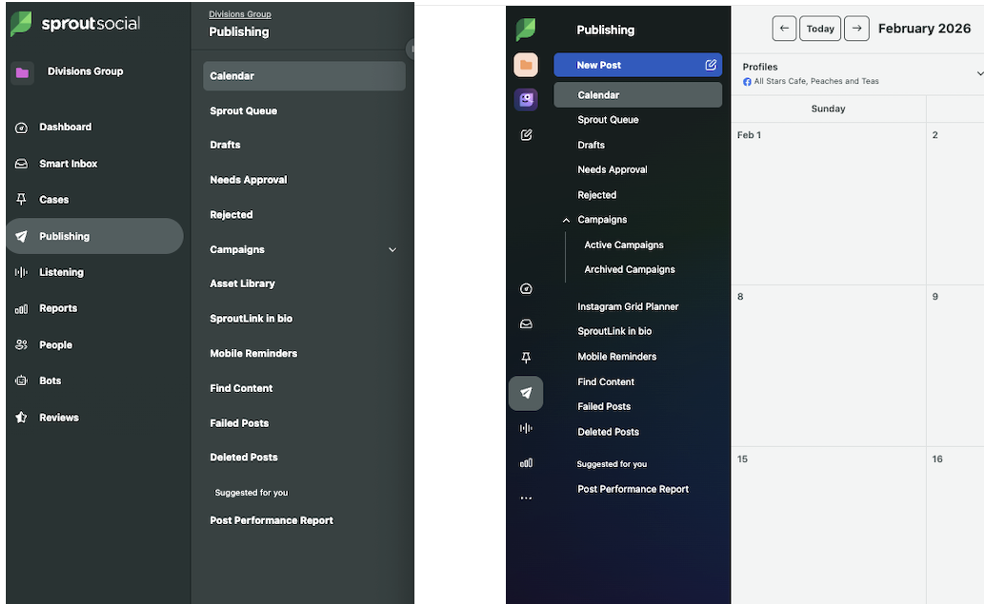
The company has provided visual comparisons of its dashboard design, illustrating the transition from its previous layout to the new, unified left navigation, showcasing a cleaner, more organized, and accessible interface.
The Future of Sprout Social Accessibility
Sprout Social’s commitment to accessibility extends beyond meeting current benchmarks. The company has integrated accessibility into its core development lifecycle, ensuring that all future innovations are inherently inclusive.
Savy Lacombe, Director of Product Design at Sprout Social, states, "We’re approaching it not only to meet the current accessibility standards but to set ourselves up so that we can bake accessibility into our design and development cycles to ensure that whatever we build now and into the future is always accessible for everyone who wants to use Sprout."
The Sprout engineering team is actively developing solutions to consistently track and address accessibility gaps as new features are introduced, ensuring the platform remains accessible and compliant with evolving needs.
A Social Suite for Everyone
Sprout Social is dedicated to building a platform that empowers every social media professional to succeed. The company believes that a user’s ability to thrive should never be limited by how they interact with technology. By prioritizing inclusive design, Sprout Social is actively removing barriers and fostering an environment where all practitioners can access the insights they need with dignity and ease.
This transformation represents an ongoing, evolving commitment to its users. As Sprout Social’s technology advances, its promise of universal accessibility will grow in parallel, ensuring a truly equitable experience for all.
Frequently Asked Questions About Accessible Technology
What is Sprout Social doing to improve platform accessibility?
Sprout Social has undergone a comprehensive, under-the-hood transformation to meet WCAG 2.1 Level AA standards. This ensures the platform is natively accessible to all practitioners in anticipation of the 2026 US government mandates. The centerpiece of this effort is a new unified navigation system that streamlines the interface into a single, responsive sidebar, reducing cognitive load and providing a consistent experience for keyboard and screen-reader users. This initiative signifies a long-term, evolving commitment to inclusive design, ensuring that as Sprout Social’s technology advances, it remains accessible to every social professional, regardless of their interaction methods.
Does Sprout Social support screen readers and keyboard navigation?
Yes. By modernizing its underlying code, Sprout Social has significantly enhanced the speed and ease of navigation via keyboard or screen reader. The platform now features a flexible layout that automatically adjusts to the user’s workspace, ensuring a more fluid and accessible experience for all users.
Why is the 2026 WCAG mandate important for social media software?
The US Department of Justice (DOJ) ruling, with an effective date of April 24, 2026, mandates that all state and local government entities, and the vendors they contract with, must conform to WCAG 2.1 Level AA standards. For social media software providers, this means accessibility is transitioning from a desirable feature to a fundamental legal prerequisite for procurement. Platforms that fail to meet these standards will be effectively barred from government contracts and the technology stacks of regulated agencies. This is because these organizations are now legally obligated to ensure equal access and cannot delegate their Americans with Disabilities Act (ADA) obligations to non-compliant third-party tools.
What is the difference between WCAG and ADA?
The Americans with Disabilities Act (ADA) is a broad federal civil rights law that prohibits discrimination based on disability and serves as the overarching legal mandate for equal access across all areas of public life in the United States. In contrast, the Web Content Accessibility Guidelines (WCAG) are a set of technical standards and success criteria developed by the W3C. Developers use WCAG to provide the specific, actionable guidance needed to ensure that software and web content actually meet the legal requirements of accessibility laws like the ADA. While the ADA establishes the legal obligation to be inclusive, WCAG provides the technical blueprint for building the digital tools that fulfill that obligation.
If a platform is WCAG 2.1 compliant, does it mean content created within it is automatically accessible?
No, not necessarily. Compliance with WCAG 2.1 applies to the platform’s interface and functionality itself. It ensures that the tool is built in an accessible manner. However, it does not automatically guarantee that all content created using that platform will be fully accessible. The accessibility of user-generated content depends on the content creators’ understanding and application of accessibility best practices, such as adding alt text to images, providing captions for videos, and structuring content logically. While platform accessibility provides the tools and environment for creating accessible content, user action is still required.