Artificial Intelligence Revolutionizes Drug Discovery: MIT Professor Connor Coley Leads the Charge

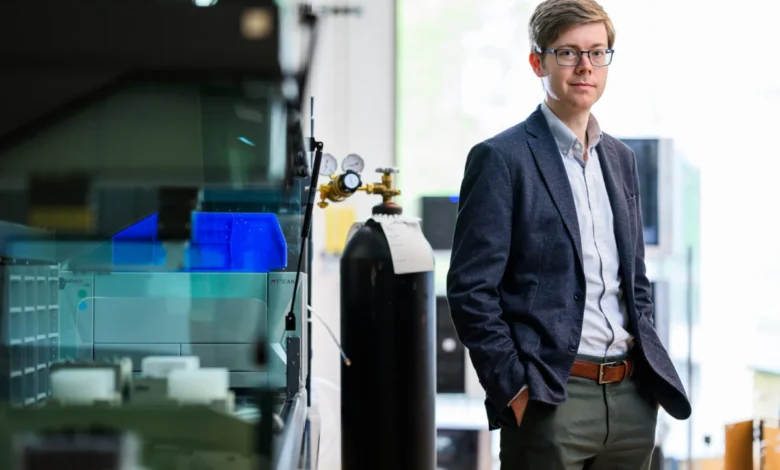
The vast landscape of potential chemical compounds, estimated to contain anywhere from 1020 to 1060 molecules, presents an almost insurmountable challenge for traditional drug discovery methods. Manually evaluating each of these candidates experimentally would not only be prohibitively time-consuming but also economically unfeasible for chemists. In response to this immense hurdle, researchers have increasingly turned to artificial intelligence (AI) as a powerful ally, leveraging its computational prowess to sift through this molecular universe and identify promising candidates for new medicines. At the forefront of this transformative movement is MIT Associate Professor Connor Coley, PhD ’19, whose pioneering work at the intersection of chemical engineering and computer science is reshaping the future of small-molecule drug discovery.
Coley, who holds shared appointments in the departments of Chemical Engineering and Electrical Engineering and Computer Science, as well as the MIT Schwarzman College of Computing, is dedicated to developing and deploying sophisticated computational models. These models are designed to analyze immense datasets of chemical compounds, facilitate the design of novel molecules with desired therapeutic properties, and predict intricate reaction pathways required for their synthesis. His research is not confined to theoretical exploration; it actively seeks to translate these computational insights into tangible advancements in medicine. "It’s a very general approach that could be applied to any application of organic molecules, but the primary application that we think about is small-molecule drug discovery," Coley explains, underscoring the profound impact his work aims to achieve.
A Legacy of Scientific Inquiry
Connor Coley’s deep-seated passion for science is not a recent development but rather a thread woven into the fabric of his family history. He notes that his family boasts a greater number of scientists than non-scientists, a testament to an environment that fostered intellectual curiosity from an early age. His father, a radiologist, and his mother, who earned a degree in molecular biophysics and biochemistry before pursuing an MBA at the MIT Sloan School of Management, both instilled in him a profound respect for scientific exploration. His grandmother, a mathematics professor, further contributed to this scientifically-rich upbringing.
This familial influence undoubtedly played a role in Coley’s early academic trajectory. As a high school student in Dublin, Ohio, he demonstrated exceptional aptitude, participating actively in Science Olympiad competitions and graduating at the remarkably young age of 16. His academic journey then led him to the California Institute of Technology (Caltech), where he chose chemical engineering as his undergraduate major, recognizing its unique capacity to bridge his intertwined interests in science and mathematics.
During his undergraduate years at Caltech, Coley also cultivated a keen interest in computer science. He gained practical experience by working in a structural biology lab, where he utilized the Fortran programming language to contribute to the intricate process of solving the crystal structures of proteins. This early exposure to computational methods in a biological context laid a crucial foundation for his future research. Upon graduating from Caltech, he decided to deepen his expertise in chemical engineering, a decision that ultimately brought him to MIT in 2014 to commence his doctoral studies.
Charting New Territories in Chemical Synthesis
Under the mentorship of distinguished professors Klavs Jensen and William Green, Coley’s doctoral research focused on optimizing automated chemical reactions. His work was characterized by a synergistic integration of machine learning and cheminformatics—the application of computational methods to analyze chemical data. This interdisciplinary approach enabled him to develop innovative strategies for planning reaction pathways capable of generating novel drug molecules. Furthermore, he contributed to the design of specialized hardware engineered for the automated execution of these complex chemical processes.
A significant portion of this groundbreaking work was undertaken as part of the DARPA-funded Make-It program. This ambitious initiative aimed to harness the power of machine learning and data science to revolutionize the synthesis of medicines and other valuable compounds, breaking them down into their fundamental building blocks. "That was my real entry point into thinking about cheminformatics, thinking about machine learning, and thinking about how we can use models to understand how different chemicals can be made and what reactions are possible," Coley reflects, highlighting the program’s pivotal role in shaping his research direction.
A Return to MIT and the Genesis of a Vision
Coley’s exceptional talent and dedication did not go unnoticed. While still a graduate student, he began fielding faculty job offers. At the young age of 25, he accepted an offer to join the faculty at MIT, the very institution where he had pursued his doctoral studies. Although he received a spectrum of advice, ranging from encouragement to caution about remaining at the same institution for graduate and faculty work, the allure of MIT’s unparalleled resources and interdisciplinary environment proved irresistible.
"MIT is a very special place in terms of the resources and the fluidity across departments," Coley states. "MIT seemed to be doing a really good job supporting the intersection of AI and science, and it was a vibrant ecosystem to stay in." He further elaborated on the compelling advantages of remaining at MIT, emphasizing, "The caliber of students, the enthusiasm of the students, and just the incredible strength of collaborations definitely outweighed any potential concerns of staying in the same place." This decision to return to MIT as a faculty member marked the beginning of a new chapter, one dedicated to establishing his own research group and pushing the boundaries of AI in chemistry.
Cultivating Computational Intuition for Drug Design
Before officially joining the faculty, Coley chose to defer his position for a year to undertake a postdoctoral fellowship at the Broad Institute. This period was instrumental in gaining more extensive experience in chemical biology and drug discovery. During his postdoc, he focused on developing methods to identify promising small molecules from vast DNA-encoded libraries, specifically those exhibiting potential binding interactions with mutated proteins implicated in various diseases. This experience further solidified his understanding of the challenges and opportunities within the drug discovery pipeline.
Upon his return to MIT in 2020, Coley established his lab with a clear and ambitious mission: to deploy AI not only for the efficient synthesis of existing compounds with therapeutic potential but also to conceptualize and design entirely new molecules possessing desirable properties, along with innovative methods for their creation. Over the past few years, his research group has successfully developed a diverse array of computational approaches designed to address these complex objectives.
"We try to think about how to best pair a challenge in chemistry with a potential computational solution," Coley explains. "And often that pairing motivates the development of new methods." This iterative process of identifying chemical problems and devising tailored computational solutions has led to significant breakthroughs. One notable model developed by his lab is ShEPhERD (Shape-Enriched Pharmacophore-based Evaluation for Rapid Drug discovery). Trained to assess the potential of new drug molecules based on their three-dimensional shapes and predicted interactions with target proteins, ShEPhERD is now being adopted by pharmaceutical companies to accelerate their drug discovery efforts. "We’re trying to give more of a medicinal chemistry intuition to the generative model, so the model is aware of the right criteria and considerations," Coley elaborates, highlighting the model’s sophisticated ability to incorporate expert chemical knowledge.
In another significant project, Coley’s lab introduced FlowER (Flow-based generative models for End-to-end Reaction prediction), a generative AI model capable of predicting the chemical products that will result from combining various input chemicals. In the design of FlowER, the researchers meticulously incorporated fundamental physical principles, such as the law of conservation of mass, into the model’s architecture. Crucially, they also compelled the model to consider the feasibility of intermediate steps required in the reaction pathway from reactants to products. This rigorous constraint-based approach, the researchers discovered, significantly enhanced the accuracy of the model’s predictions.
"Thinking about those intermediate steps, the mechanisms involved, and how the reaction evolves is something that chemists do very naturally," Coley notes. "It’s how chemistry is taught, but it’s not something that models inherently think about." He further emphasizes the importance of this grounding: "We’ve spent a lot of time thinking about how to make sure that our machine-learning models are grounded in an understanding of reaction mechanisms, in the same way an expert chemist would be." This commitment to incorporating fundamental chemical principles ensures that the AI models are not merely pattern-matching machines but are instead imbued with a deep, mechanistic understanding of chemical transformations.
Advancing the Frontier of AI in Chemistry
Beyond these flagship projects, students within Coley’s lab are actively engaged in a multitude of research areas crucial for optimizing chemical reactions. These include computer-aided structure elucidation, where AI aids in deciphering the molecular structures of synthesized compounds; laboratory automation, focusing on the integration of AI with robotic systems for high-throughput experimentation; and optimal experimental design, where AI helps in planning the most efficient and informative experiments to maximize data acquisition and minimize resource expenditure.
The overarching goal of these diverse research threads is to propel the field of AI in chemistry forward. By tackling fundamental challenges in molecular design, synthesis prediction, and experimental optimization, Coley’s lab is not only contributing to the advancement of drug discovery but also to the broader scientific endeavor of understanding and manipulating matter at the molecular level. The implications of this work are far-reaching, promising to accelerate the development of new therapeutics, enable the creation of novel materials, and ultimately improve human health and well-being on a global scale. The integration of AI into chemical research represents a paradigm shift, moving from laborious trial-and-error to intelligent, data-driven discovery, and Connor Coley is a key architect of this revolutionary future.