Victorious Study Uncovers Stark Reality: Nearly 90% of Brands Lack AI Search Visibility in Q1 2026, Challenging Industry Assumptions

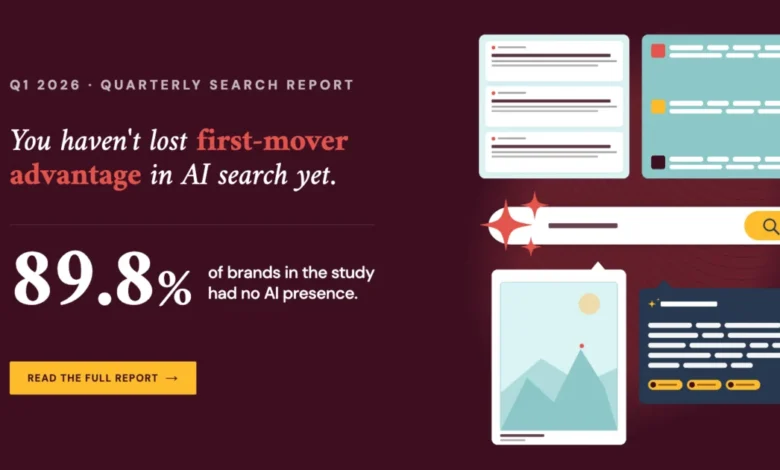
A groundbreaking study by Victorious, a prominent search engine optimization firm, has revealed a significant disparity in the nascent landscape of AI search visibility, indicating that a staggering 89.8% of brands currently have no discernible presence within AI search results. This finding, based on an extensive analysis conducted in the first quarter of 2026, directly challenges widespread industry assumptions about the competitive state of AI search, suggesting that the "race" for AI visibility is far from crowded and offers an unprecedented opportunity for early movers.
The Evolving Landscape of AI Search and Market Assumptions
The past year has witnessed a seismic shift in how users interact with search engines, propelled by the rapid integration of artificial intelligence. From Google’s AI Overviews (formerly Search Generative Experience, SGE) and AI Mode to standalone platforms like ChatGPT, Perplexity, Gemini, Microsoft Copilot, Claude, and Meta AI, the paradigm of information discovery is undergoing a fundamental transformation. This shift has naturally led to a surge of confident pronouncements within the marketing industry regarding the factors influencing AI visibility. However, these discussions have largely been speculative, lacking the empirical data necessary to support commonly held assumptions about brand presence and performance in this new environment. Many marketers and strategists have been operating under the premise that AI visibility is already a highly contested domain, with brands locked in a fierce battle for mentions and citations. Victorious sought to cut through this noise by undertaking a comprehensive, data-driven investigation to understand the true state of play.
The urgency for such a study became apparent as AI search capabilities matured. While traditional SEO has decades of accumulated data and best practices, AI search presented a black box, largely driven by proprietary algorithms that synthesize information rather than merely listing sources. Questions abounded: How do brands get recognized by AI? Are traditional SEO metrics still relevant? Is brand authority transferable to AI environments? The absence of concrete answers fueled a climate of uncertainty, with brands hesitant to invest without clear guidance. Victorious’s initiative to build a robust dataset was a direct response to this critical need for evidence-based recommendations.
Methodology: A Dual-Lens Approach to AI and Traditional Search Performance
To provide a comprehensive comparison of brand performance across both traditional and AI search, Victorious meticulously constructed a unique dataset. The study’s methodology was designed to capture concurrent signals from both realms for the same set of companies during the identical period of Q1 2026, ensuring direct comparability and actionable insights. This rigorous four-phase approach provided the foundational data for their startling conclusions.
The initial phase involved determining the brand set. A representative cross-section of 177 brands was carefully selected, spanning five diverse and economically significant verticals: healthcare, SaaS (Software as a Service), financial services, e-commerce/retail, and legal services. This selection aimed to provide a broad understanding of how AI visibility manifests across different industry dynamics and consumer interaction models, ensuring the findings were not skewed by sector-specific anomalies.
Capturing the AI visibility signal constituted the second and most innovative phase. For each of the 177 brands, Victorious developed and executed vertical-specific prompts across eight leading AI platforms: ChatGPT, Perplexity, Gemini, Google AI Overview, Google AI Mode, Microsoft Copilot, Claude, and Meta AI. This multi-platform approach was crucial, recognizing that users engage with various AI tools, and a brand’s presence might differ significantly across them. The sheer scale of this effort resulted in the analysis of 107,011 AI responses. From each response, two critical metrics were meticulously recorded: whether the AI platform explicitly named the brand (a "mention"), and whether it provided a direct link to the brand’s domain as a source of information (a "citation").
Victorious underscored the strategic importance of tracking mention rate and citation rate separately, rather than collapsing them into a single "AI visibility" score. A brand might be frequently mentioned without being cited, indicating recognition but not necessarily authority or direct sourcing. Conversely, a brand could be cited often as a source of information but rarely explicitly named. This granular distinction proved instrumental in uncovering the nuanced patterns of AI visibility across different verticals, offering a more precise understanding of how brands are perceived and utilized by AI.
The third phase focused on pulling organic performance data from traditional search. For the same 177 brands, domain-level organic performance metrics were tracked using Semrush during Q1 2026. Key indicators included traffic trends, reflecting overall organic search presence, and Authority Scores. Authority Score, a proprietary metric from Semrush, serves as a proxy for a domain’s overall strength and trustworthiness, incorporating factors like backlink profiles, domain age, and organic traffic. This data provided a vital baseline for comparing how established traditional search signals correlated with emerging AI visibility.

Finally, the datasets were cross-referenced. The AI visibility data (mention rate and citation rate) was meticulously joined with the organic performance data (Authority Score) for every brand. This integrated structure allowed Victorious to analyze the intricate relationships between traditional ranking signals and AI visibility, and to discern whether these relationships varied across the diverse industry verticals studied. The ability to directly compare these measures for the same brands during the same period provided an unprecedented level of insight into the mechanics of AI search performance.
Finding 1: The Vast Majority of Brands Are Absent from AI Search
The most striking and arguably most significant finding from Victorious’s Q1 2026 Quarterly Search Report is the profound lack of AI visibility for the overwhelming majority of brands. Out of the 177 brands included in the comprehensive dataset, a mere 18 registered any AI mention rate above zero. This translates to a staggering 89.8 percent of the tested brands being largely absent from AI search across all eight measured platforms. They were neither mentioned by name in AI-generated responses nor were their domains surfaced as sources or examples.
This revelation stands in stark contrast to the prevailing narrative within the marketing industry, which often portrays AI visibility as an ongoing, highly competitive "race." The data unequivocally demonstrates a radically different picture: for nearly nine out of ten brands, the race for AI visibility has, in essence, not yet begun. This creates a substantial "white space" opportunity. Rather than facing an already saturated market, brands willing to proactively address their AI visibility now will find themselves competing against a very small number of incumbents within their respective verticals. This early mover advantage could prove decisive in shaping brand perception and consumer discovery in the years to come, fundamentally altering competitive landscapes.
Finding 2: AI Visibility Patterns Exhibit Vertical-Specific Nuances
While the overall absence of AI visibility was a dominant finding, Victorious’s study also revealed distinct patterns when the data was disaggregated by industry vertical. These variations underscore that a one-size-fits-all approach to AI optimization is ineffective, and strategies must be tailored to industry-specific dynamics and how AI platforms process information within those contexts.
Mentioned & Cited: Healthcare, SaaS, and Financial Services Brands
Brands within the healthcare, SaaS, and financial services sectors demonstrated a consistent pattern of both being mentioned and cited by AI platforms. However, the underlying reasons for this visibility differed significantly across these verticals:
- Healthcare: Brands in healthcare benefit from robust, clear entity identifiers. These include distinct names, specific locations, specialized areas of practice, and established network affiliations. AI platforms leverage these structured data points to evaluate expertise, authority, and trustworthiness (E-E-A-T principles), making it easier to confidently name and source information from these entities, particularly for queries related to medical conditions, practitioners, or facilities. The presence of well-defined organizational structures and verifiable credentials strengthens AI’s ability to attribute information accurately.
- SaaS: Software-as-a-Service brands frequently appear on influential third-party platforms such as G2, Reddit, and LinkedIn. These sites are rich with user-generated content, product reviews, peer discussions, and professional endorsements. AI platforms increasingly tap into these sources to understand product reputation, functionality, and user sentiment. Consequently, SaaS brands are often mentioned in the context of solutions or recommendations, with citations linking back to these authoritative review and community sites, or occasionally to the brand’s own domain if it effectively consolidates such social proof.
- Financial Services: This vertical benefits from a strong editorial media presence. Trusted financial news and advice platforms like MarketWatch, Bankrate, and NerdWallet are common sources that AI platforms consult for financial queries, investment advice, or market insights. These platforms often feature deep dives into financial products, services, and companies. Notably, Financial Services was the only vertical where the citation rate slightly exceeded the mention rate. This suggests that while AI platforms trust the content originating from these authoritative financial sources enough to cite it, they might still be in the process of building robust entity recognition for the specific brands behind that content. This hints at an opportunity for financial brands to further solidify their individual brand identity in AI’s understanding.
In all three cases, the common denominator for brands achieving AI visibility was the presence of verifiable, structured information or strong third-party validation that AI platforms could readily "attach" to the brand identity. Brands lacking these foundational elements struggled to appear in AI responses.
Mentioned More Than Cited: Ecommerce & Retail Brands
The e-commerce and retail sector exhibited the widest gap in Victorious’s dataset, with brands frequently mentioned but rarely cited directly from their own domains. AI platforms readily recognize these brands, often due to widespread marketplace presence (e.g., Amazon, Etsy) and high consumer familiarity. However, when it comes to sourcing information, AI tends to pull content from aggregators, review sites (like Reddit, Yelp, or dedicated product review platforms), or large marketplaces rather than the brand’s proprietary website.

For e-commerce brands, recognition is primarily driven by their ubiquity and customer awareness, often cultivated through extensive marketing and presence on major selling platforms. The significant challenge identified by the study is enabling these brands to provide AI platforms with citable content on their own domains. This means moving beyond product listings to create authoritative guides, detailed product comparisons, unique brand stories, and robust customer support resources that AI deems valuable enough to directly source, rather than defaulting to generic marketplace descriptions or third-party reviews. This is a critical strategic imperative for e-commerce brands seeking to control their narrative and drive traffic directly.
Cited But Rarely Mentioned: Legal Services
Legal services presented an inverse pattern to e-commerce brands, where AI platforms regularly sourced content from legal websites but infrequently credited the specific law firm or legal entity behind the article. This indicates that AI recognizes the authority and relevance of the content itself, particularly for informational legal queries, but struggles to connect that content back to a distinct brand identity.
The challenge for legal firms, therefore, lies in building the strong entity signals necessary to bridge this gap. This could involve enhancing clear author attribution on articles, leveraging structured data markup (Schema.org) to define expertise and organizational details, showcasing firm-specific case studies, and ensuring consistent branding across all digital assets. By solidifying these entity signals, legal services firms can move from being generic sources of information to recognized authorities, ensuring their brand benefits from the valuable content they produce.
Finding 3: Each AI Platform Draws from a Different Set of Sources
Victorious’s analysis further revealed that the eight AI platforms studied do not operate uniformly. Each platform—ChatGPT, Perplexity, Gemini, Google AI Overview, Google AI Mode, Microsoft Copilot, Claude, and Meta AI—demonstrates distinct preferences for specific types of content and source domains. This divergence can be attributed to differences in their underlying training data, real-time indexing capabilities, and proprietary ranking algorithms.
For instance, some platforms might prioritize academic papers and research for certain topics, while others might lean towards news articles, user-generated content, or official brand websites. This finding has profound implications for a brand’s AI visibility strategy. A brand cannot simply optimize for "AI search" generically; it must understand where its target audience is engaging with AI and which platforms are most likely to surface its content. The full Victorious report offers a detailed breakdown of mention rates by platform and vertical, empowering brands to strategically focus their efforts on the AI environments most relevant to their buyers and business objectives. This multi-platform optimization approach becomes crucial in a fragmented AI search landscape.
Finding 4: Personalization May Be Compounding Early AI Visibility
An intriguing insight from the study points to the potential for personalization to exacerbate early AI visibility trends. Google’s Personal Intelligence update, which integrates signals from a user’s Gmail and Photos into AI Mode responses, suggests a bias towards brands the user has previously encountered or interacted with. If this effect holds true and expands across other AI platforms, it implies a powerful compounding mechanism: brands that succeed in securing a user’s first AI interaction on a given topic could significantly accelerate and sustain their visibility over time, making it increasingly difficult for later entrants to gain traction.
This personalization factor elevates the importance of initial brand touchpoints beyond traditional marketing funnels. It suggests that even incidental encounters or previous interactions, perhaps through email newsletters, online purchases, or visual content, could influence AI’s propensity to surface a brand. Victorious plans to closely monitor and test this hypothesis in Q2, acknowledging that if this compounding effect is strong, it creates an even more urgent imperative for brands to establish early and positive AI-driven brand familiarity.
Broader Impact and Strategic Implications for the Marketing Industry

Victorious’s Q1 2026 Quarterly Search Report is more than just a collection of data; it’s a strategic roadmap for the marketing industry at a critical juncture. The overwhelming finding that nearly 90% of brands are invisible in AI search transforms the narrative from one of fierce competition to one of unparalleled opportunity. This is not a race that has already been won or lost; for most, it has barely begun.
The study underscores a fundamental shift in what constitutes "visibility" in the digital age. While traditional SEO focused on keywords, backlinks, and technical site health, AI visibility demands a deeper engagement with brand identity and content authority. Brands must move beyond simply ranking for queries to becoming recognized entities that AI can confidently mention and cite as credible sources.
Statements from Industry Experts (Inferred)
"This study by Victorious offers a crucial wake-up call for the marketing industry," states Dr. Anya Sharma, a hypothetical Professor of Digital Marketing at a prominent university. "For too long, we’ve operated on assumptions, driven by early adopter anxieties without concrete data. This research unequivocally reveals that the AI search landscape is far less competitive than many feared, presenting an unprecedented opportunity for brands willing to invest strategically in AI visibility now. The focus must shift from broad SEO tactics to building robust brand entities that AI can confidently identify, mention, and cite. Those who seize this moment will establish a significant, long-term competitive advantage."
Another hypothetical expert, Mr. Mark Chen, CEO of a leading digital strategy consultancy, added, "The insights into vertical-specific patterns are particularly invaluable. It’s not just about getting noticed; it’s about understanding how AI validates credibility in different sectors. E-commerce brands need to create citable content on their own domains, not just rely on marketplaces. Legal firms must build stronger entity signals to connect their expertise directly to their brand. This level of nuance is what will differentiate successful AI strategies."
A Call to Action for Brands: Seizing the White Space
The overarching takeaway from Victorious’s comprehensive analysis is clear: brands have not lost their first-mover advantage in AI search. The vast "white space" identified across numerous verticals represents a golden opportunity for proactive engagement. The time to act is now, before the landscape becomes as saturated as traditional search.
For brands looking to establish or enhance their AI visibility, the study offers several actionable recommendations:
- Prioritize Entity Building: Focus on clearly defining your brand as a distinct, authoritative entity. This involves consistent branding, robust "About Us" information, author bios, structured data markup (Schema.org), and a strong presence on authoritative third-party platforms.
- Cultivate Citable Content: Develop high-quality, original, and authoritative content on your owned domains that AI platforms will deem trustworthy enough to cite directly. This is particularly crucial for e-commerce and legal services brands.
- Leverage Third-Party Validation: Actively manage and encourage reviews, testimonials, and mentions on relevant industry platforms, review sites, and editorial media outlets. For SaaS, this means G2 and Reddit; for financial services, reputable financial news sites.
- Understand Vertical Nuances: Tailor your strategy to how AI assesses credibility within your specific industry. What works for healthcare (structured data) may differ from what works for SaaS (user reviews).
- Adopt a Multi-Platform AI Strategy: Recognize that different AI platforms have different source preferences. Understand where your audience engages with AI and optimize for those specific platforms, rather than a generic "AI search."
- Act Now to Compound Visibility: Given the potential for personalization to compound early interactions, establishing a positive AI presence sooner rather than later can create a powerful snowball effect, making future visibility easier to achieve and sustain.
In conclusion, Victorious’s Q1 2026 Quarterly Search Report serves as a pivotal moment for digital marketers. It dispels myths, provides concrete data, and illuminates a clear path forward. The opportunity to claim significant AI search visibility is still wide open for nearly 90% of brands. Those who heed this data and strategically invest in building their AI-ready brand entities today will be the ones shaping the future of digital discovery and securing a decisive competitive edge in the evolving AI economy.
The full Q1 2026 Quarterly Search Report, with detailed breakdowns of mention rates by platform and vertical, as well as further insights into future trends, is available for those seeking to delve deeper into these critical findings.