The Future of Social Media: Navigating the Shifting Landscape of Free Access and Paid Subscriptions

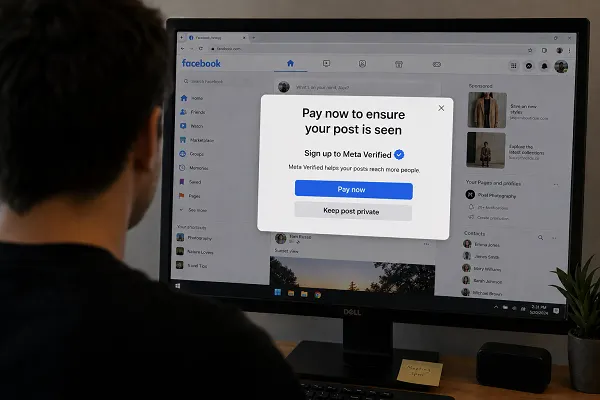
The digital town square, once a bastion of free and open communication, is undergoing a profound transformation. Following Meta’s recent announcement of a suite of new add-on subscription packages and AI-focused offerings, a critical question has resurfaced, echoing through the corridors of the tech industry and across user forums: is free social media a model destined for obsolescence? This seismic shift in Meta’s strategy, coupled with earlier pronouncements from other tech titans, ignites a debate about the long-term viability of completely free access to platforms that have become integral to global communication and commerce.
The Erosion of the Free Model: A Growing Concern
For years, the prevailing paradigm has been that social media platforms would remain accessible without direct user fees, funded instead by advertising revenue. This model, while immensely successful, has faced increasing pressure from various fronts. One of the most persistent arguments for a paid social media future centers on the battle against malicious actors. The low barrier to entry for creating new accounts has historically enabled spammers, scammers, and purveyors of disinformation to flood platforms with fake profiles, overwhelming moderation efforts and degrading the user experience.
This concern was starkly articulated by Elon Musk, owner of X (formerly Twitter), in the wake of his acquisition of the platform. In early 2023, Musk publicly suggested that X might be compelled to introduce charges for all users, even if nominal, as a necessary measure to combat bot armies. His rationale was rooted in the rapidly advancing capabilities of artificial intelligence, which, he argued, made it "trivial to spin up 100k human-like bots for less than a penny per account." Musk posited that paid verification, by significantly increasing the cost of bot creation by approximately 10,000%, would serve as a potent deterrent. He went on to predict that "paid social media will become the only social media that matters," a bold assertion that signaled a potential fundamental shift in how social networks are monetized and accessed.
Meta’s Evolving Stance: From Free to Freemium
Meta, the parent company of Facebook and Instagram, has historically championed the free access model. Mark Zuckerberg, its CEO, famously assured Congress in 2018 that "there will always be a version of Facebook that is free." This commitment was underpinned by a business model that relies almost exclusively on advertising, generating an estimated 98% of its annual income. This financial engine is fueled by the platform’s colossal reach, boasting over three billion active users across its various services.
However, Meta’s recent introduction of subscription add-ons, including AI packages, marks a significant departure from its long-held stance. While these are presented as optional enhancements rather than mandatory access fees, they signal a strategic exploration of new revenue streams. This move has inevitably fueled speculation about whether this is the precursor to a broader monetization strategy that could eventually involve charging for basic access. Such a pivot, however, would represent a colossal undertaking and a substantial risk for Meta. Forcing its vast user base to pay for access to Facebook and Instagram would likely prompt many to re-evaluate their engagement with the platforms, especially given the proliferation of alternative social media and communication channels.
The Limited Precedent of Paid Social Media
Despite the growing discussion around paid social media, historical data and current trends indicate a lukewarm reception from users to subscription models. While various platforms have introduced premium tiers or add-ons, their adoption rates have generally been modest.
- YouTube Premium: Approximately 4.5% of YouTube’s user base subscribes to YouTube Premium, which offers ad-free viewing and other benefits.
- X Premium: Fewer than 1% of X users currently pay for X Premium, despite its integration of new features and verification.
- Snapchat+: This offering has been relatively successful for Snap Inc., reaching around 2.6% of the platform’s total monthly audience with approximately 25 million subscribers.
- Meta Verified: While Meta has not released specific adoption figures, external analysis of its quarterly performance updates suggests that around 0.98% of its combined Facebook and Instagram user base, potentially equating to 35 million users, may have subscribed to Meta Verified. This, while a substantial number in absolute terms, represents a small fraction of its overall audience.
- LinkedIn Premium: This platform appears to have achieved the highest adoption rates for its premium features. External estimates suggest that around 18% of LinkedIn’s member base subscribes to its paid offerings.
These figures collectively underscore a significant user reluctance to pay for social media access. The vast majority of users have become accustomed to free services, and any move to fundamentally alter this expectation carries inherent risks of alienating a substantial portion of the user base.
The AI Imperative: Driving Subscription Models
The most compelling driver for the expansion of subscription models on social media platforms appears to be the escalating costs associated with Artificial Intelligence development and deployment. Companies like Meta and X are investing billions, and potentially trillions, into building and maintaining sophisticated AI infrastructure. Reports indicated that xAI, Elon Musk’s AI venture, was incurring development and maintenance costs of approximately $1 billion per month. Similarly, Meta is channeling vast sums into AI datacenters and ongoing operational expenses.
Every AI-powered feature, from generating an image of a dog in a hat to powering advanced chatbots, consumes significant computational resources and incurs ongoing costs. As AI becomes more deeply integrated into social media platforms and user engagement with these features increases, these expenses are set to escalate further. Even a hypothetical scenario where Meta generates $100 billion annually from AI subscriptions would still require over a decade to recoup its initial AI expenditures. Meta’s non-advertising revenue in 2025, which encompasses data sales, AI glasses, and VR hardware, stood at $4.8 billion, highlighting the substantial gap that AI monetization needs to fill.
Therefore, it is highly probable that Meta, X, and other social media companies will increasingly look to pass on at least a portion of these AI-related costs to users through subscription options for AI tools and enhanced features. This strategy allows them to explore new revenue streams without necessarily resorting to universal access fees.
A Nuanced Future: Subscriptions for Features, Not Access
While the notion of every social media user being forced to pay a monthly fee for basic access remains a distant, and perhaps improbable, prospect, the landscape is undoubtedly shifting. The immediate future points towards a more nuanced approach:
- AI Feature Subscriptions: Platforms will likely continue to introduce and expand subscription offerings that provide access to advanced AI capabilities, enhanced creative tools, and premium content. This allows for the monetization of expensive AI investments while catering to users who value these advanced functionalities.
- Differentiated User Experience: Subscription tiers might offer distinct advantages such as increased visibility, advanced analytics, or enhanced privacy controls, creating a tiered experience that incentivizes adoption among power users or businesses.
- Geographic Variations: Regulatory landscapes can influence monetization strategies. For instance, in Europe, Meta is already required to offer an ad-free subscription option as a compliance measure to avoid using personal data for ad targeting. This precedent could lead to region-specific subscription models.
Conclusion: A Hybrid Model on the Horizon
The era of purely free social media, as we have known it, may be gradually giving way to a hybrid model. While the core functionality of platforms like Facebook and Instagram is likely to remain accessible without direct payment to maintain their broad reach, the introduction of subscription add-ons, particularly for AI-driven features, signals a clear intent to diversify revenue streams. The significant investments in AI development and the ongoing costs of maintaining these sophisticated systems necessitate new monetization strategies.
The prospect of universally charging for social media access, as some industry figures have suggested, appears unlikely in the short to medium term, primarily due to the risk of alienating vast user bases and the limited historical success of such models. Instead, social media companies will likely focus on offering value-added subscription services that cater to specific user needs and preferences, effectively creating a tiered ecosystem where enhanced features and advanced capabilities come at a cost, while fundamental access remains free for the masses. The ongoing evolution of AI will undoubtedly play a pivotal role in shaping this future, driving innovation in both platform capabilities and monetization strategies.
Related posts: