Jinhua Zhao Appointed Head of MIT’s Department of Urban Studies and Planning, Ushering in New Era for Mobility Research and Global Impact

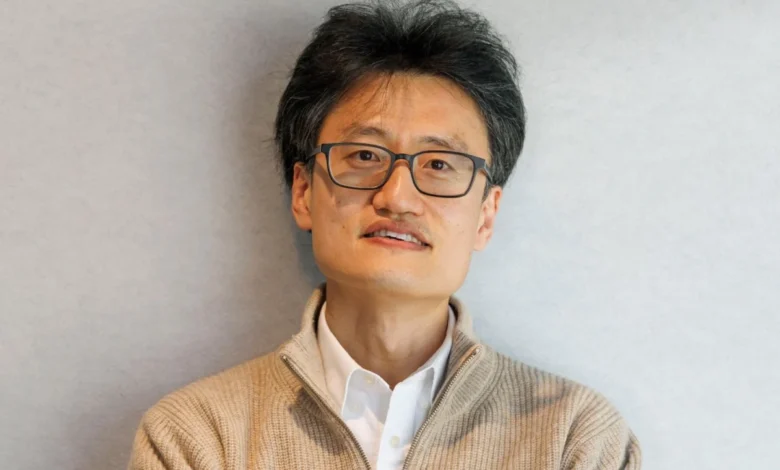
The Department of Urban Studies and Planning (DUSP) at the Massachusetts Institute of Technology (MIT) has announced a significant leadership transition, with Jinhua Zhao, a distinguished alumnus and renowned expert in urban mobility, assuming the role of department head effective July 1. Zhao, who holds multiple advanced degrees from MIT, including an MCP ’04, SM ’04, and PhD ’09, is also the Class of 1941 Professor of Cities and Transportation at the institution. This appointment marks a pivotal moment for DUSP, signaling a commitment to amplifying its global reach and deepening its impact on pressing urban challenges.
Dean Hashim Sarkis of the MIT School of Architecture and Planning lauded Zhao’s appointment, characterizing him as a preeminent transportation planner, educator, and scholar with a global reputation for envisioning and shaping the future of mobility. "Jinhua is one of those rare scholars who moves seamlessly between cutting-edge research and real-world policy," Dean Sarkis stated. "His work with governments and transportation agencies around the world is a model for what MIT’s impact can look like beyond our campus." This endorsement underscores Zhao’s proven ability to bridge the gap between theoretical innovation and practical implementation, a crucial attribute for a department dedicated to addressing complex urban issues.
Zhao succeeds Professor Christopher Zegras, who has steered DUSP as department head since 2020. Under Zegras’s tenure, the department significantly expanded opportunities for students to engage directly with communities and policymakers globally, while reinforcing its long-standing commitment to integrating research with practice. Dean Sarkis expressed his sincere gratitude to Professor Zegras for his "excellent and level-headed leadership, especially in challenging times," acknowledging the complexities of leading an academic department, particularly through periods of global uncertainty.
Zhao’s deep-rooted connection to MIT, beginning with his graduate studies, has profoundly shaped his academic and professional trajectory. He has consistently found the Institute’s unconventional approach and its culture of interdisciplinary collaboration to be a powerful catalyst for his work. "MIT is a small school in the best sense of the word," Zhao commented. "We have fewer boundaries than other universities – intellectually and physically. Our ‘infinite corridor’ literally connects us to so many disciplines." This sentiment highlights a core strength of MIT’s academic environment, fostering a synergy that Zhao intends to leverage further within DUSP.
Shaping Global Mobility Systems: A Proven Track Record
Jinhua Zhao’s appointment comes at a time when urban mobility is at a critical juncture, grappling with rapid technological advancements, evolving societal needs, and the urgent imperative of sustainability. His extensive research and the innovative programs he has founded at MIT position him to lead DUSP in navigating these complex landscapes. As a globally recognized authority on mobility, Zhao’s work has demonstrably influenced policy and practice across some of the world’s most demanding urban transportation systems.
His influence extends to shaping policy for Transport for London, the Mass Transit Railway in Hong Kong, and Japan Railways, underscoring his capacity to address diverse international contexts. Leading U.S. transit authorities, including Boston’s MBTA, the Chicago Transit Authority, and Washington’s Metropolitan Area Transit Authority, have also benefited from his research and strategic guidance. Furthermore, Zhao has been instrumental in guiding strategic planning for the mobility industry, particularly concerning the future of autonomous and digital mobility, and has developed crucial autonomous vehicle (AV) deployment strategies for entities in Singapore and the Middle East.
Zhao articulated a central challenge he consistently encounters: "Every city I’ve worked with faces the same tension: The technology is moving faster than the institutions designed to govern it. My work has been about closing that gap." This observation encapsulates the essence of his research agenda and his vision for DUSP – to ensure that urban governance and planning keep pace with the transformative power of new technologies.
Fostering Collaboration and Knowledge Exchange
A cornerstone of Zhao’s impact at MIT is the MIT Mobility Initiative, which he founded. This initiative serves as a vital hub, uniting mobility and transportation researchers from across the Institute with leading global practitioners and policymakers. The initiative’s weekly MIT Mobility Forum, hosted via Zoom and open to the public, has evolved from a small internal gathering into a significant global platform. Drawing over 200 participants weekly—including practitioners, policymakers, and researchers from around the world—the forum reflects the immense and growing interest in the future of urban mobility.
Zhao attributes the forum’s success and broad appeal to the inherently interdisciplinary nature of transportation. "No single discipline owns transportation," he stated. "AI and autonomous systems are reshaping urban living faster than most institutions can adapt. The question is no longer what we know. It is whether the people who need it most – municipal governments, transport agencies, federal ministries – can access it when they make decisions on transportation. This is why the forum exists." This focus on accessibility and the practical application of knowledge is central to his leadership philosophy.
In addition to the Mobility Initiative, Zhao directs the JTL Urban Mobility Lab. This lab integrates behavioral science with transportation technology to influence travel behavior, design more effective mobility systems, and enhance transportation policies. He is also a lead principal investigator with Mens, Manus, and Machina, an MIT initiative at the confluence of artificial intelligence, the future of work, and human learning. This ambitious project aims to develop the tools and strategies necessary for cities, institutions, and economies to ensure that AI augments, rather than displaces, human potential.
DUSP’s Evolving Global Agenda
As Zhao assumes leadership, he brings a clear vision for DUSP’s role in addressing the most pressing global urban issues. He poses a critical question: "If you look at the global agenda, what are the issues people are facing? An aging society; AI and its impact on jobs; the energy crisis; traffic congestion. These are just some of the problems people feel connected to because they are embodied in our cities and communities." His ambition is for DUSP to actively engage with city leaders worldwide, sharing its research and insights to inform solutions.
The timeline of technological advancement versus institutional adaptation is a recurring theme in Zhao’s work. For instance, the rapid development of autonomous vehicle technology, which began gaining significant traction in the early 2010s with pilot programs and increasing investment, has presented cities with complex regulatory and infrastructural challenges. Zhao’s research has been crucial in helping entities like Singapore and various Middle Eastern governments develop strategic frameworks for AV integration, aiming to balance innovation with public safety and urban planning principles. This proactive approach to anticipating and guiding technological adoption is a hallmark of his expertise.
Zhao’s immediate priority as department head is to accelerate the dissemination of DUSP’s research to those who can most effectively utilize it: the planners, officials, and engineers making critical decisions in cities today. He envisions DUSP in active dialogue with transit authorities grappling with AV integration, city governments re-evaluating aging infrastructure, and national transport ministries navigating the policy implications of artificial intelligence. The implications of this approach are far-reaching. By forging stronger connections between academic research and real-world urban governance, DUSP can play an even more vital role in shaping sustainable, equitable, and resilient cities.
The impact of DUSP’s research under Zhao’s leadership could translate into tangible improvements in urban life. For example, insights generated from the JTL Urban Mobility Lab on influencing travel behavior could lead to more effective strategies for reducing traffic congestion and promoting public transit, potentially saving millions of hours in lost productivity and reducing carbon emissions. Similarly, work on AI and its impact on the future of work, as undertaken within the Mens, Manus, and Machina initiative, could guide cities in developing workforce training programs and economic development strategies that harness AI’s potential while mitigating job displacement.
A Legacy of Innovation and a Future of Impact
Zhao’s journey from a MIT student to the head of its prestigious Department of Urban Studies and Planning is a testament to the Institute’s ability to foster groundbreaking thinkers and leaders. His academic lineage, deeply embedded within MIT’s rigorous environment, has equipped him with a unique perspective on the challenges and opportunities facing urban environments globally. The fact that he earned all his advanced degrees at MIT and then joined its faculty underscores a profound commitment to the institution and its mission.
The transition marks not only a change in leadership but also a renewed emphasis on DUSP’s capacity to serve as a global thought leader. By leveraging his extensive network and his proven ability to translate complex research into actionable policy, Zhao is poised to elevate DUSP’s influence on the international stage. The department’s continued engagement with real-world problems, from the intricacies of urban transit networks to the profound societal shifts brought about by artificial intelligence, will be crucial in shaping the cities of tomorrow.
As the department looks ahead, Zhao’s leadership promises to foster an environment where the critical issues of urban development and planning are addressed with both intellectual rigor and practical urgency. His focus on bridging the gap between technological advancement and institutional capacity is particularly timely, as cities worldwide grapple with unprecedented rates of change. The future of DUSP, under Jinhua Zhao’s direction, appears set to be one of enhanced global impact, driven by innovation, collaboration, and a steadfast commitment to creating better urban futures for all.