Marketing’s AI Paradox: Widespread Adoption Meets Operational Chaos as Efficiency Goals Remain Elusive


A recent Optimizely survey involving over 2,000 B2B marketers worldwide has unveiled a significant paradox in the realm of artificial intelligence adoption: while marketers are rapidly integrating AI into their daily operations, a substantial majority are struggling to harness its promised efficiencies. The findings indicate that nearly half of all respondents report AI being fully integrated into their day-to-day work. However, this high rate of adoption is juxtaposed with widespread inefficiencies, as most marketers dedicate considerable hours each week to correcting AI output, navigating a fragmented ecosystem of disconnected tools, and compensating for organizational processes that have failed to evolve at the pace of technological integration. This critical disconnect suggests that the challenge is less about adopting AI and more about effectively operationalizing it within existing marketing frameworks.
The report underscores that the current hurdles are predominantly operational rather than technological. While AI is undeniably becoming an embedded component of modern marketing practices, the essential governance structures, streamlined workflows, and robust technology infrastructure required to genuinely support and optimize its use are lagging considerably. The initial allure of AI was rooted in the promise of unprecedented efficiency and automation; however, the reality for many marketing departments appears far more intricate and demanding than anticipated.
The Unfulfilled Promise of Efficiency
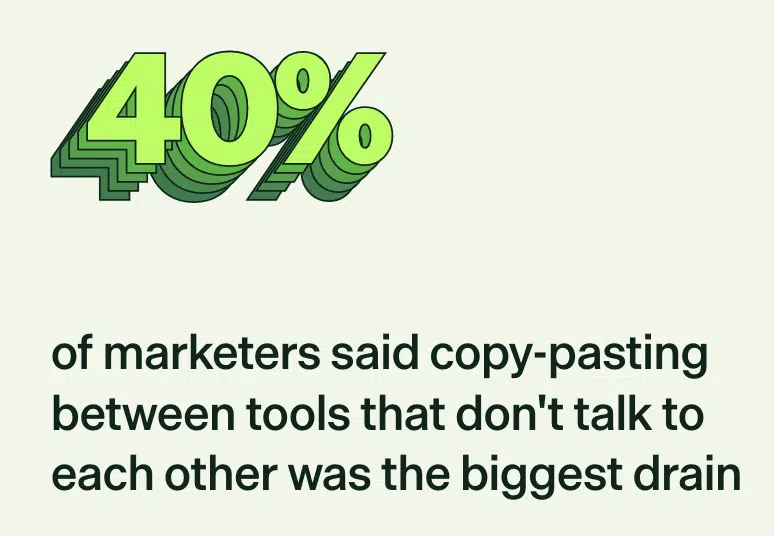
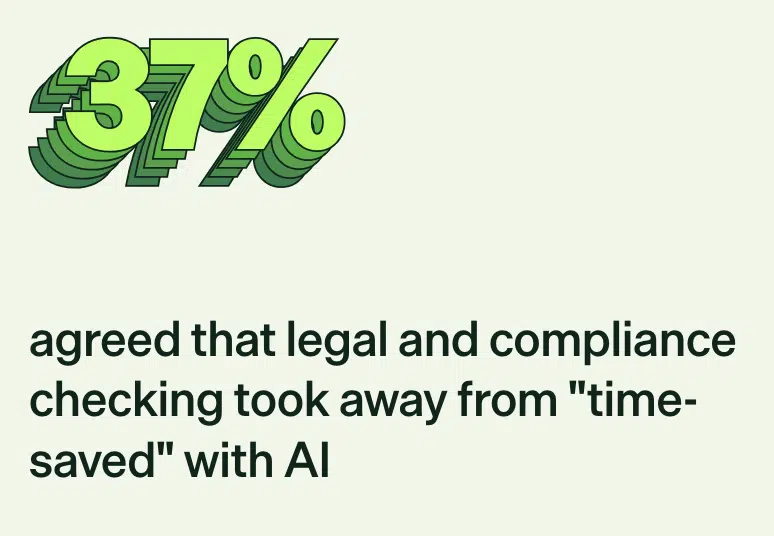
The most striking revelation from the survey highlights a significant drain on productivity. A staggering three-quarters of respondents admit to spending at least three hours weekly on remedial tasks directly related to AI-generated content. This time is consumed by a range of activities including extensive editing, rigorous fact-checking, and rectifying various inaccuracies or "hallucinations" produced by AI models. Furthermore, the necessity for manual copy-and-paste operations between disparate, non-communicating tools and the demands of legal and compliance reviews add significantly to this burden. Alarmingly, only a meager 4% of marketers reported that AI consistently saves them time across the entire content creation process, from ideation to final publication. This suggests that for the vast majority, the perceived time-saving benefits of AI are either minimal or entirely negated by the subsequent corrective efforts.

These findings challenge the widespread assumption that AI intrinsically leads to greater efficiency. Instead, they paint a picture where the speed of content generation is indeed accelerated, but the downstream processes of quality assurance, contextualization, and compliance have become more complex and time-consuming. Marketers are finding themselves in a new role, not just as creators but as meticulous editors and vigilant guardians of accuracy and brand integrity in an AI-assisted environment. This necessitates a re-evaluation of how AI’s impact on workflow is measured, moving beyond initial generation speed to encompass the entire content lifecycle.
A Shift in Workload, Not Elimination
The study compellingly argues that AI has not eliminated work so much as it has fundamentally shifted its nature. While the initial phases of content generation may see a reduction in manual effort, the subsequent stages, particularly those related to quality control, governance, strategic coordination, and ensuring brand consistency, now demand heightened attention and investment of human capital. This rebalancing of workload implies that marketing teams must adapt their roles and skill sets, moving towards more strategic oversight and critical evaluation rather than solely focusing on creative output.
Interestingly, a geographical disparity in confidence levels emerged from the survey. While the global average indicated that only 28% of AI-generated content is usable without significant editing, marketers in the United States expressed notably greater confidence, with 39% reporting that most AI output requires minimal refinement. This difference could be attributed to several factors, including earlier and more mature AI adoption strategies in the U.S. market, potentially larger investments in advanced AI tools and training, or varying regulatory landscapes that influence content review processes. Despite this higher confidence, the overall global trend points to a pervasive need for human intervention to ensure accuracy, relevance, and brand alignment.
The Fragmented Tech Stack: A Bottleneck to Progress

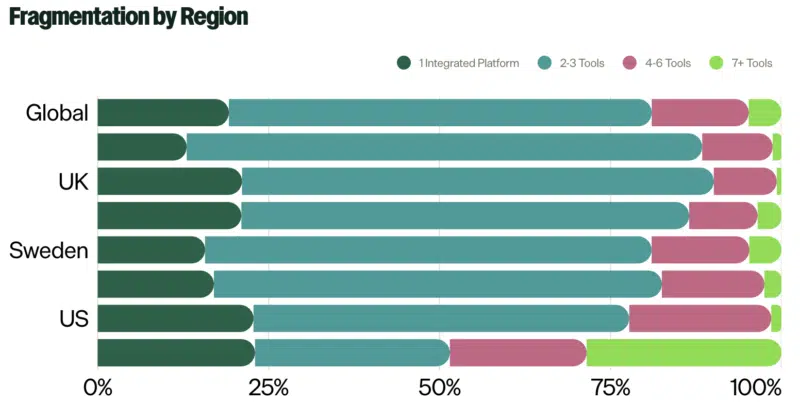
A significant contributor to the operational inefficiencies highlighted in the report is the prevalent use of fragmented technology ecosystems. The survey revealed that a mere 19% of respondents utilize a single, integrated AI platform for their marketing activities. In stark contrast, over 80% regularly switch between multiple, often disconnected, AI applications. This proliferation of specialized tools, while potentially offering granular functionalities, creates disjointed workflows that necessitate laborious manual transfer of information and assets between systems.
This "swivel chair integration" problem is not new to marketing technology, but it has been amplified by the rapid, often ad-hoc, adoption of AI tools. Departments may independently acquire AI solutions for specific tasks—one for copywriting, another for image generation, a third for data analysis—without a holistic strategy for their integration. The consequence is a "tool sprawl" that undermines the very efficiency AI is meant to deliver. Each manual transfer of data introduces opportunities for errors, inconsistencies, and significant time wastage, transforming what should be a seamless digital process into a series of laborious, human-mediated handoffs. This fragmentation imposes a hidden cost, not just in terms of lost productivity but also in the cognitive load placed on marketers constantly switching contexts and adapting to varied interfaces.
The Cost of Disconnected Systems: Governance and Consistency Challenges
The issue of fragmented technology extends beyond mere inconvenience; it poses substantial challenges to effective governance and the maintenance of consistent brand messaging. Disconnected environments make it exceedingly difficult for organizations to apply and enforce consistent AI policies, ethical guidelines, and brand standards across all content outputs. Teams are compelled to spend excessive time verifying AI-generated outputs, ensuring compliance with evolving legal and regulatory frameworks (such as data privacy and intellectual property), and painstakingly confirming that information remains consistent across all customer touchpoints and internal systems. This exhaustive verification process diverts valuable resources and attention away from more strategic initiatives, such as crafting compelling customer experiences and developing innovative marketing campaigns.
The report, while not definitively establishing a direct causal link, strongly suggests a correlation between technological fragmentation and these governance outcomes. Where AI tools operate in silos, the ability to implement centralized controls, conduct comprehensive audits, and ensure a unified brand voice diminishes significantly. This distributed nature of AI implementation makes it harder to identify and rectify biases, ensure factual accuracy at scale, or maintain a consistent tone across diverse content types. The implication is clear: without a cohesive technological infrastructure that allows for centralized control and oversight, the potential risks associated with AI, from factual inaccuracies to brand dilution, are substantially amplified.
The Brand Identity Conundrum
Beyond operational hurdles, the survey also unearthed a fundamental struggle for AI in one of marketing’s most critical and nuanced areas: preserving and articulating brand identity. More than half of all respondents indicated that while AI tools are proficient at capturing factual information, they frequently fall short in grasping and replicating their brand’s unique emotional tone and personality. Only approximately one-third of marketers expressed high confidence that their AI tools consistently reflect their distinct brand voice across various outputs.
Brand identity is not merely about facts or keywords; it encompasses a complex interplay of tone, style, values, and emotional resonance that differentiates a brand in the marketplace. AI, in its current iteration, often operates on pattern recognition and statistical likelihoods, which can lead to generic, safe, or even bland outputs that lack the distinctive spark of human creativity and nuanced understanding of brand ethos. This limitation poses a significant challenge for marketers striving to maintain a unique market presence in an increasingly competitive and AI-driven content landscape.
The Homogenization Threat: Losing Brand Distinctiveness
While U.S. marketers again showed slightly more optimism, with 45% expressing high confidence in AI’s ability to capture emotional resonance, a widespread concern persists: 62% of U.S. respondents, and a significant proportion globally, believe that AI is contributing to an undesirable homogenization of brand voices. This fear is not unfounded. If multiple brands rely on similar AI models and prompts without substantial human oversight and refinement, their content can begin to sound remarkably alike, eroding the very distinctiveness that marketing aims to build.
Further reinforcing this concern, 15% of respondents candidly stated that if branding elements were removed, their AI-generated work would be difficult to distinguish from a competitor’s. This alarming statistic highlights the potential for AI to inadvertently lead to a "sea of sameness," where brands struggle to stand out and connect authentically with their target audiences. The findings unequivocally reinforce that while AI can be a powerful engine for content generation, the critical role of maintaining differentiation, infusing unique personality, and ensuring strategic alignment still firmly rests on human editorial oversight, robust governance frameworks, and meticulously managed brand systems. The creative and strategic discernment of human marketers remains irreplaceable in shaping and safeguarding a brand’s unique identity.
The Chasm Between Leadership and Practitioners
The Optimizely report also shed light on a notable perception gap between marketing leaders (C-suite executives) and the practitioners who engage with AI on a daily basis. Over half of the marketers surveyed articulated a strong belief that leadership significantly underestimates the true human effort and ongoing intervention AI requires to function effectively. C-suite respondents, in contrast, were considerably more prone to describing themselves as "liberated" by AI and to assert that their organization’s AI implementation was fully aligned with strategic objectives.
This divergence in perception is crucial. Leaders, often operating at a strategic altitude, might primarily observe the output of AI (e.g., faster content generation, initial drafts) and attribute efficiency gains without fully appreciating the extensive process involved in achieving that output—the hours spent on prompt engineering, iterative refinement, fact-checking, and compliance. This "watermelon effect" (green on the outside, red on the inside) can lead to unrealistic expectations from leadership regarding AI’s autonomous capabilities and the resource allocation required for its effective deployment.
The Ethical Quandary: Undisclosed AI Use and Off-Brand Content
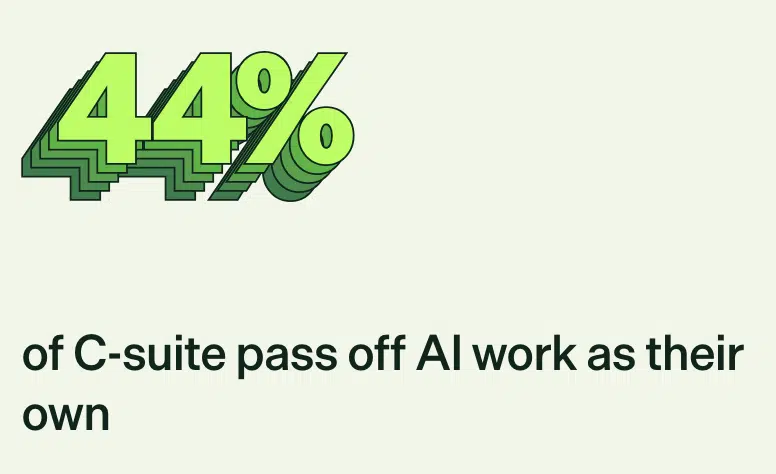
The survey also uncovered concerning behavioral differences, particularly among leadership. A significant 44% of C-suite respondents admitted to frequently or always submitting AI-generated work without disclosing its origins. Even more troubling, one-quarter of marketing leaders acknowledged publishing AI-generated content that they knew was "off-brand" in order to meet tight deadlines. In the U.S., this figure escalated to one in three leaders.
These findings are not isolated incidents of governance failure but rather symptomatic of the intense operational pressure marketers are currently enduring. The rapid adoption of AI is clearly outstripping the development and enforcement of corresponding ethical guidelines, disclosure policies, and quality control processes. The drive for speed and output, perhaps fueled by leadership’s optimistic view of AI’s liberation, is inadvertently pushing practitioners, including leaders themselves, to compromise on transparency and brand integrity. This creates a precarious environment where short-term gains in output could lead to long-term erosion of trust, brand reputation, and ethical standards within the marketing function. It highlights an urgent need for organizations to establish clear AI usage policies, foster a culture of transparency, and ensure that deadlines are realistic in the context of responsible AI integration.
A Call for Strategic Recalibration
Perhaps the most compelling and indicative finding of the entire report is the widespread sentiment among marketing leaders regarding their AI initiatives. A striking 65% of these leaders would seriously consider pausing their current AI rollout for a period of 90 days to fundamentally rethink and recalibrate their approach. This willingness to halt momentum, despite significant investment and organizational pressure, underscores a profound realization that current strategies are not delivering the anticipated value. Only a minority, 35%, expressed confidence that their existing implementation is genuinely on the right trajectory.
While the data from Optimizely, as with any vendor-sponsored research, reflects the perceptions of marketers rather than independently verified productivity metrics, the consistency of these findings across a large global sample points to a clear, overarching theme. Marketing organizations have largely overcome the initial hurdle of AI adoption; the technology is in place. However, the far more intricate and demanding challenge now lies in constructing the robust governance frameworks, seamlessly integrated technology stacks, and adaptive operating models necessary to render AI truly reliable, efficient, and valuable at scale. The initial excitement around AI has matured into a pragmatic understanding that successful implementation requires a holistic, strategic overhaul of processes and infrastructure.
The Road Ahead: From Adoption to Operational Excellence
The implications of these findings are profound for the future trajectory of marketing, technology, and talent development within the industry.
The New Competitive Frontier: For enterprise marketers, the competitive advantage is no longer derived simply from adopting AI. In an era where AI tools are readily accessible, the true differentiator will be the ability to operationalize AI effectively. This means moving beyond experimental usage to embed AI into core workflows in a way that is governed, integrated, brand-aligned, and genuinely value-accretive. Companies that master this operationalization will gain significant leads in efficiency, personalization, and brand consistency, while those that struggle risk falling behind in a rapidly evolving landscape.
MarTech’s Evolution: Integrated Solutions and AI Orchestration: The widespread fragmentation reported by marketers signals a clear demand for more integrated MarTech solutions. Vendors will face increasing pressure to move beyond offering standalone AI features to providing comprehensive platforms that seamlessly connect various AI capabilities, manage data flows, and incorporate governance controls. The rise of AI orchestration platforms, designed to manage and coordinate multiple AI models and tools within a unified framework, is a likely future development in response to this pressing need. These platforms will need to prioritize interoperability, ease of data transfer, and built-in compliance features to meet the complex demands of modern marketing organizations.
Redefining the Marketer’s Role in an AI-Powered World: The shift in workload from content generation to quality control, governance, and strategic oversight implies a significant evolution in the role of the marketer. Future marketing talent will require enhanced skills in prompt engineering, critical evaluation of AI outputs, data literacy, ethical AI considerations, and strategic thinking. The emphasis will move from creating every piece of content to curating, guiding, and refining AI-generated content to ensure it meets brand standards, legal requirements, and strategic objectives. This also opens new avenues for specialized roles such as AI content strategists, AI governance specialists, and AI ethicists within marketing departments.

In conclusion, the journey of AI integration in marketing is transitioning from an era of rapid deployment to one of strategic refinement. The initial wave of enthusiasm has given way to a more nuanced understanding of the complexities involved. The ultimate success of AI in marketing will not be measured by its presence, but by the effectiveness of the operational frameworks, the robustness of the technological infrastructure, and the adaptability of the human talent that support and guide its intelligent application. The time for marketers to pause, reassess, and strategically operationalize their AI initiatives is now, to unlock its true potential and navigate the challenges of the coming decade.
Related posts: