CMOs Must Bridge the AI Excitement-Action Gap to Navigate Marketing’s Transformative Era

According to a June 2026 McKinsey article, a striking 96% of Chief Marketing Officers (CMOs) surveyed expressed excitement about the possibilities of Artificial Intelligence (AI) at work. This near-universal enthusiasm, however, masks a critical disconnect: the transition from excitement to concrete, organizational action remains largely stalled across the industry. The same McKinsey survey revealed that a mere 28% of marketers perceive their companies as undertaking a fundamental rewiring of their marketing teams and workflows to integrate AI effectively. This disparity highlights a pivotal challenge for marketing leadership: AI is not merely a tool to be adopted, but a force demanding a complete reimagination of strategy, structure, and skill sets.
The current landscape of marketing is characterized by two profound phenomena. Firstly, the rapid, almost exponential, advancement of AI capabilities, particularly in generative AI, has outpaced traditional organizational adaptation speeds. Tools that were once futuristic concepts are now readily available, offering unprecedented efficiencies and personalization opportunities. Secondly, despite the clear potential, many marketing organizations are grappling with inertia, a lack of clear implementation roadmaps, and the significant undertaking required to integrate AI beyond superficial applications. This creates a precarious situation where a vast majority of leaders acknowledge AI’s revolutionary potential, yet only a fraction are actively preparing their teams for the inevitable shift. The cautionary tale of Charlie’s father in "Charlie and the Chocolate Factory," who loses his job to machines capping toothpaste tubes only to be rehired to maintain them, serves as a poignant analogy for the evolving human-AI dynamic. The question for CMOs is not if AI will transform marketing, but how they will lead their organizations through this metamorphosis, ensuring their teams are equipped to maintain and leverage these new "machines," rather than being displaced by them. The era of digital reluctance has passed; the time for decisive AI action is now.
The Evolving Landscape of Marketing AI: A Brief Chronology
The journey of AI in marketing is not a sudden eruption but a cumulative evolution, accelerating dramatically in recent years. Early iterations of AI in marketing, dating back to the late 2000s and early 2010s, primarily involved rule-based automation for tasks like email segmentation, basic ad bidding, and rudimentary customer service chatbots. These systems offered incremental efficiency gains but lacked true intelligence or adaptive learning capabilities. The mid-2010s saw the rise of machine learning (ML) applications, allowing for more sophisticated predictive analytics, personalized recommendations, and dynamic content optimization based on vast datasets. This marked a shift towards data-driven marketing, where algorithms could identify patterns and make predictions with increasing accuracy.

However, the true inflection point arrived in the early 2020s with the widespread adoption and rapid advancement of generative AI, particularly Large Language Models (LLMs) and tools capable of generating images, videos, and even code. This era, extending into 2026, democratized AI, making sophisticated capabilities accessible to marketers without deep technical expertise. The ability to generate campaign copy, design concepts, customer responses, and even entire marketing strategies with unprecedented speed and scale fundamentally altered the operational paradigm. This rapid acceleration of AI capabilities, from tactical automation to strategic augmentation, is the core context behind the McKinsey findings. CMOs are now faced with tools that can do more than optimize; they can create, analyze, and strategize in ways previously unimaginable, pushing the boundaries of what marketing can achieve. The reports from McKinsey, Gartner, and BCG in early to mid-2026 underscore that this is not a future projection, but a present reality demanding immediate, comprehensive strategic responses.
The Urgent Mandate for AI Literacy Among CMOs
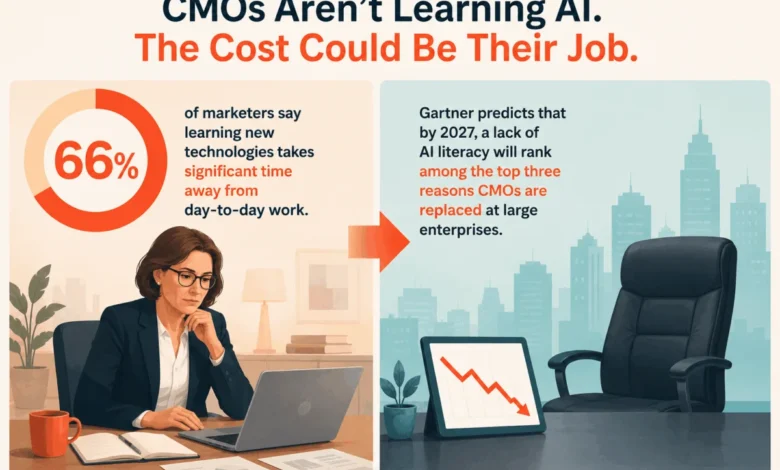
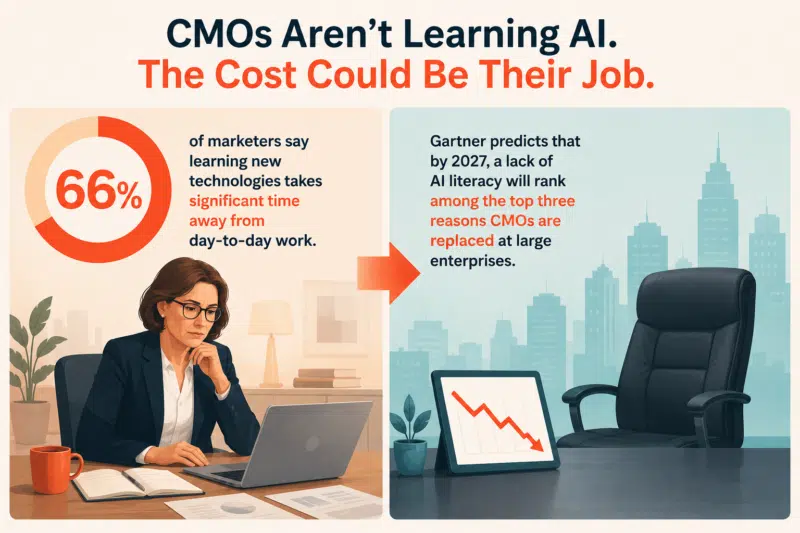
A significant barrier to action is the perceived time investment required for CMOs to become truly AI literate. A June 2026 Gartner article revealed that 66% of marketers lament that "learning new technologies takes significant time away from day-to-day work." This reluctance, while understandable given demanding schedules, carries severe consequences. Gartner predicts that "by 2027, a lack of AI literacy will rank among the top three reasons CMOs are replaced at large enterprises." This isn’t just about understanding the buzzwords; it’s about leading an organization through a fundamental technological shift.
Building AI literacy for a CMO transcends merely understanding the basics; it necessitates a deep, practical engagement with the technology. This means going beyond general resources, like those offered by the Marketing AI Institute, to actively "getting your hands on the keyboard." CMOs must personally experiment with the AI tools their organizations utilize, understanding their strengths, limitations, and practical applications. This hands-on approach allows them to formulate "intelligent questions" for their teams, demonstrating informed leadership and fostering a culture of innovation. For instance, a CMO who has experimented with a generative AI tool for campaign copy can better guide their creative team on prompt engineering, iteration processes, and quality control. They can understand why certain outputs are generated, what data biases might influence results, and how to effectively integrate AI-generated content into broader marketing strategies.
Furthermore, AI literacy for CMOs includes a robust understanding of the ethical implications of AI use in marketing, such as data privacy, algorithmic bias, and transparency. As the custodians of brand reputation and customer trust, CMOs must champion responsible AI deployment, ensuring that personalization doesn’t cross into invasiveness and that algorithms do not perpetuate harmful stereotypes. The inferred sentiment from industry experts is clear: CMOs who fail to grasp these nuances risk not only operational inefficiencies but also significant brand damage and regulatory scrutiny. The time invested now in developing this comprehensive AI understanding is not a diversion from day-to-day work, but a critical investment in future relevance and leadership.
Reimagining the Marketing Organization for the AI Age
The advent of AI necessitates a fundamental rethinking of the marketing organization itself. Traditional structures, often designed around distinct functional silos and manual processes, are ill-equipped for the fluid, data-intensive, and highly automated workflows enabled by AI. CMOs must initiate a strategic overhaul, beginning with two critical questions:
How Much of Your Budget Should Be Allocated to AI?
The appetite for AI investment is undeniably strong, yet clarity on optimal allocation remains elusive. Gartner’s May 2026 press release indicated that "CMOs are allocating an average of 15.3% of marketing budgets to AI initiatives." This figure, while substantial, needs context. For comparison, a June 2026 Boston Consulting Group (BCG) publication revealed that "43% of CMOs report their AI investments in marketing exceeded $15 million this year (compared with 28% last year)," signifying a significant increase in absolute spending.
The challenge lies not just in the allocation itself, but in the justification and measurement of return on investment (ROI). Unlike traditional marketing expenditures with well-established metrics, AI investments often involve experimental initiatives with longer-term, less direct returns. Finance teams, as inferred, will demand quantifiable results. CMOs must develop sophisticated frameworks for tracking AI’s impact, moving beyond simple efficiency gains to demonstrating enhanced customer lifetime value, improved conversion rates, deeper market insights, and accelerated time-to-market for campaigns. This might involve running controlled experiments, developing new attribution models, and clearly defining success metrics before deployment. Early adopters are advised to start with pilot programs that demonstrate clear, measurable value to build internal confidence and secure further investment. The risk of overspending on unproven AI solutions without a clear ROI pathway is a genuine concern for boards and CEOs.
What Do You Do About a Team You Didn’t Staff for AI?
Perhaps the most daunting task for CMOs is transforming their existing workforce. BCG found that CMOs "must reimagine the job to be done at every layer of the function — insights, strategy, creative, planning, production, activation, or measurement — in the context of what AI makes possible." This goes far beyond simple headcount reductions. While the majority of marketing organizations might consider "targeted cuts" as a primary response, leading CMOs are adopting a more proactive and transformative approach.

This proactive strategy focuses on upskilling and reskilling existing talent. For example:
- Strategists move from manually gathering data to interpreting AI-driven insights, focusing on ethical considerations and strategic model selection.
- Creative teams leverage AI as a co-pilot, rapidly generating concepts, iterating designs, and personalizing content at scale, shifting their focus to higher-level creative direction and emotional resonance.
- Analysts evolve from descriptive reporting to advanced predictive and prescriptive analytics, monitoring AI model performance and identifying new opportunities.
- Content creators become prompt engineers, curators, and editors, ensuring AI-generated content aligns with brand voice and strategic objectives.
- Campaign managers utilize AI for hyper-segmentation, dynamic bidding, and real-time optimization, freeing them to focus on overarching campaign narrative and customer journey orchestration.
This transformation also necessitates the creation of new roles, such as AI marketing specialists, AI ethicists, and prompt engineers, to manage and optimize AI systems. The overarching principle is the "augmented human" model, where AI handles repetitive, data-intensive, and scalable tasks, allowing human marketers to dedicate their cognitive capacities to creativity, complex problem-solving, strategic thinking, and emotional intelligence – areas where human unique value remains indispensable. The inferred sentiment from marketing professionals is a mix of anxiety about job security and excitement about acquiring new, valuable skills. CMOs must manage this transition with transparent communication, robust training programs, and a clear vision for how human and AI capabilities will synergize.
Turning AI Adoption into Business Results
The ultimate objective of AI integration is not just efficiency but demonstrable business transformation. An April 2026 McKinsey article highlighted that a hybrid human-AI workforce would be truly transformational, unlocking unprecedented value across the marketing spectrum. This involves leveraging AI not just for isolated tasks, but as an integral part of an end-to-end marketing ecosystem.
The specific benefits of this hybrid approach are manifold:

- Hyper-personalization at Scale: AI can analyze vast customer data to deliver highly individualized messages, offers, and experiences across all touchpoints, significantly increasing engagement and conversion rates.
- Accelerated Content Creation and Optimization: Generative AI dramatically speeds up the production of diverse content formats, from ad copy to social media posts and blog articles, while predictive AI optimizes distribution and performance in real-time.
- Enhanced Predictive Analytics: AI models can forecast market trends, customer behavior, and campaign performance with greater accuracy, allowing for proactive strategy adjustments and optimized resource allocation.
- Automated Campaign Management: From media buying to budget allocation and performance tracking, AI can automate complex campaign elements, freeing human marketers to focus on strategic oversight and creative innovation.
- Improved Customer Experience: AI-powered chatbots and virtual assistants provide instant, personalized support 24/7, resolving queries efficiently and improving customer satisfaction.
- Deeper Market Insights: AI can uncover subtle patterns and correlations in market data that would be imperceptible to human analysis alone, leading to more informed strategic decisions.
For businesses, these capabilities translate directly into tangible results: increased customer lifetime value (CLTV), higher conversion rates, greater market share, reduced operational costs, and faster time-to-market for new products and campaigns. Leading CMOs are actively pursuing these outcomes, recognizing that AI is not a cost center but a powerful driver of growth and competitive differentiation. The implications are clear: companies that effectively integrate AI into their marketing operations will gain a significant advantage over those that merely observe from the sidelines.
Broader Implications and the Road Ahead
The integration of AI into marketing carries broader implications that extend beyond immediate operational efficiencies. Ethical considerations, in particular, will become paramount. CMOs must navigate complex issues surrounding data privacy, algorithmic bias, and transparency in AI decision-making. Developing robust AI governance frameworks and ensuring compliance with evolving regulations will be critical to maintaining consumer trust and avoiding reputational damage. Inferred calls from industry bodies and consumer advocacy groups for standardized ethical guidelines and greater accountability in AI deployment are growing louder.
Moreover, the AI landscape is not static; it is in a state of continuous evolution. What is cutting-edge today may be commonplace tomorrow. This necessitates a culture of perpetual learning, experimentation, and adaptation within marketing organizations. CMOs must foster an environment where teams are encouraged to explore new AI tools, share insights, and challenge existing paradigms. This agility will be crucial for staying ahead in a rapidly changing technological environment.
As nearly all CMOs agreed, it is indeed an exciting time to be in marketing. AI is revolutionizing the way businesses connect with customers, analyze markets, and create value. However, this transformative change also brings anxiety and the imperative for bold leadership. The time for deliberation is over. CMOs must now move decisively to build AI literacy across their teams, fundamentally rethink their organizational structures, and strategically deploy AI to achieve measurable business results. The choice is stark: lead the transformation and harness the incredible power of AI, or risk being left behind, much like Charlie’s father, still metaphorically capping toothpaste tubes while the world moves on to maintaining the advanced machinery. The future of marketing belongs to those who act now.