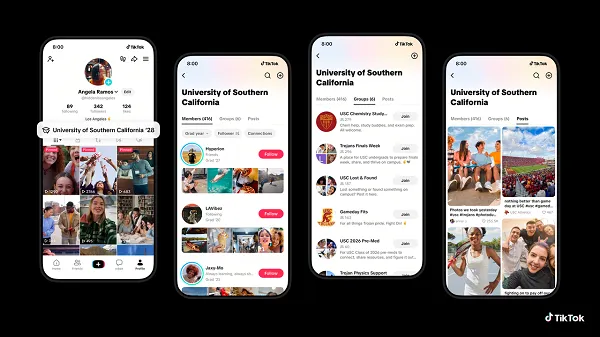
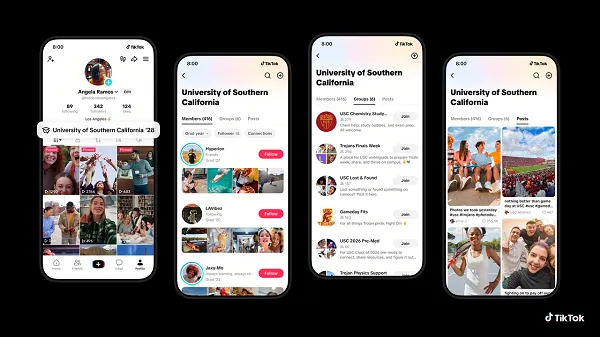
In a significant move to deepen its engagement with the crucial Gen Z demographic, TikTok has announced the launch of its new Campus Hub display, a specialized in-stream feature designed to foster enhanced connectivity among verified students at higher education institutions across the United States. This initiative aims to provide a dedicated digital space where college students can engage with localized content feeds, participate in exclusive group chats, and stay abreast of campus-specific trends, events, and opportunities. The rollout covers an expansive network of over 6,000 U.S. universities, leveraging TikTok’s existing Campus Verification feature, which relies on a partnership with the third-party provider Unidays to authenticate student status. This strategic expansion represents TikTok’s continued evolution from a primary entertainment platform to a more comprehensive social and community-building tool, while simultaneously addressing the historical challenges associated with maintaining secure and exclusive online college communities.
The Strategic Imperative: TikTok’s Deepening Roots in Gen Z Culture
TikTok’s ascent to global prominence has been meteoric, particularly among younger demographics, with Gen Z forming a significant portion of its active user base. Data consistently shows that TikTok is a primary source of entertainment, news, and social interaction for individuals aged 18-25. For platforms vying for the attention and loyalty of this demographic, integrating deeply into key life stages, such as the college experience, is a strategic imperative. College years are a pivotal period for social formation, community building, and the establishment of long-term digital habits. By offering a tailored experience for university students, TikTok seeks to cement its position not merely as an app for viral trends but as a foundational communication and community platform within the academic ecosystem. This move reflects a broader industry trend where social media giants are increasingly attempting to create more segmented, interest-based communities to retain users and foster deeper engagement beyond the broad public feed.
Unpacking the Campus Hub: Features and Functionality
The Campus Hub is presented as a multifaceted solution designed to cater specifically to the social and informational needs of college students. At its core, the feature is predicated on verified student identities, a critical component facilitated by the Campus Verification feature. Students from participating universities can link their academic affiliation directly to their TikTok profiles after authenticating their student status through Unidays, a globally recognized platform for student discounts and verification. Once verified, students gain access to two primary functionalities within the Campus Hub:
-
College Group Chats: This feature enables campus-verified students to create and join private group chats with up to 300 classmates. These chats are envisioned as dynamic spaces for students to discuss campus life, organize events, collaborate on academic projects, or simply connect with peers sharing common interests. The limited size of 300 members is likely a deliberate choice to foster a more manageable and intimate group dynamic, potentially mitigating some of the chaos associated with larger, unmoderated online communities. This function directly addresses the need for real-time, peer-to-peer communication that is often crucial in college settings, from coordinating study groups to planning social gatherings.
-
College Content Feeds: Complementing the group chats, the Campus Hub also provides students with a personalized content feed. This feed is specifically curated to surface videos and posts from other verified students at their university, as well as content directly related to their institution. This could include updates from student organizations, highlights of campus events, local news pertinent to the student body, or general content reflecting the unique culture and experiences of that specific university. The personalization aspect, a hallmark of TikTok’s algorithm, ensures that the content remains highly relevant and engaging, reinforcing a sense of shared identity and belonging within the campus community.
Together, these features aim to create a cohesive digital environment that mirrors and enhances the physical campus experience, making TikTok an indispensable tool for daily student life.
A Chronology of College Social Networking: Lessons from the Past
TikTok’s foray into dedicated college communities is not without precedent. The history of social media is replete with platforms that either began within or attempted to capture the college market, often with mixed results. Understanding this lineage is crucial for contextualizing TikTok’s current strategy and the challenges it faces.
-
The Early Days (2000s): Before Facebook’s dominance, platforms like MySpace served as early digital gathering spaces, though not specifically tailored for university students. However, the true genesis of college-centric social networking is often attributed to Facebook. Launched by Mark Zuckerberg in 2004 from Harvard University, "Thefacebook" was initially exclusive to Ivy League students, requiring a university email address for registration. This exclusivity was a core part of its early appeal and rapid growth, fostering a sense of trust and community among users who knew they were interacting with verifiable peers. This model, however, was eventually expanded to the general public as Facebook sought broader market penetration.
-
The Rise and Fall of Niche College Apps (2010s): As the social media landscape matured, various apps attempted to recapture the niche appeal of college exclusivity. Yik Yak, launched in 2013, gained significant traction by allowing users to post anonymous messages to a localized feed within a small radius. While initially popular for its candid and community-driven content, anonymity quickly led to widespread issues of cyberbullying, harassment, and even bomb threats, forcing the platform to implement stricter moderation and eventually leading to its initial shutdown in 2017. It later relaunched with phone number verification but continued to grapple with content moderation challenges.
-
Facebook Campus (2020-2022): Perhaps the most direct predecessor to TikTok’s Campus Hub was Facebook Campus, launched in September 2020. This feature aimed to bring Facebook back to its collegiate roots, offering college-only News Feeds and directories, as well as group chats. It required students to verify their university and graduation year. Despite the nostalgia and the backing of a tech giant, Facebook Campus struggled to gain traction and, more critically, faced significant issues with non-students gaining access. Concerns around security and the integrity of the student-only environment ultimately led Meta to announce its closure just two years after its launch, in March 2022. This failure underscores the immense difficulty in maintaining an exclusive and safe digital space when the incentives for infiltration are high, and the verification mechanisms are not foolproof.
These historical examples provide invaluable lessons for TikTok. The desire for a dedicated, trusted college community is evident, but the path to sustaining such an environment is fraught with challenges, particularly concerning verification integrity and content moderation.
The Role of Verification and Addressing Security Concerns
TikTok’s decision to partner with Unidays for student verification is a critical component of its Campus Hub strategy, aiming to differentiate itself from past failures like Facebook Campus. Unidays specializes in verifying student status for exclusive deals and services, utilizing robust systems that integrate with university databases or require official student documentation. This third-party verification adds an extra layer of security and authenticity compared to simple email domain checks or self-attestation, which were often exploited in previous platforms.
However, even with sophisticated verification, challenges persist. No system is entirely impervious to determined attempts at circumvention. The "risk…that non-students can infiltrate these groups, and end up targeting students within social apps" remains a primary concern. Potential vulnerabilities could arise from:
- Account Sharing: Verified students sharing their accounts or verification credentials with non-students.
- Impersonation: Sophisticated attempts to forge student documentation or exploit loopholes in the verification process.
- Social Engineering: Manipulating verified students into providing access or information.
Beyond initial access, content moderation within these private group chats and feeds will be paramount. TikTok will need to invest heavily in proactive moderation tools, user reporting mechanisms, and dedicated moderation teams to monitor for cyberbullying, harassment, hate speech, and other forms of harmful content. The anonymity that sometimes pervades online interactions, even in semi-private groups, can embolden bad actors. TikTok’s stated commitment to safety and community will be tested in its ability to effectively manage these risks within the Campus Hub.
Potential Benefits and Opportunities for Stakeholders
If TikTok can successfully navigate the complexities of security and moderation, the Campus Hub presents significant opportunities for multiple stakeholders:

-
For Students: The most direct beneficiaries are the students themselves. The Campus Hub offers an intuitive and accessible platform for:
- Enhanced Community Building: Fostering connections with peers, both within academic programs and across extracurricular interests.
- Information Access: Staying updated on campus events, academic deadlines, local opportunities, and university announcements.
- Networking: Potentially facilitating academic collaboration, mentorship, and even early career networking within university-specific alumni networks (as hinted by the original article’s mention of "trends among alumni").
- Support Systems: Creating spaces for peer support and shared experiences during the often-challenging college years.
-
For Universities: Academic institutions could also find value in a well-managed Campus Hub:
- Improved Communication: A direct and engaging channel to reach their student body with official announcements, event promotions, and critical information.
- Student Engagement: A tool to encourage participation in campus life and foster a stronger sense of university identity.
- Welfare Support: Potentially identifying and addressing student welfare concerns through community discussions or official monitoring (though privacy considerations would be paramount here).
-
For TikTok: The strategic benefits for the platform are substantial:
- Increased Engagement and Retention: Deeper integration into students’ daily lives leads to higher usage frequency and longer retention rates, particularly as students transition from college to professional life.
- Data and Insights: A rich source of data on student behaviors, interests, and trends, which can inform future product development and advertising strategies.
- Localized Monetization: Opportunities for localized advertising partnerships with businesses near university campuses, or collaborations with universities for sponsored content and events.
- Competitive Edge: Further differentiating itself from rivals like Instagram, Snapchat, and X (formerly Twitter) by offering a unique, verified community experience that these platforms currently lack or have struggled with.
Challenges and Critical Considerations
Despite the promising outlook, several challenges and critical considerations will dictate the long-term success of TikTok’s Campus Hub:
- Maintaining Exclusivity and Trust: The biggest hurdle remains preventing infiltration by non-students. Any significant breach of the verified student environment could quickly erode trust and lead to the feature’s demise, mirroring Facebook Campus’s fate. Continuous investment in verification technology and proactive security measures will be crucial.
- Content Moderation Burden: The sheer volume of content and communications across thousands of universities will place an immense burden on TikTok’s moderation teams. Ensuring a safe, respectful, and compliant environment while respecting free expression within student communities is a delicate balance. The potential for cyberbullying, harassment, misinformation, and other harmful content is ever-present.
- Student Privacy: With students linking their university affiliations, concerns about data privacy and how TikTok utilizes this sensitive information will inevitably arise. Clear, transparent policies and robust data protection measures will be essential to build and maintain student trust.
- Sustained Engagement: While novelty might drive initial adoption, maintaining long-term engagement requires continuous innovation and responsiveness to student needs. Students are discerning users, and if the Campus Hub doesn’t consistently provide value, they may revert to existing group chats (e.g., WhatsApp, Discord) or general TikTok feeds.
- Competition: Other platforms are also vying for student attention. While the Campus Hub offers a unique verified space, students still use multiple apps for different purposes. TikTok must ensure its offering is compelling enough to be a primary connection tool.
Broader Implications and Future Outlook
TikTok’s Campus Hub is more than just a new feature; it represents a significant strategic pivot towards fostering authenticated, niche communities within its broader platform. This move signals a growing trend in social media, where generalized feeds are being supplemented or even overshadowed by more private, interest-based, or identity-verified spaces. For TikTok, it’s an attempt to deepen its integration into the daily fabric of its most valuable demographic’s lives, potentially creating a "sticky" ecosystem that retains users long after their college years.
The success of this initiative will serve as a critical case study for the entire social media industry. If TikTok can effectively manage the security, privacy, and moderation challenges that have plagued previous attempts at college-centric social networks, it could establish a new benchmark for how platforms facilitate community building in specialized environments. Conversely, if it succumbs to the same pitfalls, it will reinforce the inherent difficulties of creating truly exclusive and safe online spaces. Regardless of its ultimate trajectory, the Campus Hub underscores the enduring importance of community and connection in the digital age, particularly for a generation that has grown up with social media as an integral part of their identity and social lives. It positions TikTok not just as a content consumption platform, but as a potentially indispensable tool for navigating the complex social landscape of higher education.
Related posts: