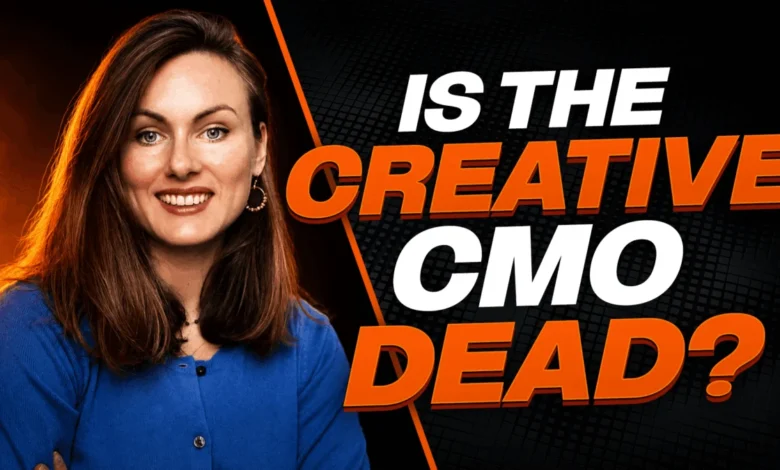
The catalyst for this transition is the rapid integration of artificial intelligence (AI) into the marketing stack. As AI-native tools move from experimental pilots to core business drivers, the CMO is no longer just a consumer of technology; they are now an architect of it. This new reality has created a strategic necessity for the CMO to align closely with the Chief Information Officer (CIO), forging a "power duo" that is becoming the bedrock of successful digital transformation.
The Erosion of the Creative-Only CMO
For decades, the CMO’s value proposition was primarily linked to brand equity and market sentiment. However, the rise of "Marketing Operations" (MOps) has shifted the locus of power toward those who can navigate complex martech ecosystems. Recent research conducted in partnership with Forrester underscores this transformation, suggesting that a formalized background in marketing technology is no longer a "nice-to-have" attribute for executive leadership, but a mandatory prerequisite for career longevity.

The data supports this trend: companies that integrate their marketing and technology stacks report a 25% higher efficiency rate in campaign deployment compared to those that maintain siloed operations. As the pressure to justify marketing spend grows in an environment of tightening budgets and increased accountability, the ability to manage data pipelines is now as critical as the ability to manage a brand campaign.
Chronology of the Shift: From Advertising to Automation
The evolution of the marketing executive can be traced across three distinct phases over the last two decades:
- The Creative Era (2000–2010): Marketing leadership was defined by traditional advertising, public relations, and high-level brand strategy. The role was predominantly outward-facing, with a focus on creative agencies and mass-market reach.
- The Digital Transition (2010–2020): The advent of social media and web analytics brought a new wave of metrics. CMOs began to oversee digital channels, yet much of the technical heavy lifting was still delegated to IT departments.
- The AI-Native Integration (2020–Present): With the proliferation of generative AI and predictive analytics, the distinction between marketing strategy and technical infrastructure has dissolved. Marketing leaders must now understand how to leverage LLMs, handle data privacy compliance, and manage automated customer journeys.
The CMO-CIO Partnership: A New Strategic Mandate
Valeria Balaro, CMO at the AI-native technology firm Star, has been at the forefront of this shift. Managing a team of 20 marketers in London, Balaro represents a new breed of executive who views technical literacy as the foundation of creativity. According to Balaro, the relationship between the CMO and the CIO has moved from a transactional service-provider dynamic to a collaborative strategic partnership.

"The CMO can no longer afford to be a bystander in the selection of enterprise technology," industry analysts note. When a CMO understands the intricacies of the data stack, they can better collaborate with the CIO to ensure that technology serves the customer experience rather than merely providing a platform for ad delivery. This collaboration reduces friction in project execution and ensures that the company’s digital footprint is consistent across both customer-facing and back-end systems.
Implications for Future Leadership
The emerging trend indicates that the next generation of CMOs will likely rise from the ranks of Marketing Operations. These professionals possess the analytical rigor and technical acumen required to manage complex MarTech stacks. They speak the language of APIs, data modeling, and CRM architecture as fluently as they speak the language of brand positioning.
For those currently in marketing leadership, the implications are clear: the "creative-only" career path is narrowing. To future-proof their careers, marketing leaders must pivot toward:
- Algorithmic Literacy: Understanding the capabilities and limitations of AI models to drive content and personalization.
- Data Stewardship: Prioritizing the governance and cleanliness of customer data as the primary asset for effective marketing.
- Technical Integration: Developing the ability to architect marketing systems that scale alongside the business.
Addressing the "Big Lie" in Marketing
One of the most pressing conversations currently happening in boardrooms involves what industry experts call the "biggest lie marketing tells itself." For years, the industry has clung to the notion that "brand" and "performance" are separate disciplines. In an AI-native world, this distinction is increasingly viewed as an artificial construct that hinders growth.
Data-driven brand building—where the brand experience is optimized in real-time based on deep behavioral analytics—is the new standard. Leaders like Balaro argue that the most effective marketing teams at scale are those that treat every touchpoint as both a brand expression and a data collection event.
Broader Economic and Corporate Impact
The integration of the CMO into the technical leadership fold is not merely a trend in professional development; it is a response to broader economic pressures. As businesses face higher costs of acquisition and increased competition for customer attention, the margin for error in marketing spend is shrinking.

When the CMO and CIO align, companies see a reduction in "shadow IT"—the practice of departments purchasing software without central oversight. This alignment leads to better resource allocation, improved data security, and a more cohesive customer experience. Furthermore, companies that prioritize this alignment are significantly better positioned to leverage AI for competitive advantage.
Looking Toward the Future
As season four of Conversations with MarTech highlights, the professional development of the CMO is an ongoing journey. The transition from creative storyteller to data-driven strategist is a response to the reality that in the 21st century, technology is the medium through which the brand story is told.
The future of marketing leadership belongs to those who can bridge the divide between the boardroom and the server room. By embracing a technical mindset and fostering deep collaboration with IT counterparts, the next generation of CMOs will be equipped to drive not just awareness, but sustained, measurable growth in an increasingly complex digital economy. The successful CMO of the future will not choose between creativity and technology; they will understand that in an AI-native world, technology is the canvas upon which the most compelling creative work is now built.
Related posts: