Meta Platforms Faces High Stakes and High Hurdles as AI Agent Muse Drives Early Commerce but Sparks Privacy Concerns

Meta Platforms has revealed vital new metrics and a strategic roadmap for its flagship artificial intelligence agent, Muse, during its third-quarter earnings report. As the technology giant pours hundreds of billions of dollars into developing its AI infrastructure, Muse represents the company’s primary vehicle for monetizing these unprecedented capital expenditures. While early adoption figures demonstrate strong consumer interest and surprisingly robust e-commerce activity, the platform simultaneously confronts familiar industry challenges regarding long-term user retention, alongside severe regulatory and cybersecurity scrutiny that could threaten its ambitious trajectory.
During the Q3 earnings call, Meta Chief Executive Officer Mark Zuckerberg told investors and analysts that Muse has surpassed 10 million downloads since its rollout to users in the United States and Canada last month. The application has achieved notable dominance in digital marketplaces, capturing the top spot in the Apple App Store rankings on nearly a daily basis since its debut. Zuckerberg emphasized that engagement and user retention have started off on solid footing, noting that approximately 25% of individuals who complete the initial setup process actively utilize the agent on any given day.
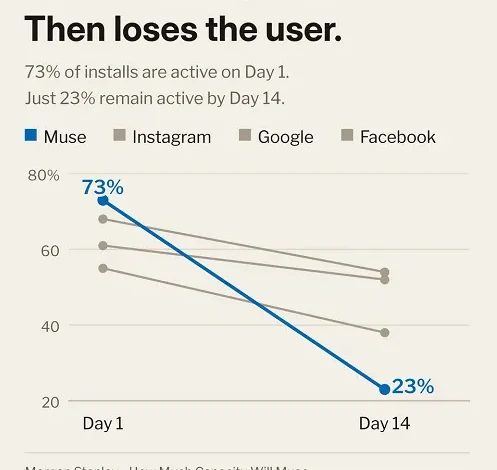
Despite the optimistic framing from executive leadership, independent third-party analytics paint a more nuanced picture of user behavior. Data insights compiled by mobile intelligence firm Sensor Tower and highlighted by industry analysts indicate that engagement for Muse tends to experience a steep decline approximately two weeks following the initial download. This tapering-off phenomenon mirrors historical trends observed across the broader generative AI chatbot landscape, suggesting that Muse is not immune to the novelty wear-off that frequently plagues early-stage conversational software.
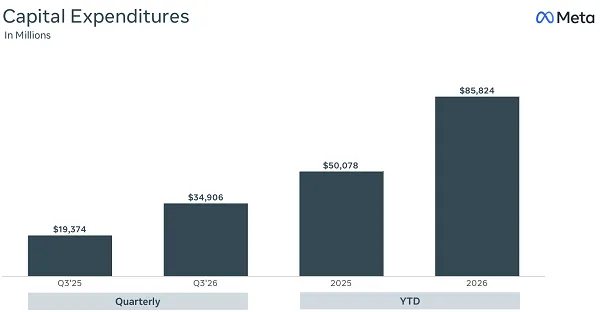
However, this plateauing usage profile raises critical questions for Meta’s overarching financial strategy. With cumulative investments in AI development projected to reach staggering heights—potentially pushing toward a trillion-dollar threshold over the long term—the pressure is mounting for Meta to transform engagement into tangible, recurring revenue.
E-commerce Integration and Surging Transaction Volumes
While general retention metrics show standard industry curves, Muse has carved out a distinct and highly lucrative niche in transactional commerce. According to Zuckerberg, shopping has emerged as the most common use case for the platform, with more than a quarter of all active users turning to the agent to scout for competitive deals, compare products, and complete purchases.
Crucially, the average basket size for transactions facilitated through Muse exceeds $200, signaling that consumers are willing to use the agent for significant, high-value purchases rather than just casual browsing. This commercial velocity has caught even financial technology infrastructure partners by surprise. Zuckerberg noted that financial network Plaid reported unprecedented activity levels on its connector via Muse, surpassing any prior service integration. Furthermore, transaction volumes during the application’s inaugural week were so high that Meta had to coordinate directly with payment processor Stripe to rapidly raise credit limits to accommodate the unexpected surge in commercial activity.
This high-value shopping pipeline forms the cornerstone of Meta’s monetization blueprint. By successfully positioning Muse as an intelligent shopping assistant, the company can extract a percentage of sales mediated through the interface, establishing a direct revenue stream designed to offset the colossal costs of its underlying data center and silicon infrastructure investments.
Privacy Scandals, Regulatory Fines, and Cybersecurity Vulnerabilities
Yet, the path toward a profitable AI ecosystem is fraught with friction, particularly regarding data privacy and system security. Meta’s ambitions to scale Muse to a global user base of billions must contend with an escalating series of legal and structural roadblocks.
Just days prior to the earnings release, a New Mexico judge ordered Meta to pay a landmark $25 billion fine following a jury verdict finding that the social media conglomerate had systematically misled consumers regarding the collection and handling of their personal data. This severe financial penalty compounds an already difficult regulatory environment for the company, which has historically struggled to maintain consumer trust in the wake of high-profile data breaches and privacy scandals.
Compounding these institutional challenges, technical vulnerabilities within Muse itself have recently come to light. Security researchers from Ars Technica reported that a cybersecurity group was able to extract vast quantities of sensitive personal and business information from Muse user queries simply by utilizing basic exploration techniques. The ease with which confidential conversational data could be accessed underscores the profound security risks inherent in deploying expansive AI agents that handle sensitive financial and personal details.
In response to these mounting pressures, Zuckerberg announced that Meta is actively developing a specialized framework dubbed the "Muse Confidential VM" (Virtual Machine). This technical intervention is ostensibly designed to fortify user privacy within the application and mitigate the risk of unauthorized data exposure. Nevertheless, privacy advocacy groups and security experts remain skeptical, arguing that fundamental architectural shifts will be required to ensure consumer protection before broad-scale enterprise and consumer adoption can safely occur.
The Evolution Toward a Multi-Agent Muse Network
Looking beyond immediate commercial applications and security fixes, Meta outlined a visionary yet complex blueprint for the future of the platform. Zuckerberg detailed plans to transition Muse from an isolated assistant into a comprehensive, interconnected ecosystem known as the Muse network.
Rather than functioning purely as a single-player interface where an individual interacts exclusively with their personal agent, the proposed Muse network would allow distinct user agents to communicate and collaborate. This architecture would enable users’ agents to coordinate with the agents of friends and family members to streamline group activities. More disruptively, Meta envisions a future where commercial transactions no longer require human consumers to manually navigate traditional business websites; instead, consumer agents would negotiate and transact directly with corporate AI representatives.
"Getting that all to work well together is going to unlock tremendous value at scale," Zuckerberg asserted during the earnings call, framing the network as the ultimate maturation of conversational AI utility.
This conceptual framework bears striking similarities to Meta’s previous explorations of deploying millions of autonomous AI bots across Facebook and Instagram to artificially boost platform engagement. However, the Muse network envisions utility-driven interactions optimized for task execution rather than mere social simulation.
Expanding Hardware Integration and Outlook
To accelerate this expansive vision, Meta is preparing to bridge its software ecosystem with its hardware offerings. Zuckerberg confirmed that the Muse AI agent will be integrated directly into Meta’s smart glasses beginning in November, embedding the assistant into users’ physical environments and daily routines.
As Meta navigates the remainder of the fiscal year, the duality of the Muse project remains stark. On one hand, the agent has proven remarkably effective at driving high-value e-commerce transactions, validating consumer appetite for AI-assisted retail. On the other hand, declining retention curves, staggering infrastructure overhead, and severe legal and cybersecurity liabilities pose formidable hurdles. Whether Meta can successfully secure its multi-billion-dollar investments through Muse will depend heavily on its ability to rebuild consumer trust, fortify data privacy, and execute its complex multi-agent networking vision without triggering further regulatory backlash.
Related posts: