Google Launches Ads Decoded Podcast to Bridge the Gap Between Product Development and Digital Marketers in the AI Era


Google has officially inaugurated its "Ads Decoded" podcast series, a strategic communication initiative designed to foster direct dialogue between the architects of its advertising technology and the global community of marketers who utilize these tools. Hosted by Ginny Marvin, Google’s Ads Product Liaison, the debut episode features Eleanor Stribling, Group Product Manager at Google Analytics, focusing on the critical intersection of advanced analytics and artificial intelligence (AI). This launch comes at a pivotal moment for the digital advertising industry, which is currently navigating a dual transition toward privacy-centric measurement and AI-driven optimization.
The podcast aims to demystify the complexities of Google’s product roadmap, providing a platform where advertiser concerns are addressed by the individuals responsible for designing and building Google Ads and Google Analytics. By moving beyond traditional documentation and blog posts, the "Ads Decoded" series seeks to humanize the development process while offering practical, high-level strategic guidance for businesses attempting to maintain growth in an increasingly volatile digital landscape.
The Strategic Evolution of Google Analytics as an Activation Engine
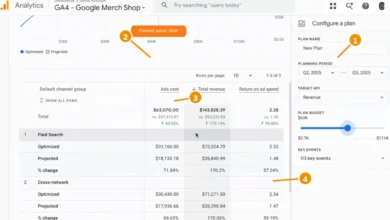
In the premiere episode, the conversation centers on the transformation of Google Analytics from a legacy reporting tool into what Stribling describes as an "activation engine." For decades, digital analytics was largely retrospective, focused on passive reporting—analyzing what had already occurred on a website or application. However, the current iteration, Google Analytics 4 (GA4), is built with a fundamentally different architecture designed to serve as the foundational data layer for AI.
Stribling emphasizes that the primary value of modern analytics lies in its ability to drive action. This shift from "viewing data" to "using data" is the cornerstone of business growth in the AI era. By leveraging machine learning models integrated directly into the analytics platform, marketers can now predict user behavior, such as churn probability or purchase intent, and export these insights directly into Google Ads for real-time bidding and targeting. This integration reduces the latency between data collection and marketing execution, allowing brands to respond to consumer signals with unprecedented speed.
Data Strength: The Prerequisite for AI Performance
A significant portion of the discussion is dedicated to the concept of "data strength." In the context of AI-driven marketing, data strength refers to the quality, volume, and relevance of the first-party data fed into machine learning algorithms. As the industry moves away from third-party cookies and faces stricter regulatory environments like GDPR and CCPA, the "garbage in, garbage out" principle has never been more relevant.
Marvin and Stribling argue that data strength is not merely a technical requirement but a unique strategic advantage. Brands that possess a robust, consented data set can train AI models more effectively than those relying on fragmented or low-quality data. This "strength" enables AI to fill in the gaps caused by missing data points—often a result of user opt-outs or cross-device journeys—through sophisticated modeling. Consequently, accurate measurement setup is presented not as a back-office task, but as a primary driver of competitive performance.
Historical Context: The Road to Google Analytics 4
The launch of "Ads Decoded" follows one of the most significant transitions in the history of digital marketing: the sunsetting of Universal Analytics (UA) in favor of Google Analytics 4. This transition, which reached its primary milestone in July 2023, was met with both anticipation and friction within the marketing community. Universal Analytics was built for a world of desktop browsing and independent sessions, whereas GA4 was designed for a cross-platform, privacy-first world where user journeys are non-linear.
The timeline of this evolution is critical to understanding the current state of the industry:
- 2020: Google introduces GA4 (originally "App + Web") as the next generation of measurement.
- 2022: Google announces the definitive sunset dates for Universal Analytics, signaling a mandatory shift for millions of businesses.
- 2023: The official retirement of standard UA properties, forcing a mass migration to GA4’s event-based tracking model.
- 2024: The focus shifts from basic implementation to "activation," where businesses are encouraged to use GA4’s AI capabilities to offset the loss of third-party identifiers.
The podcast serves as a corrective measure to address the "learning curve" associated with this transition, providing a direct line of communication to help marketers navigate the nuances of the new system.
Supporting Data and Market Trends
The push toward AI-integrated analytics is supported by broader industry trends and performance metrics. According to internal Google data and various industry benchmarks, advertisers who utilize AI-powered tools, such as Value-Based Bidding combined with GA4 signals, see an average increase in conversion value of 15% to 30%. Furthermore, a recent survey of CMOs indicated that over 70% of marketing leaders believe that the ability to unify data across platforms is their top priority for 2024.
The scale of Google’s ecosystem underscores the importance of these updates. Google Analytics is currently used by an estimated 80% of websites that employ an analytics service. Therefore, changes in how Google recommends using its product have a profound "ripple effect" across the global digital economy. As third-party cookies are phased out in Google Chrome, the reliance on first-party data collected via GA4 becomes the primary mechanism for maintaining personalized advertising at scale.
Industry Implications and Official Perspectives
The move to launch "Ads Decoded" suggests that Google is aware of the transparency gap that often exists between a platform’s technical capabilities and the advertiser’s ability to execute them. Industry analysts suggest that this podcast is an attempt to mitigate the "black box" perception of AI. By explaining the "why" and "how" behind product features, Google hopes to build trust with skeptical marketers who may feel they are losing control to automated systems.
While official responses from the broader marketing community have been generally positive regarding the increased transparency, some specialists note that the "practical talk" promised by Marvin and Stribling must address the high barrier to entry for smaller businesses. For many SMEs, achieving "data strength" is a daunting task that requires technical expertise and significant privacy compliance infrastructure. The podcast’s emphasis on "laying the groundwork for a strong year" implies a call to action for businesses of all sizes to audit their measurement setups immediately.
Analysis: The Shift Toward Predictive Marketing
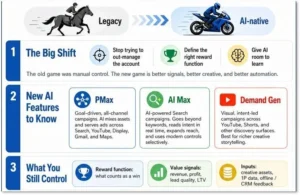
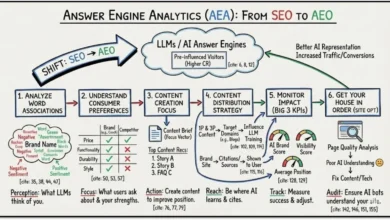
The core implication of the "Ads Decoded" debut is that the era of manual, granular campaign management is ending. In its place is a new paradigm of "Predictive Marketing." In this environment, the marketer’s role shifts from adjusting bids and keywords to managing data inputs and defining business objectives.
The discussion between Marvin and Stribling highlights three critical pillars for success in this new era:
- Measurement Accuracy: Ensuring that every interaction is captured correctly within the event-based framework of GA4.
- Consent Management: Using tools like Consent Mode to ensure that data collection aligns with global privacy regulations while still providing enough signals for AI modeling.
- Cross-Functional Collaboration: Breaking down the silos between the analytics team (who collect the data) and the ads team (who spend the budget) to ensure that the "activation engine" is fueled by the right business goals.
Conclusion and Future Outlook
As the first season of "Ads Decoded" unfolds, it is expected to cover a wide array of topics ranging from the Privacy Sandbox to the future of search in the age of generative AI. The debut episode sets a clear tone: the future of advertising is inextricably linked to the sophistication of one’s analytics.
By positioning Google Analytics as a strategic "activation engine" rather than a mere record-keeper, Google is challenging marketers to rethink their entire digital strategy. The message is clear: those who invest in data strength and embrace the transition to AI-driven measurement will find themselves with a significant competitive advantage, while those who remain tethered to passive reporting models risk falling behind in an increasingly automated marketplace.
The "Ads Decoded" podcast is more than a marketing tool for Google; it is a roadmap for the industry’s survival in a post-cookie, AI-first world. As Ginny Marvin and her guests continue to pull back the curtain on product development, the digital advertising community will be watching closely to see how these tools evolve to meet the challenges of tomorrow. For now, the directive for marketers is simple: subscribe, listen, and—most importantly—ensure your measurement foundation is ready for the AI revolution.