The global marketing and advertising industry stands at a monumental crossroads as the rapid integration of artificial intelligence and automated systems fundamentally reshapes the dynamics between brands and their agency partners. For decades, the foundational business model of marketing agencies relied heavily on billable hours, manual execution, and compensation tied directly to a percentage of media spend. However, the maturation of agentic artificial intelligence—systems capable of autonomous decision-making, continuous machine learning optimization, and real-time campaign execution—has rendered traditional agency workflows largely obsolete. Industry analysts, corporate procurement officers, and marketing executives are now forced to reevaluate contract structures, shifting away from paying for routine operational labor and toward compensating partners for high-level strategy, governance, and verifiable business outcomes.
This transformation spans every discipline within modern marketing, encompassing media buying, creative development, performance marketing, brand positioning, measurement, customer relationship management, lifecycle marketing, advocacy, auditing, and complex multi-channel combinations. As machine learning models absorb the repetitive execution tasks that once consumed thousands of human hours each month, the economic framework governing agency fees must adapt to reflect this massive productivity shift.
The Evolution of Agency Compensation Models
Historically, traditional agency contracts incentivized volume over efficiency. The prevalent percent-of-media-spend model rewarded agencies for driving higher ad spend and executing a greater frequency of manual tasks, regardless of whether those actions yielded optimal financial returns for the client. Furthermore, statements of work were laden with labor-intensive line items such as manual bid adjustments, keyword sculpting, continuous campaign restructuring, and repetitive reporting routines.
With platforms increasingly relying on autonomous algorithms like Google’s Performance Max, Meta’s Advantage+, and automated bidding architectures, human micro-management of ad accounts has shifted from a value-add to a liability. Industry experts note that frequent manual interventions often disrupt the machine learning cycles of ad platforms, ultimately degrading campaign performance. Consequently, the mandate for the modern enterprise is to decouple agency compensation from physical activity and manual labor volume.
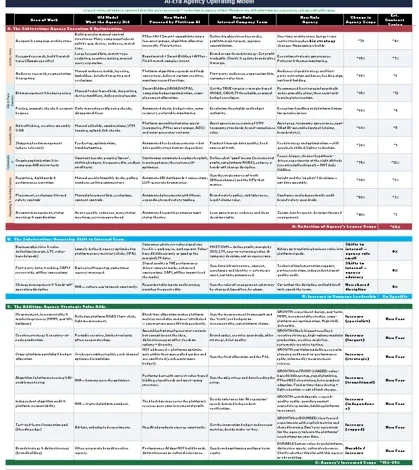
Industry forecasts suggest that updating agency statements of work to eliminate redundant execution tasks can yield immediate fee reductions ranging between 25% and 75% across various agency types. Conversely, investments in high-value, underpowered strategic services—such as cross-platform consumer behavior modeling, value-signal automation, advanced data engineering, and risk reduction for bleeding-edge innovations—are projected to drive a modest 15% to 25% increase in targeted advisory fees. The net result of this restructuring is a more cost-effective operational model that preserves corporate budgets while funding higher-tier strategic capabilities.
Restructuring the Contract: A Three-Tier Framework
To successfully navigate the agentic AI era, corporate leadership and procurement teams are moving away from traditional hourly billing and percentage-of-spend structures in favor of a modernized three-tier financial framework. This new approach aligns agency incentives directly with enterprise growth and technological efficiency.
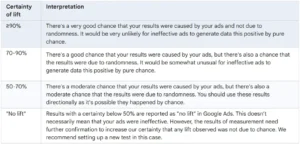
First, enterprises are establishing a lean base retainer dedicated strictly to governance, steering, and foundational data engineering. This baseline typically accounts for 40% to 50% of the newly streamlined total budget. Second, dedicated project fees are allocated for high-value strategic initiatives, including creative concept ideation and pre-testing, complex analytical modeling, and overarching portfolio strategy, representing approximately 30% to 40% of the financial commitment. Finally, a significant portion—ranging from 15% to 25%—is structured as an outcome-based incentive tied strictly to incremental profit, verified business lift, or incremental revenue, explicitly excluding misleading metrics such as platform return on ad spend.
Impact on Agency Operations and Workforce Dynamics
While these structural shifts present immediate challenges for traditional agency models, forward-thinking agency executives view the transition as a vital opportunity to elevate the quality of their work and enrich professional careers. By shedding low-value execution tasks, agencies are positioned to move upstream into advisory roles that command higher billing rates for specialized judgment and strategic oversight.
This evolution allows agencies to transition away from the high-turnover model of employing junior staff at below-market wages to manage endless manual tasks. Instead, agencies can cultivate multidisciplinary teams of experienced specialists focused on data governance, algorithm wrangling, creative direction, and holistic enterprise strategy. Industry analysts predict an acceleration of market dynamics over the coming years, characterized by the decline of legacy agencies clinging to outdated execution models and the simultaneous rise of modern, outcome-centered strategic partners.
Deconstructing the Subtractions: Where Work is Migrating to Machines
A detailed analysis of agency operations reveals twelve core dimensions of traditional workloads that are rapidly shifting toward platform intelligence and automation. These dimensions can be categorized into five primary operational clusters:
-
The Agency Activity Army: Account and campaign architecture, keyword research, match-type sculpting, and audience segmentation were once meticulously managed by human teams. Today, advanced machine learning models ingest tens of thousands of data points to dynamically allocate budgets across asset groups based on real-time consumer intent. The agency’s role is thus reduced to one-time architectural design and strategic oversight, cutting contract cost weights by approximately 78% in this domain.
-
The Bid and Pace Dancers: Manual bids, budget adjustments, day-parting, device modifiers, and daily pacing checks previously consumed hundreds of human hours. Automated smart bidding algorithms now execute these adjustments continuously and with greater precision. Restricting human interference prevents algorithmic resets, limiting the agency’s function to establishing accurate reward functions and configuring high-level guardrails. This results in an estimated 73% reduction in manual effort.
-
The Assembly Line: Trafficking, ad builds, tagging, quality assurance, and creative variant generation are increasingly managed by generative AI tools embedded within major ad platforms. Because platforms generate contextual variations tailored to individual users based on core business assets and reward functions, the agency’s operational burden narrows to asset preparation, clean taxonomy, and specialized feed management.
-
The Optimization Theater: Daily rituals of pausing underperforming ads, shifting budgets by intuition, and conducting superficial A/B tests represented a significant portion of legacy agency costs. Modern AI platforms execute continuous explore-exploit testing at speeds unattainable by human teams. Consequently, the agency’s focus shifts toward designing major, high-impact experiments that drive double-digit percentage increases in revenue.
-
The Reporting and Servicing Factory: Manually compiled weekly spreadsheets, exhaustive placement reports, and frequent status meetings are being phased out in favor of automated data lakes and AI-fronted analytics dashboards. As automated brand safety tools and platform efficiencies improve, the need for extensive account management servicing decreases, allowing teams to pivot from passive reporting to active business impact.
Broader Implications and Strategic Imperatives
The transition to an agentic AI marketing landscape requires organizations to implement rigorous operational safeguards. Corporate leadership must ensure complete, direct ownership of all ad accounts, tracking pixels, and auxiliary data pipelines to prevent vendor lock-in and maintain operational autonomy. Furthermore, eliminating percent-of-media-spend contracts removes the systemic risk of undisclosed media markups and financial rebates, demanding internal alignment across corporate finance and procurement departments.
Ultimately, the maturation of agentic artificial intelligence redefines the core value proposition of marketing agencies. By replacing manual execution with algorithmic efficiency and shifting financial incentives toward measurable business outcomes, enterprises and their agency partners can achieve greater productivity, sustainable growth, and long-term strategic resilience in an increasingly automated global economy.