Meta Rolls Out Major Video Creation Upgrades for Edits App and Instagram Reels Alongside Key Feature Sunset

Meta continues to aggressively iterate on its ecosystem of short-form video tools, rolling out a comprehensive suite of updates designed to streamline content production, enhance creator analytics, and refine the overall user experience across both its dedicated video editing application, Edits, and the flagship Instagram platform. As competition within the creator economy intensifies among tech giants vying for top-tier digital talent, these latest product rollouts highlight Meta’s ongoing commitment to equipping creators with advanced production utilities while simultaneously pruning underperforming features to optimize app architecture.
The multi-pronged update introduces targeted enhancements to the Edits application—including custom styling kits, audio link integrations, and expanded audience trend insights—while introducing an innovative "reference clip" workflow directly inside the primary Instagram composer. However, the sweeping operational changes also include the impending sunset of the recently introduced Reels linking feature, signaling a strategic pivot in how Meta handles multi-part video series.
Upgrades to the Edits App: Custom Kits, Audio Links, and Audience Insights
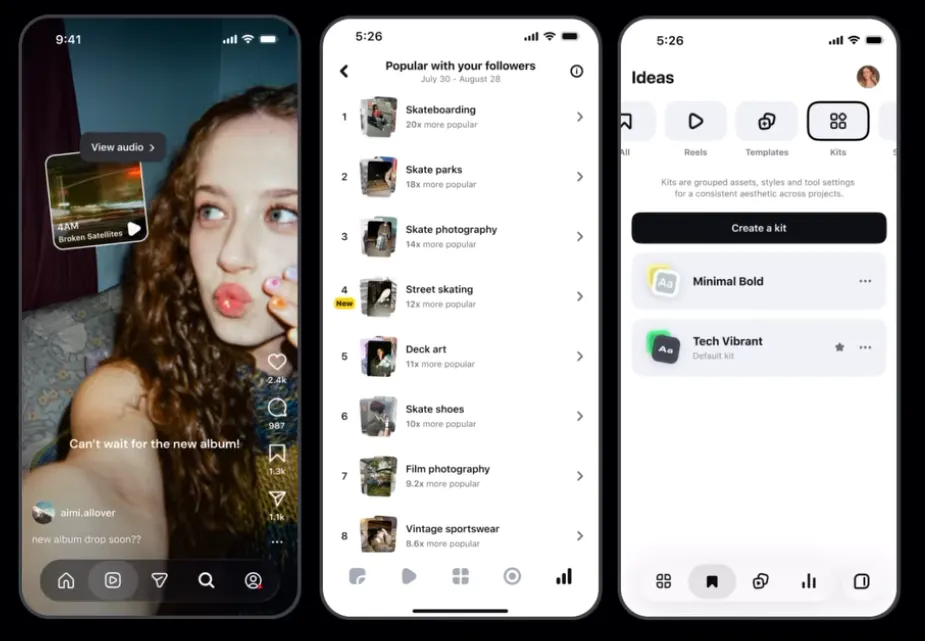
Meta’s standalone video editing app, Edits, has received a robust set of feature additions aimed at granting creators deeper control over their visual branding and strategic decision-making. Among the most prominent additions is the introduction of custom styling kits. This capability enables video producers to save specific visual style elements—such as color grading, text overlays, transition combinations, and aesthetic filters—into a dedicated, reusable group. Rather than manually replicating complex edits across multiple projects, creators can apply these saved kits instantaneously, ensuring cohesive branding across their video library.
In tandem with visual organization, Edits has integrated clickable audio links directly into the editing pipeline. This tool allows Reels creators to embed direct hyperlinks to specific songs, original voice tracks, and audio samples within their video assets. When viewers encounter these videos on their feeds, they can tap the embedded audio link to instantly navigate to the source sound, fostering higher discoverability and enabling audio trends to spread more organically across the platform.
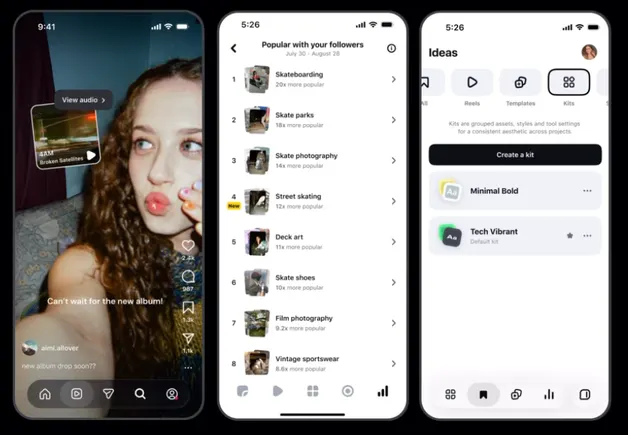
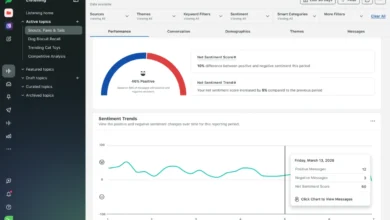
Furthermore, Edits is expanding its analytical capabilities by rolling out granular audience trend insights. This feature grants creators a direct window into the specific content themes, formats, and editing styles that are driving real-time engagement among their unique follower bases. By understanding what resonates best with their audience segments, creators can tailor their upcoming video concepts to maximize viewer retention and interaction rates.
It is worth noting, however, that access to these advanced audience insights is currently tiered, restricted to creators who have crossed the threshold of 10,000 followers. Alongside these analytical and structural additions, Meta has quietly deployed a broader assortment of visual effects tools within the Edits application, providing producers with an expanded creative toolkit to experiment with advanced transitions, text animations, and dynamic overlays.
Streamlining Production: The New Instagram Reels Reference Feature
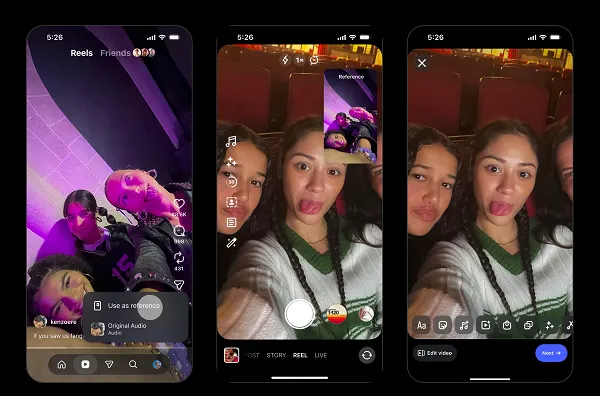
While the Edits app receives backend and stylistic upgrades, the primary Instagram application is welcoming a production-focused feature designed to simplify the creation of response videos, duets, and reaction content. Meta has officially launched a new option that allows creators to use an existing video clip as a visual reference directly inside the native camera and composer interface.
Previously, creators attempting to craft reaction videos, analyses, or direct responses to trending content often had to rely on cumbersome workarounds, such as external screen recordings, dual-device viewing, or manual alignment during post-production. The new reference feature eliminates this friction by integrating the source material directly into the active recording environment.
According to official guidance released by Instagram, the workflow is designed for maximum simplicity: creators can open any public Reel under 90 seconds in length, access the three-dot options menu, and select the newly added "Use as reference" command. Once selected, the target Reel opens inside a compact, floating window directly within the user’s camera view.

This floating player offers high functional flexibility. Creators are able to reposition the video window anywhere across the active composer screen to prevent it from obstructing their framing. Furthermore, the reference clip can be paused, replayed, and reviewed as many times as necessary prior to recording. To ensure seamless execution, the tool incorporates a built-in countdown timer designed to help creators perfectly synchronize their audio and visual delivery with key moments in the source clip.
Industry analysts note that this feature is tailor-made for the modern commentary and reaction economy, which thrives on rapid, contextual responses to viral internet culture. By lowering the technical barrier to producing high-alignment response videos, Meta hopes to stimulate higher volumes of conversational engagement and cross-pollination of content across the platform. At present, however, this capability is rolling out exclusively on the iOS version of the Instagram application, with Android support expected to follow in a subsequent update.
The Strategic Sunset of Reels Linking
Even as Meta introduces new production efficiencies, the company is concurrently pruning features that no longer align with its long-term architectural and strategic vision. Most notably, Instagram has announced the removal of the option to link Reels in a series, a feature that was originally deployed only months prior.
The impending removal was first flagged by prominent creator economy expert Lia Haberman and has since been confirmed by platform documentation. The change is scheduled to go into official effect on October 28, bringing a swift conclusion to an experiment that aimed to transform short-form video into serialized narratives.
Instagram originally introduced Reels linking in August 2025 as a direct mechanism to help creators stitch together connected video clips. The objective at the time was to extend viewer session times by guiding audiences seamlessly from one installment of a narrative or tutorial series to the next, mitigating the drop-off typically associated with algorithmically driven standalone feeds.
However, the rapid decision to deprecate the feature points to shifting priorities within Meta’s product development teams. In recent months, Instagram has intensified its exploration of long-form content formats, particularly across connected television (CTV) environments and dedicated video hubs. Rather than forcing users to navigate through a fragmented chain of short-form clips stitched together via manual linking, platform strategists appear to be leaning toward unified, longer-form viewing experiences. The sunsetting of Reels linking suggests that Meta may be laying the groundwork for a more robust, native long-form video architecture that bypasses the limitations of traditional short-form micro-series.
Context, Chronology, and the Evolving Creator Landscape
To understand the scope of these rapid updates, it is necessary to examine Meta’s broader trajectory within the highly competitive social media landscape. Over the past three years, the short-form video ecosystem—pioneered largely by TikTok and heavily replicated by YouTube Shorts and Meta’s Reels—has undergone a continuous evolution from simple, casual entertainment to a highly professionalized digital media sector.
Throughout 2024 and 2025, Meta has systematically invested in standalone utility apps and advanced native editing suites to claw back market share from specialized third-party editing software like CapCut and Adobe Premiere Rush. The launch of the Edits app represented a major milestone in this strategy, pulling essential production workflows into Meta’s proprietary orbit. By continually enriching Edits with features like custom kits and trend analytics, Meta is attempting to build a closed-loop ecosystem where creators can ideate, edit, analyze, and publish without ever leaving the company’s software suite.
The timeline of these recent rollouts underscores a relentless product release cadence:
- August 2025: Instagram introduces Reels linking to encourage multi-part storytelling and extend user engagement.
- Late 2025: Meta expands the standalone Edits app with advanced visual effects and creative assets.
- October 2025 (Current Update): Meta deploys custom styling kits, audio links, and trend analytics to Edits, introduces the iOS-exclusive "Use as reference" tool for Instagram Reels, and announces the October 28 sunset for Reels linking.
Broader Implications and Industry Analysis
From an analytical standpoint, these simultaneous feature expansions and contractions reveal a clear operational philosophy at Meta: hyper-responsiveness to creator workflows balanced by a ruthless willingness to streamline redundant infrastructure.
The introduction of reference clips and audio links directly addresses pain points frequently cited by power users and media creators. By reducing friction in the production of derivative and collaborative content—such as reaction videos and audio-driven trends—Meta directly stimulates the network effects that keep daily active users engaged. Furthermore, restricting granular audience insights to creators with over 10,000 followers creates a tangible incentive structure, encouraging micro-influencers to aggressively grow their audiences to unlock professional-grade analytical tools.
Conversely, the decision to remove Reels linking highlights the persistent friction between short-form discovery algorithms and long-form narrative consumption. While platforms like TikTok and Instagram have trained users to consume rapid-fire, isolated pieces of content, building sustainable narrative engagement within a vertical swipe format has proven difficult. By sunsetting manual linking in favor of broader long-form content explorations, Meta is signaling that the future of extended viewing on its apps may rely on dedicated long-form formats rather than patched-together short clips.
As these updates continue to roll out across global markets—with iOS users receiving primary access to new composition tools—creators and digital strategists will need to adapt their production pipelines accordingly. Whether these enhancements successfully solidify Meta’s dominance in the creator economy will depend heavily on user adoption rates and the seamless integration of these tools in the months ahead.