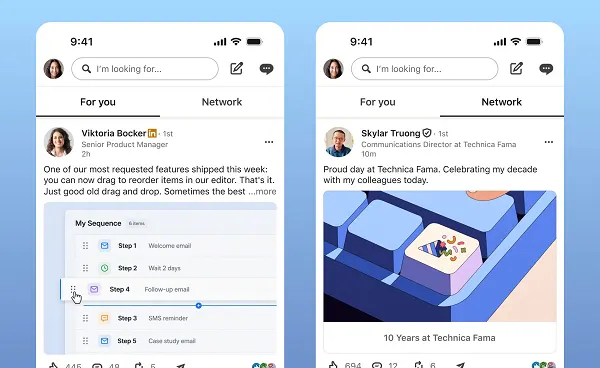
In an ongoing effort to refine the user experience and foster authentic professional relationships, LinkedIn is once again experimenting with alternative feed structures. Last Friday, Chief Product Officer Hari Srinivasan announced the official rollout of a trial feature known as the "Network tab." This newly designed interface offers users an alternative to the traditional algorithmic main feed by curating content exclusively from direct connections and explicitly followed accounts. As digital platforms face mounting pressure to filter out low-quality interactions, automated spam, and inorganic promotional material, LinkedIn’s latest trial highlights the platform’s broader strategy to prioritize genuine human engagement over hollow metric growth.
The introduction of the Network tab arrives at a critical juncture for the world’s largest professional networking site. Over the past several years, users have voiced increasing frustration over the changing nature of their feeds. What was once a straightforward stream of career milestones, industry news, and direct colleague updates has progressively shifted into a chaotic landscape dominated by corporate self-promotion, artificial intelligence-generated text, and algorithmic optimization hacks. By testing a dedicated space populated solely by first-degree connections and followed peers, LinkedIn is attempting to return to its foundational roots: cultivating a digital environment where real people can exchange meaningful professional insights.
Background Context: The Evolution of LinkedIn Feeds and the Rise of Platform Fatigue
To understand the significance of the Network tab trial, one must examine the evolution of LinkedIn’s feed architecture. For years, the platform relied heavily on a standard algorithmic feed designed to maximize user retention and daily active usage. This system surfaced trending topics, viral posts from industry influencers, and secondary or tertiary content based on user interactions, likes, and comments. While this approach successfully drove overall platform metrics and daily engagement highs, it inadvertently paved the way for ecosystem manipulation.
In recent years, the professional community has witnessed the proliferation of "engagement pods"—private groups where users systematically coordinate to artificially boost each other’s posts through automated likes, comments, and shares. These pods distort the platform’s meritocratic potential, artificially elevating mediocre or purely promotional content at the expense of substantive professional discourse. Compounding this issue is the exponential rise of generative artificial intelligence. Users frequently report encountering automated "AI slop," characterized by generic, repetitive, and uninspired text churned out by bots or lazy creators attempting to game the algorithm for personal branding purposes.
These phenomena have contributed to widespread user fatigue. Many professionals report spending excessive time scrolling past irrelevant content, corporate platitudes, and viral clickbait to find updates from colleagues, former classmates, or industry partners. Recognizing this friction, LinkedIn’s product and engineering teams have steadily introduced measures to curb platform manipulation. Earlier initiatives included reporting tools targeted specifically at AI-generated content and algorithmic updates designed to penalize engagement pod behavior. The Network tab represents a structural, rather than merely punitive, approach to solving this crisis of authenticity.
Chronology of LinkedIn’s Alternative Feed Experiments
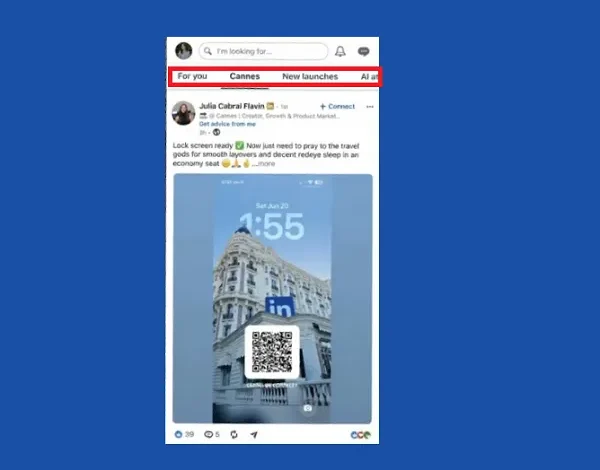
The Network tab is not LinkedIn’s first attempt to reshape how users consume content. Over the past twenty-four months, the Microsoft-owned platform has engaged in a systematic campaign of experimentation, testing various feed iterations to determine what resonates best with its global user base of over one billion accounts.
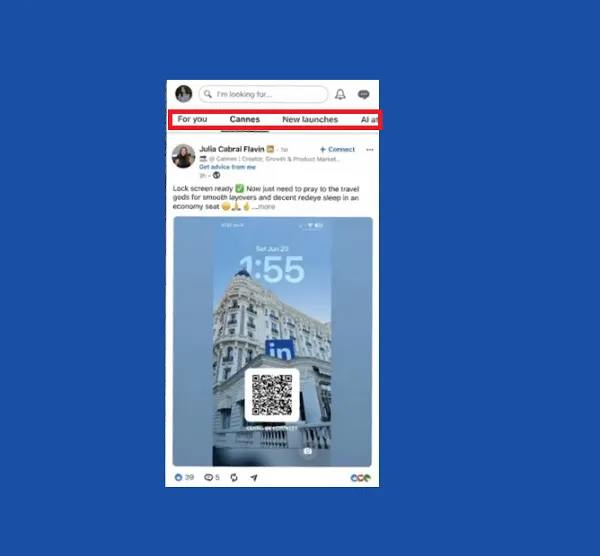
Last year, LinkedIn rolled out a series of alternative feed tests aimed at expanding overall app utility and tailoring content discovery to specific professional niches. These tests explored whether breaking the monolithic main feed into specialized categories could improve user satisfaction. Building upon those internal trials, LinkedIn escalated its experimentation phase in June of this year by testing topic-based suggested feeds. These experimental feeds were designed to connect users with trending industry conversations, topical debates, and niche subjects outside their immediate circle of contacts.

However, neither the broad alternative feeds of last year nor the topic-based suggested feeds of June saw a permanent, platform-wide rollout. Industry analysts noted that while topic-based feeds offered interesting avenues for discovery, they often failed to capture the core utility that users sought from LinkedIn: maintaining professional touchpoints with people they actually know in the physical or digital business world.
The announcement on Friday by CPO Hari Srinivasan signals a pivot from broad topical discovery back to interpersonal connection. By narrowing the scope of the experimental feed exclusively to direct follows and established contacts, LinkedIn is addressing the specific user demand for intimacy and relevance over vast, uncurated reach.
Analysis of Srinivasan’s Announcement and the Mechanics of the Network Tab
In his official post detailing the trial, Hari Srinivasan emphasized the philosophical shift driving the new feature. “The Network tab helps you stay connected to your network, i.e., the people you have explicitly connected or followed,” Srinivasan stated. He further contextualized the initiative within a broader societal and digital desire for authenticity, noting, “We all want more real connection with real people, and we hope this plays a small part in rebuilding that world.”
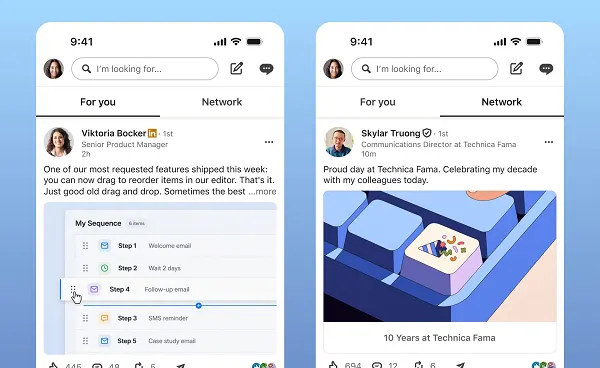
From a mechanical standpoint, the Network tab functions as a filtered silo. When activated, it strips away the algorithmic recommendations, viral posts from distant influencers, and sponsored content that typically populate the default feed. What remains is a chronological or lightly curated stream of updates exclusively tied to the user’s vetted professional circle. This includes job changes, work anniversaries, shared articles, original posts, and commentary generated strictly by first-degree connections and individuals the user has consciously chosen to follow.
The implications of this mechanical shift are profound. For everyday professionals, the tab offers a sanctuary of calm within an increasingly noisy application. It allows busy executives, job seekers, and industry practitioners to catch up on the professional lives of their actual colleagues without wading through algorithmically boosted motivational quotes or sales pitches from strangers. For content creators and thought leaders, however, it presents a complex challenge. If users increasingly migrate to a Network-only view to escape feed pollution, visibility for broader, un-networked content could decline, placing a higher premium on direct network-building and authentic peer-to-peer relationships.
Broader Impact, Challenges, and Market Implications
While the theoretical benefits of the Network tab are clear, its long-term viability remains a subject of debate among digital media and social platform analysts. Historical precedent suggests that alternative feed tabs face a steep uphill battle in achieving mainstream adoption.
When major social media platforms introduce alternative feeds—such as X’s "Following" tab or various algorithmic versus chronological toggles across competing networks—the vast majority of users ultimately default to the primary platform-curated feed. Inertia is a powerful force in digital consumption; most individuals open an application and consume whatever content is immediately placed in front of them upon launch. For the Network tab to succeed on LinkedIn, the platform must not only make the feature easily accessible but also convince users that the quality-of-life improvement justifies the extra click or toggle required to access it.
Furthermore, LinkedIn faces a delicate balancing act regarding its core business model. As a platform heavily monetized through B2B marketing, sponsored content, recruitment tools, and premium subscriptions, LinkedIn relies on broad user engagement and ad impressions. A feed populated exclusively by direct connections contains significantly less real estate for programmatic advertising and sponsored thought-leadership campaigns. If a substantial portion of LinkedIn’s user base migrates permanently to a Network-only tab, the platform will need to carefully navigate how advertising and promoted content are integrated—or risk diminishing returns for corporate advertisers.
Despite these hurdles, the trial underscores a maturing understanding within Silicon Valley that hyper-growth driven purely by engagement maximization has its limits. Platforms are increasingly recognizing that user retention is driven as much by trust and relevance as it is by sheer volume of content. By providing users with the tools to curate their own digital environments, LinkedIn is positioning itself as a responsive platform attuned to the psychological fatigue of modern digital networking.
Outlook and Future Expectations
As the trial period for the Network tab progresses, LinkedIn product teams will undoubtedly monitor key performance indicators, including daily active usage of the tab, user retention rates, feedback submissions, and the impact on overall platform sentiment. Whether this experiment transitions into a permanent, globally available feature or meets the same quiet fate as last year’s alternative feed tests remains to be seen.
What is certain, however, is that LinkedIn’s leadership is keenly aware of the structural vulnerabilities facing modern social graphs. By attempting to bridge the gap between algorithmic discovery and genuine human connection, LinkedIn is actively charting the future of professional networking. For professionals weary of digital noise, engagement manipulation, and artificial intelligence clutter, the Network tab offers a welcome glimpse into a more focused, human-centric digital workspace.
Related posts: