Mastering Holiday Social Media Customer Service: Essential Strategies for Brands in 2026

The traditional scene of holiday shoppers lining up outside big-box retailers in the freezing cold hours before dawn has largely been replaced by a digital reality. Today, consumers conduct their holiday shopping, gift research, and brand interactions entirely through online ecosystems, with social media acting as the primary virtual shopping mall. However, when these digital retail experiences encounter friction—such as shipping delays, billing errors, or inventory shortages—shoppers immediately return to those same social platforms to demand answers, air grievances, and seek resolutions.
According to Sprout Social’s Q3 2026 Pulse Survey, an overwhelming 86% of consumers plan to use social media for customer service this holiday season as much (59%) or more (27%) than they did in 2025. As global retail markets brace for peak festive demand, customer care volumes on social networks are projected to scale dramatically. To prevent operational bottlenecks, customer support teams are increasingly relying on advanced resource management, artificial intelligence, and centralized case workflows to maintain positive brand relationships that endure well past the New Year.
The Evolution of Holiday Retail and the Centrality of Social Media
Social media has fundamentally evolved from a brand-awareness channel into a comprehensive, end-to-end e-commerce ecosystem. The phrase "TikTok made me buy it" has transitioned from a viral social media slogan into an accurate description of modern consumer behavior. Modern platforms allow users to discover products via algorithmic feeds, read authentic peer reviews, and complete purchases entirely within the app interface without ever visiting a traditional e-commerce website or brick-and-mortar storefront.

Data from the Q3 2026 Sprout Social Pulse Survey underscores this shift, revealing that social media now ties directly with physical retail stores as the primary resource for gift ideas and product discovery. Specifically, 46% of all surveyed consumers indicated they plan to use social media networks to source holiday gifts. Year-over-year metrics show that 28% of consumers intend to increase their use of social channels for gift inspiration, while 50% plan to maintain their previous year’s usage levels.
This trend is heavily concentrated among younger demographics. Among Millennials, 85% plan to utilize social media just as much or more for holiday gift research in 2026. Among Generation Z consumers, that figure climbs to 88%. Consequently, customer service can no longer be viewed merely as a post-purchase safety net; it must be deeply integrated into the social discovery and purchasing journey to protect brand reputation and capture high-intent buyers.
Surge in Direct Consumer Outreach and Channel Preferences
As e-commerce transactions migrate directly into social applications—facilitated by features such as TikTok Shop, Instagram Checkout, and Facebook Marketplace—consumer outreach to brands is experiencing a corresponding surge. More than half (57%) of respondents in the 2026 pulse survey confirmed plans to make purchases directly within social media apps during the festive season, with 38% having already utilized the feature and 19% planning to try social purchasing for the first time.
This direct-in-app purchasing behavior correlates with a sharp rise in customer inquiries. When consumers reach out to brands on social media, direct messaging remains overwhelmingly preferred, with 55% of participants identifying DMs as their primary communication channel. Additional outreach methods include posting comments, publicly tagging company accounts, or replying directly to ephemeral content such as stories. Industry analysts note that brands relying solely on traditional customer service channels—such as email, telephone support, and web contact forms—risk missing critical customer service interactions occurring across fragmented social environments.

Ten Strategic Pillars for Holiday Customer Service Optimization
To navigate the anticipated surge in seasonal inquiries, retail and hospitality brands are overhauling their customer care operations. Industry experts recommend a comprehensive, ten-step framework designed to streamline workflows, reduce operational stress, and enhance consumer satisfaction during the critical fourth-quarter shopping period.
1. Advanced Strategic Planning and Early Preparation
The retail holiday shopping window expands earlier with each passing year, requiring brands to finalize their operational frameworks well in advance of traditional holiday decor displays. Adequate preparation involves aligning customer service agents with key marketing milestones, such as Black Friday, Cyber Monday, and the final shipping dates guaranteed for holiday delivery.
Planning must also account for psychological and economic pressures facing consumers. The 2025 Deloitte Holiday Retail Survey revealed that 58% of individuals find holiday shopping inherently stressful, driven heavily by financial anxieties. Sprout’s Q3 2026 data similarly noted that 56% of consumers plan to reduce overall spending. While a streamlined customer care strategy cannot eliminate broader economic strains, it can significantly reduce friction for overwhelmed shoppers.
2. Proactive Deployment of Holiday-Specific FAQs
Proactive communication remains one of the most effective tools for reducing ticket volumes. By publishing dedicated holiday FAQs on brand websites, within chatbots, and across social media captions, companies can empower consumers to find self-service answers regarding shipping deadlines, return policies, and promotional codes.

Case studies from organizations such as Educational Testing Service (ETS)—a nonprofit managing major standardized exams—demonstrate the value of proactive resource creation. Utilizing Sprout Social to monitor recurring inquiries, ETS identified pre-testing surges and translated data into accessible resources, successfully reducing corporate response times from two hours to one hour and twenty minutes. Additionally, teams utilize pre-drafted response libraries to maintain messaging consistency and accelerate resolution speeds.
3. Scaling Support Staff and Onboarding Seasonal Agents
High-quality, personalized service is critical; the 2025 Sprout Social Index indicates that 70% of consumers expect personalized responses when contacting brands. Furthermore, consumer expectations regarding public queries are shifting: 33% of shoppers expect an initial public response followed by a private conversation, while 28% are satisfied with a public-only reply and 22% prefer strictly private communication.
To meet these multifaceted demands, brands frequently onboard temporary seasonal staff. Rapid onboarding is essential, requiring platforms with high usability and administrative simplicity. Utilizing robust case management systems allows teams to triage incoming messages efficiently, preventing duplicated efforts and ensuring critical customer context is preserved across staff rotations.
4. Prioritizing High-Value Inbound Customer Messages
During peak shopping periods, sorting and addressing high-priority messages—such as complex complaints, urgent order issues, or valuable positive feedback—is vital. Advanced sentiment analysis tools enable brands to automatically categorize incoming messages as positive, negative, or neutral, routing them into dedicated queues. Machine-learning models can further classify interactions into categories such as Customer Love, Customer Support, or High Brand Risk.

Organizations utilizing automated case creation and message tagging report substantial efficiency gains. For instance, major enterprises have documented significant reductions in response times and weekly workloads by leveraging automated inbox management to process hundreds of customer cases seamlessly.
5. Rigorous Protection of Sensitive Customer Data
The holiday season historically correlates with an increase in digital cybercrime, phishing schemes, and financial fraud. According to the Internet Crime Complaint Center’s (IC3) 2025 report, non-payment and non-delivery scams accounted for more than $503 million in consumer losses.
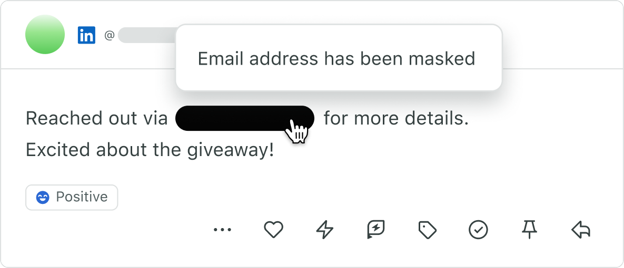
As digital shopping increases, brands bear a heightened responsibility to safeguard consumer data. Standard security protocols dictate that sensitive information, such as credit card numbers, should never be requested or shared in public comment sections. For highly regulated industries, specialized data masking tools automatically obscure sensitive details shared via direct message, while PCI-compliant secure forms allow financial institutions and retailers to collect necessary verification data safely within encrypted environments.
6. Integration of Artificial Intelligence and Automation
Artificial intelligence has become a cornerstone of operational efficiency. The 2025 Sprout Index reports that 81% of marketers view AI as having a positive impact on their daily workflows. During peak holiday rushes, AI functions as a crucial operational assistant.
Consumer demand for speed is pronounced: 32% of social users expect a same-day response, 24% anticipate a reply within one to two hours, and 14% expect acknowledgment within minutes. Despite general skepticism surrounding automated content, 70% of survey respondents expressed comfort with companies utilizing AI-driven tools—such as advanced chatbots—to accelerate customer service interactions. Generative AI tools assist agents by tailoring response tones, adjusting lengths to match brand voice, and automating routine administrative burdens.
7. Centralizing Customer Context via Social CRM Integration
Fragmented technology stacks force customer care agents to toggle between multiple disconnected applications, thereby lengthening response times and increasing the risk of missed historical data. Integrating social media management platforms with enterprise Customer Relationship Management (CRM) software—such as Salesforce—unifies customer communication channels.
Through unified interfaces, support agents gain immediate access to complete customer purchase histories, past service interactions, and loyalty program details. Advanced integrations allow social data to feed directly into internal AI assistants, empowering agents to resolve complex cases rapidly and deliver cohesive omnichannel support.
8. Establishing Clear Internal Collaboration Norms
Operational clarity is essential for preventing friction within support teams, particularly when integrating new or seasonal personnel. Brands must establish clear protocols regarding message approvals, escalation paths, and inter-departmental communication.

Implementing structured reply approval workflows ensures that responses drafted by newly onboarded agents undergo mandatory review before publication, protecting brand voice and compliance standards. Centralizing team discussions within unified inbox features further eliminates unnecessary internal emails and accelerates cross-functional problem-solving.
9. Predictive Crisis Monitoring and Brand Protection
While addressing individual consumer queries is paramount, monitoring macro-level market sentiment is equally critical. Modern shoppers frequently utilize social media to broadcast operational failures, supply chain disruptions, or packaging defects, often without directly tagging the affected corporation.
Predictive monitoring platforms allow marketing and customer care teams to track broader conversations across news media and social networks early, projecting potential escalation trajectories before localized issues evolve into public relations crises. Tracking sentiment shifts in real time enables organizations to issue timely, transparent public statements and coordinate cross-departmental responses effectively.
10. Real-Time Performance Analytics and Continuous Improvement
Refining a holiday customer service strategy requires continuous data capture and evaluation. Externally, brands deploy customer satisfaction (CSAT) and Net Promoter Score (NPS) surveys directly within social messaging environments on platforms like Instagram, Facebook, and X to measure consumer sentiment.

Internally, analytics dashboards track core operational metrics, including average handle time, total replies, response times from assignment, and tag tracking frequency. Access to granular reporting data enables management teams to prove the concrete business impact of customer care operations, justify staffing allocations, and implement immediate workflow adjustments to alleviate ongoing queue bottlenecks.
Broader Economic and Industry Implications
The systematic pivot toward social-first customer service reflects a broader structural evolution within the global retail economy. As digital marketplaces become increasingly saturated, consumer loyalty is heavily dictated by post-purchase responsiveness and brand accessibility. Companies that successfully modernize their social care infrastructure through AI integration, unified CRM architecture, and proactive data security insulate themselves against seasonal volatility. Conversely, brands that fail to adapt risk immediate reputational damage amplified by the viral nature of social media networks.
As retail markets continue to embrace hyper-digitized shopping journeys, the strategic deployment of social customer service will remain a defining differentiator between market leaders and underperforming competitors long after the holiday decorations are packed away.