Unlocking C-Suite Buy-In: How Employee Advocacy Statistics Drive Brand Growth and Revenue in 2026

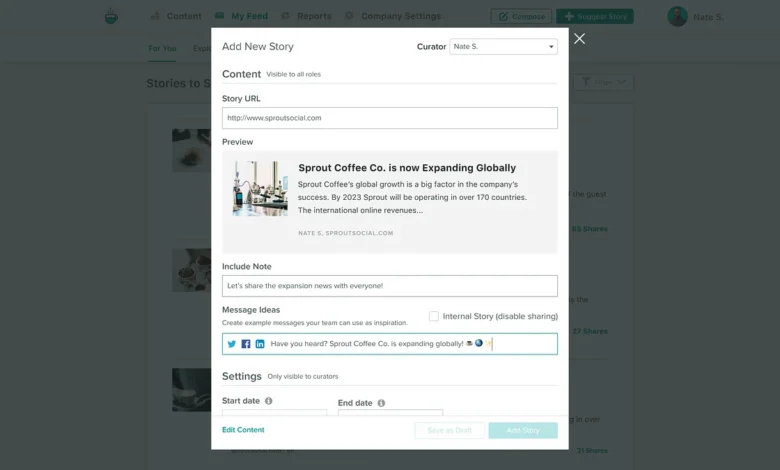
Securing approval and budgetary commitment from a corporate C-suite requires moving past abstract notions of brand passion and focusing entirely on empirical evidence. As organizations navigate an increasingly saturated digital marketplace defined by soaring paid media costs and declining consumer trust in corporate channels, decision-makers are shifting their strategic focus. When department leaders present an employee advocacy program up the chain of command, the success of the pitch relies heavily on robust data. Modern executives demand a clear understanding of what employee advocacy entails and the precise, measurable benefits the brand will gain by transforming its workforce into an active digital extension of the enterprise.
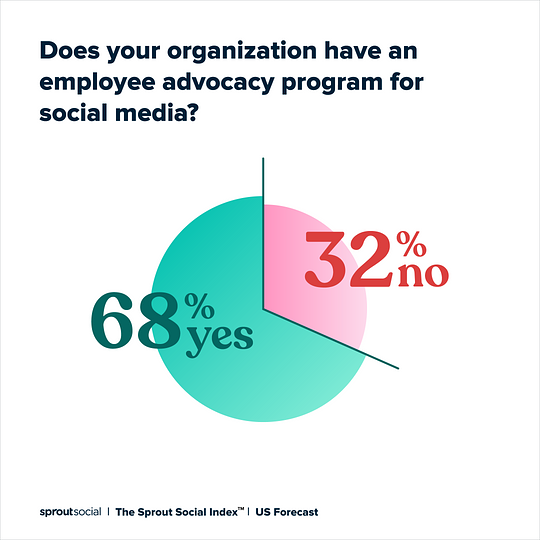
Recent industry data compiled by Sprout Social reveals that corporate advocacy has firmly transitioned from an experimental side project into a standardized, mainstream growth strategy. According to the research, 68% of marketers report that their organizations already maintain an active employee advocacy program. To successfully bridge the gap between creative marketing visions and rigorous executive oversight, leaders must arm themselves with comprehensive statistical evidence that reframes advocacy not merely as a nice-to-have cultural perk, but as a critical driver of top-of-funnel demand, recruitment, and revenue generation.

The Evolution of Employee Advocacy from Informal Initiative to Corporate Standard
The contemporary landscape of digital marketing is undergoing a structural transformation. Historically, employee advocacy programs began informally—often as uncoordinated grassroots efforts where enthusiastic team members occasionally shared company milestones on personal social media channels. However, as digital algorithms shifted and organic visibility for corporate brand pages declined, sophisticated organizations recognized the necessity of formalizing these efforts. Today, leading enterprises implement structured advocacy frameworks supported by dedicated personnel, specialized software tools, streamlined compliance processes, and comprehensive internal training.
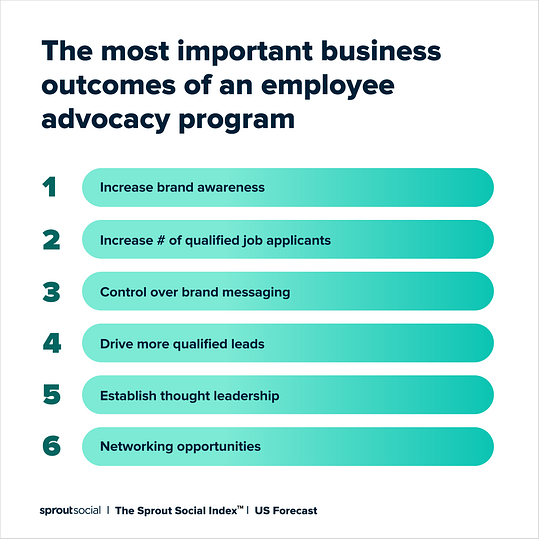
Surveying over 1,000 marketing professionals, researchers identified the primary business objectives driving the adoption of formal advocacy programs. Increasing overall brand awareness ranked as the foremost priority, closely followed by attracting qualified job applicants and establishing stricter control over corporate brand messaging. Additional key objectives cited by industry leaders included generating higher-quality sales leads, cementing institutional thought leadership, and creating valuable professional networking opportunities for personnel.
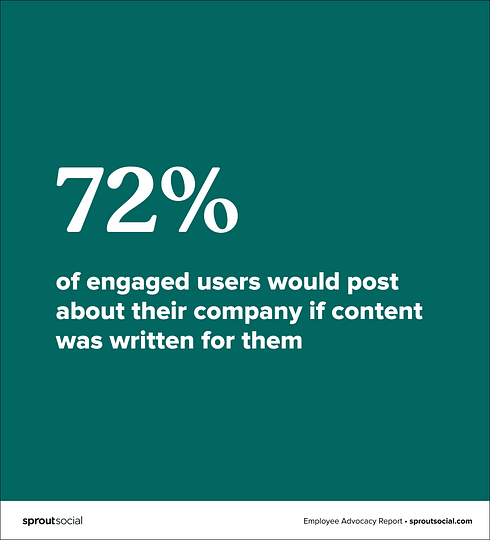
Despite these clear organizational goals, many internal communication teams face initial friction regarding content creation and employee participation. However, data indicates that the barrier to entry is largely operational rather than motivational. Sprout Social’s Employee Advocacy Report highlights that 72% of engaged users are willing to share company content on their personal networks provided that the material is pre-written and curated for them. By supplying employees with a centralized hub of pre-approved messaging and relevant industry articles, brands can seamlessly solve the content-supply problem without imposing heavy time burdens on their workforce.
Leveraging Human Authenticity to Combat Ad Fatigue
In the modern attention economy, traditional corporate advertising faces unprecedented skepticism. Audiences have grown adept at tuning out polished, highly produced brand advertisements originating from corporate social media handles. Consequently, organizations are forced to seek alternative avenues to establish genuine connections with consumers. The solution lies within the organization’s own walls: its frontline employees.
Data from the 2026 Influencer Marketing Report demonstrates that 40% of consumers discover new products through employee-generated content on a monthly basis. Furthermore, the research underscores a stark contrast in audience perception regarding institutional versus individual voices: 46% of consumers express a desire to hear directly from frontline staff, whereas a mere 10% indicate any interest in hearing from C-suite executives. This consumer preference highlights a fundamental shift in trust dynamics. Audiences view frontline employees as significantly more authentic, relatable, and credible than corporate marketing departments.
For executive leadership teams, the implications are profound. Paid reach across major social platforms has become increasingly expensive while yielding diminishing returns. Activating employees scales the single asset that audiences continue to reward—authentic human credibility—without demanding additional media spend or inflating advertising budgets. By empowering staff to share company achievements, industry insights, and product updates, brands bypass the cynicism traditionally associated with corporate broadcasting.
Amplifying Brand Reach Through Strategic Employee Networks
Beyond building foundational trust, employee advocacy acts as a powerful amplifier for organizational content, extending brand reach far beyond the limitations of organic corporate publishing. When hundreds or thousands of employees syndicate company posts across their individual networks, the exponential compounding effect generates impressions that dwarf traditional organic reach.
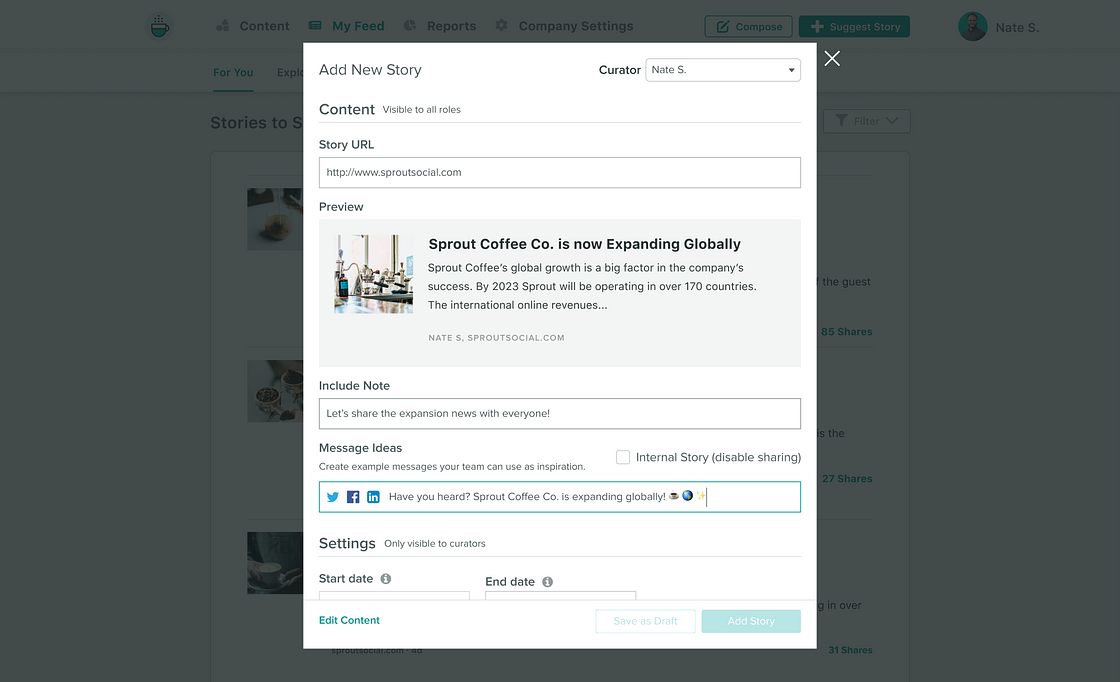
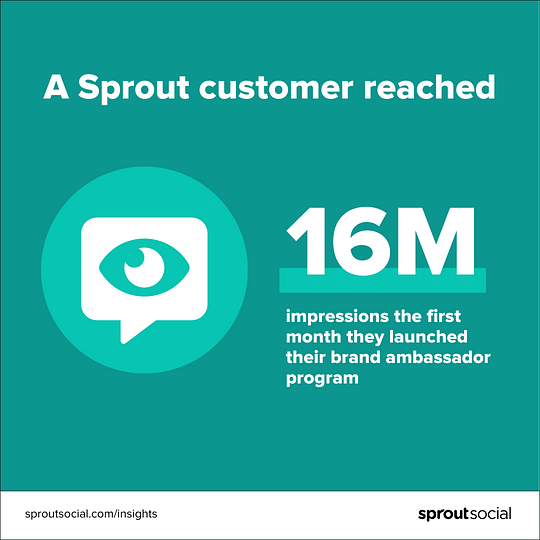
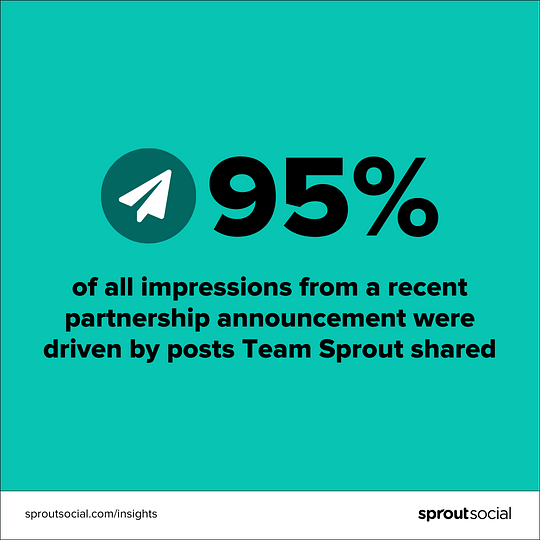
Real-world case studies illustrate the dramatic scale achievable through structured advocacy. Enterprise IT software provider Ivanti launched a brand ambassador program utilizing Sprout Social’s advocacy platform and experienced an immediate surge in visibility, growing its total reach by 16 million impressions within the first month alone. Similarly, Sprout Social leveraged its own internal workforce to amplify institutional messaging, accumulating more than 28 million impressions on content shared through its advocacy platform within a single year. Demonstrating the sheer potency of this approach, a staggering 95% of the 740,000 impressions generated by the announcement of Sprout’s global partnership with Salesforce were driven directly by posts shared by internal team members.
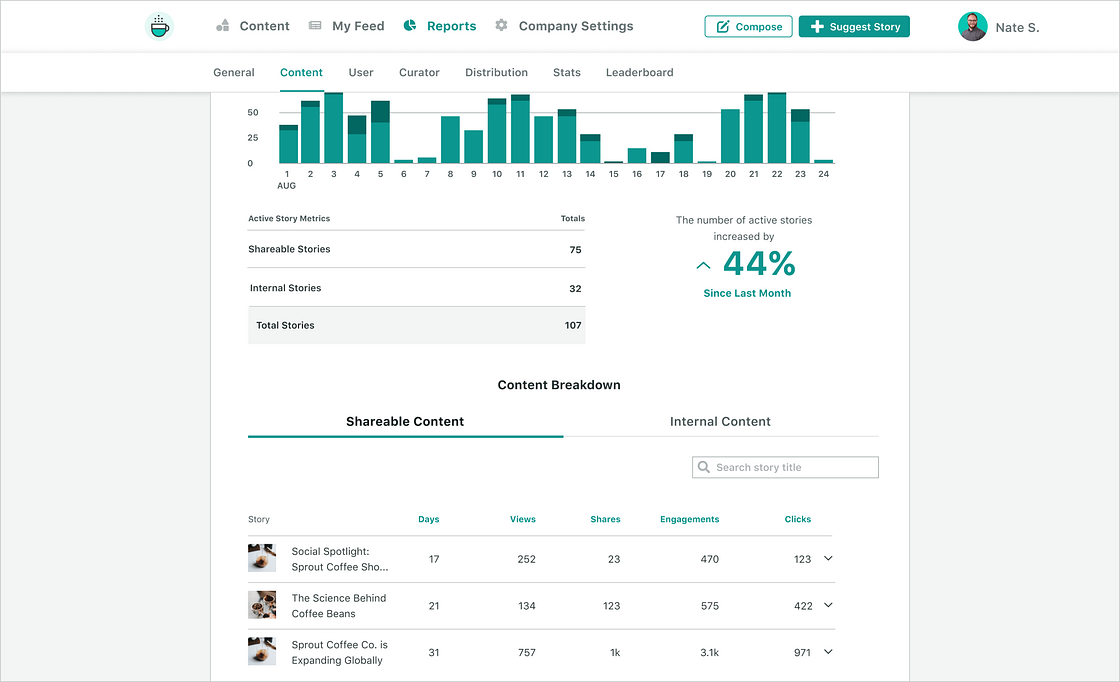
For the C-suite, these figures provide a compelling financial justification. Organic social performance for corporate pages has experienced a steady downward trajectory across nearly all industries. Tapping into the pre-existing social networks of employees represents the most efficient mechanism to amplify top-performing content and spike visibility metrics without stretching internal bandwidth or increasing paid media expenditures. Modern advocacy platforms allow organizations to measure shares, engagement rates, and overall reach in real time, enabling marketing leaders to treat employee networks as a quantifiable, high-performance amplification channel rather than an afterthought.
Accelerating Revenue and Driving Sales Performance
While brand awareness and visibility remain critical metrics, the ultimate litmus test for any corporate expenditure is its direct impact on the bottom line. Employee advocacy extends well beyond marketing vanity metrics, actively accelerating revenue targets and supporting sales pipelines.
First, advocacy optimizes demand generation by scaling high-performing content to targeted audiences without draining ad budgets. For instance, enterprise software leader Infor utilized employee advocacy to generate $100,000 in earned media value within a single month. Second, structured sharing programs directly empower employees in their day-to-day responsibilities, most notably in social selling. Sprout’s research indicates that 72% of engaged users and 62% of casual users believe sharing company content significantly enhances their ability to execute social selling initiatives.
This internal utility translates directly into closed deals. According to data from LinkedIn’s Social Selling Index, sales professionals who actively share company content and industry insights on their personal profiles are 51% more likely to achieve their sales quotas than peers who do not engage in social selling. By positioning employees as knowledgeable thought leaders within their respective fields, organizations open doors to new business opportunities that traditional outbound sales tactics often fail to penetrate. Comprehensive reporting tools allow revenue teams to tie advocacy shares directly to CRM pipelines, identifying the exact content assets and sales representatives that successfully drive conversions.
Transforming Recruitment and Employee Retention Strategies
In addition to driving external sales and marketing metrics, employee advocacy plays a pivotal role in human resources, specifically in attracting and retaining top-tier talent. Modern job seekers rarely rely solely on official career pages; instead, they conduct rigorous social due diligence, examining what current and former employees post about an organization’s culture, leadership, and daily work environment.
When employees voluntarily celebrate their workplace culture, they significantly bolster the organization’s employer brand, driving higher volumes of qualified job applicants. Furthermore, internal advocacy fosters a deep sense of psychological ownership, loyalty, and corporate belonging among existing personnel. When staff members are actively invited to act as stewards of the brand, their long-term workplace morale, engagement, and retention rates improve markedly.
Organizations can institutionalize this recruitment advantage by integrating human resources teams into their advocacy workflows. Utilizing specialized features such as internal advocacy newsletters, companies can broadcast curated stories detailing open roles, major corporate milestones, and internal achievements directly to employee inboxes. With a single click, staff can share these recruitment opportunities with their professional networks, putting hiring news in front of potential candidates through the colleagues they already trust.
The Comprehensive Business Case for Formalizing Advocacy
The empirical evidence supporting employee advocacy presents an undeniable business case for executive leadership. Across diverse sectors—ranging from healthcare providers increasing engagement metrics by 200% within six months of launch to global enterprises generating six-figure earned media values—structured advocacy consistently outperforms traditional organic social media strategies.
Furthermore, high employee satisfaction rates with centralized advocacy platforms—often exceeding 98%—indicate that staff members genuinely enjoy participating when equipped with the right tools. By centralizing content curation, streamlining compliance, and providing measurable analytics, organizations can unlock a powerful trifecta of benefits: expanded social reach, accelerated revenue generation, and a revitalized talent acquisition pipeline.
Ultimately, employee advocacy transforms a passive workforce into an active, authentic engine of brand growth. As digital marketing channels become increasingly crowded and expensive, organizations that fail to leverage the trusted voices of their employees risk falling behind competitors who have already operationalized human-centric amplification. For the C-suite, the decision is no longer whether employee advocacy works, but how rapidly the organization can formalize, fund, and scale a dedicated program to capture its full economic potential.
Related posts: