CXMT surges to record profitability as AI-driven memory demand fuels historic financial turnaround

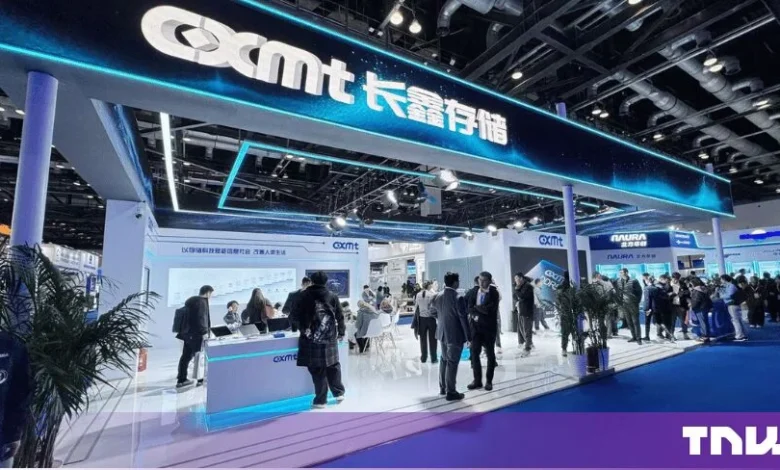
Chinese memory chipmaker ChangXin Memory Technologies (CXMT) has signaled a monumental shift in the global semiconductor landscape, projecting a net profit of 131 billion to 132.5 billion yuan ($19.6 billion to $19.8 billion) for the first nine months of 2026. This financial performance represents a stark reversal from the same period in 2025, during which the company reported a loss of 5.3 billion yuan. The preliminary filing submitted to the Shanghai Stock Exchange underscores a period of hyper-growth, with revenues ballooning to an estimated 265 billion to 270 billion yuan, a more than eightfold increase compared to the 32.1 billion yuan recorded in the corresponding months of the previous year.
The meteoric rise of CXMT is fundamentally linked to the global explosion of artificial intelligence (AI) infrastructure, which has triggered an acute supply-demand imbalance in the DRAM (Dynamic Random Access Memory) sector. As major technology firms and cloud providers scramble to secure memory components for high-performance computing, the resultant shortage has allowed manufacturers to exert significant pricing power.
Chronology of a Semiconductor Giant’s Ascent
The current fiscal triumph of CXMT is the culmination of a strategic roadmap that gained significant momentum in mid-2025.
- July 2026: CXMT makes a highly anticipated debut on the Shanghai Stock Exchange. The listing is marked by an extraordinary investor reception, with shares climbing 466% on the opening day, setting the stage for its current market capitalization of approximately 3.06 trillion yuan.
- Late 2025: The company begins aggressively scaling its manufacturing operations, optimizing wafer yield efficiency to capitalize on the widening global memory gap.
- September 2026: CXMT formally announces the commencement of mass production for its fifth-generation DRAM architecture, a milestone that positions the firm closer to its international peers in terms of technological sophistication.
- October 2026: The preliminary nine-month financial results are disclosed, confirming the company’s transition into a high-margin, high-revenue entity.
The AI Catalyst and Market Dynamics
The primary driver of this revenue surge is the relentless demand for high-bandwidth and high-capacity memory necessitated by Large Language Models (LLMs) and generative AI workloads. DRAM, the volatile memory essential for temporary data storage in smartphones, personal computers, and enterprise servers, has become the most valuable commodity in the current tech ecosystem.
According to industry reports, the shortage began in earnest during the second half of 2025. As established players struggled to keep pace with the hyper-accelerated AI deployment cycle, CXMT’s ability to stabilize its production lines—and specifically, its focus on maximizing the number of usable chips harvested from each silicon wafer—allowed it to fill gaps in the supply chain that Western and Korean competitors could not satisfy in the short term.
Furthermore, the integration of CXMT components into global supply chains has reached a new threshold. In a notable industry development, Western consumer hardware brands, including Corsair, have begun incorporating Chinese-made DRAM into their memory kits. This represents a significant shift in market perception, as the industry moves past legacy concerns regarding quality to prioritize availability and cost-efficiency in an era of constrained supply.
Shareholder Value and Capital Allocation
In response to the company’s robust financial position, Chairman Zhu Yiming has proposed a comprehensive share buyback program. The initiative, valued at between 1 billion and 2 billion yuan, is intended to be executed over the next 12 months. According to filings, these repurchased shares are earmarked for staff incentive plans—a common strategy used by major tech firms to retain top-tier engineering talent—or for potential cancellation to optimize capital structure. This move is widely viewed by market analysts as a signal of management’s confidence in the company’s long-term sustainability despite the inherent volatility of the semiconductor market.
Competitive Landscape and Technical Validation
CXMT’s recent claims regarding the mass production of its fifth-generation DRAM have drawn significant attention from global analysts. While independent verification remains a subject of ongoing scrutiny by third-party laboratories, the sheer volume of output suggested by the company’s revenue figures implies a successful transition to more advanced process nodes.
Historically, the memory chip industry has been characterized by "boom-and-bust" cycles, where rapid expansion leads to oversupply and subsequent price collapses. CXMT’s current success is contingent upon its ability to maintain high yields while navigating the complex regulatory environment surrounding semiconductor trade. The company’s ability to remain competitive depends on its consistent ability to iterate its DRAM architecture at a pace commensurate with industry leaders like Samsung, SK Hynix, and Micron.
Broader Economic and Geopolitical Implications
The emergence of CXMT as a dominant financial force has broader implications for global trade and the semiconductor supply chain. By establishing a massive, profitable foothold in the domestic Chinese market, the company provides a vital buffer for Chinese tech firms looking to insulate their supply chains from external trade disruptions.
From a macroeconomic perspective, the rise of a domestic champion in the DRAM space is a cornerstone of China’s "Made in China 2025" and subsequent high-tech autonomy initiatives. The capital influx into CXMT—and the company’s subsequent ability to reinvest those funds into R&D—suggests a long-term commitment to closing the technology gap in memory manufacturing.
However, challenges remain. The global semiconductor industry is heavily guarded by intellectual property protections, and international trade restrictions on advanced lithography equipment continue to present a technical bottleneck for all Chinese firms. CXMT’s success in overcoming these barriers through process optimization and yield improvements is a testament to the current manufacturing focus of the firm, but the long-term outlook will require continuous innovation in the face of international competition.
Analyst Perspectives and Future Outlook
Industry analysts monitoring the situation point out that while the current profit margins are exceptionally high due to the price surge, the long-term stability of CXMT will depend on its ability to diversify its client base beyond the domestic market. The decision to list in Shanghai was a pivotal step in attracting the necessary liquidity to expand its footprint, and the recent financial results validate the strategy.
As we look toward the remainder of 2026, the primary metric to observe will be whether the company can maintain its current revenue growth trajectory as memory prices eventually stabilize. If historical cycles hold true, the current "shortage" phase will eventually give way to a "normalization" phase. CXMT’s ability to transition from a volume-based player to a value-added innovator will be the definitive factor in whether this year’s profits represent a peak or a new baseline for the company’s future.
For now, the numbers are clear: CXMT has successfully leveraged the global hunger for AI compute to transform its financial health, turning a multibillion-yuan deficit into one of the most significant success stories in the recent history of the semiconductor industry. Whether through the mass adoption of its fifth-generation DRAM or the strategic deployment of its newly acquired capital, the firm has firmly established itself as a central player in the global technology infrastructure.
Related posts: