Google Integrates Meridian Open-Source Marketing Mix Model into Google Analytics 360 to Enhance Data-Driven Marketing Measurement

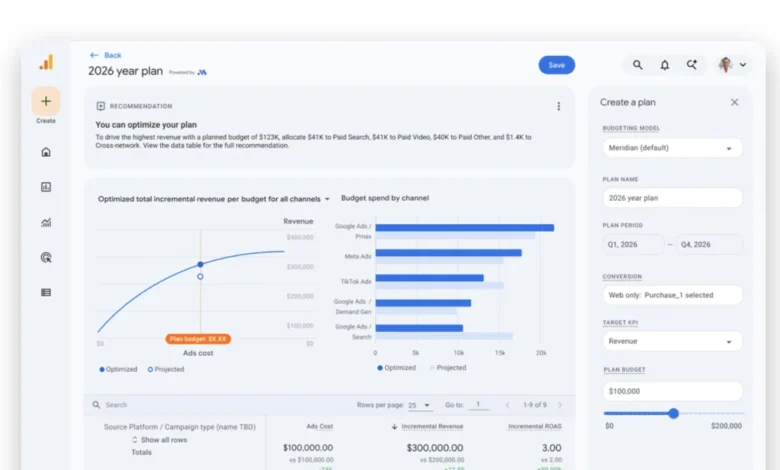
Google has announced a significant update to its enterprise measurement suite by integrating Meridian, its open-source Marketing Mix Model (MMM), directly into Google Analytics 360. This strategic move aims to provide high-level advertisers with a more unified view of their marketing performance, bridging the gap between granular digital tracking and broad-stroke econometric modeling. The integration is complemented by the introduction of Qualified Future Conversions (QFCs), a Gemini-powered predictive signal in Google Ads designed to link top-of-funnel brand investments to long-term sales outcomes. As the advertising industry grapples with the sunsetting of third-party cookies and increasing privacy regulations, these tools represent Google’s latest effort to provide "privacy-durable" measurement solutions that rely on sophisticated statistical modeling rather than individual user tracking.
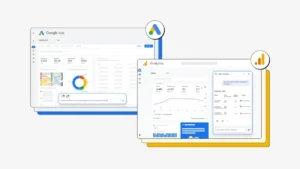
The integration of Meridian into Google Analytics 360 (GA360) is intended to simplify the complex process of data unification. Historically, marketers have struggled to reconcile the real-time, click-based data found in digital analytics platforms with the delayed, aggregate-level insights provided by traditional MMMs. By embedding Meridian within the GA360 environment, Google is enabling organizations to leverage their existing data foundations to build models that account for both online and offline variables, such as economic shifts, seasonal trends, and non-digital media spend. This holistic approach is designed to help CMOs and data scientists determine the true incremental impact of their marketing spend across various channels.
The Evolution of Marketing Measurement and the Rise of MMM
To understand the significance of the Meridian integration, it is necessary to examine the historical trajectory of marketing measurement. For much of the last decade, the industry relied heavily on Multi-Touch Attribution (MTA). MTA tracked individual user journeys across the web using cookies and device identifiers, attempting to assign credit to every touchpoint a consumer encountered before making a purchase. However, the rise of privacy initiatives—most notably Apple’s App Tracking Transparency (ATT) and the European Union’s General Data Protection Regulation (GDPR)—has significantly degraded the accuracy of MTA.
In response, the industry has seen a resurgence of Marketing Mix Modeling (MMM). Originally developed in the 1960s for consumer packaged goods (CPG) companies, MMM uses aggregate data to estimate the impact of various marketing tactics on sales. Unlike MTA, MMM does not require tracking individual users, making it inherently more privacy-compliant. Google’s Meridian is a modern, Bayesian-based MMM framework that allows for more flexibility and transparency than the "black box" models often sold by third-party consultants. By making Meridian open-source and now integrated into GA360, Google is democratizing access to high-level econometric analysis that was previously reserved for the world’s largest advertisers.
Technical Capabilities: Meridian and Qualified Future Conversions
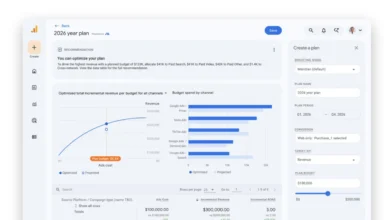
The core value proposition of Meridian lies in its ability to handle "noise" in data and provide actionable insights regarding budget optimization. As a Bayesian model, it allows marketers to incorporate "priors"—existing knowledge or historical data—into the model to refine its accuracy. When integrated with GA360, the model can automatically ingest cleaned, high-quality data, reducing the manual labor typically associated with data preparation for MMM.
Parallel to the Meridian update, Google is introducing Qualified Future Conversions (QFCs). Powered by Gemini, Google’s advanced generative AI, QFCs are designed to solve the "attribution gap" for brand-heavy campaigns. Traditionally, it has been difficult to prove that a high-budget YouTube brand awareness campaign directly leads to sales six months down the line. QFCs use AI to analyze mid-funnel signals, such as increases in brand-specific searches or website engagement, to predict the likelihood of future conversions.
According to Google, these predictive signals will eventually be integrated directly into the Meridian framework. This will allow the MMM to not only look at historical sales data but also incorporate real-time predictive data, creating a forward-looking measurement tool. This synthesis of historical modeling and AI-driven prediction is intended to give marketers a "complete picture" of performance, allowing them to uncover missed revenue opportunities that traditional models might overlook.
Timeline of Google’s Privacy-First Measurement Roadmap
The integration of Meridian into GA360 is a milestone in a multi-year timeline of product shifts aimed at stabilizing the advertising ecosystem amidst regulatory pressure.
- 2020–2021: Google announces the phase-out of third-party cookies in Chrome and shifts focus to the Privacy Sandbox. The industry begins exploring "FLoC" (Federated Learning of Cohorts), which is later replaced by the Topics API.
- 2023: Google officially transitions all users from Universal Analytics to Google Analytics 4 (GA4), which is built with a data-model-first approach rather than a cookie-first approach.
- Early 2024: Google launches Meridian as an open-source project on GitHub, encouraging developers and data scientists to contribute to and use the Bayesian framework for MMM.
- Late 2024: Google announces the direct integration of Meridian into GA360 and the rollout of Gemini-powered Qualified Future Conversions.
This chronology demonstrates a clear shift from tracking "who" the customer is to modeling "what" drives the customer’s behavior. By moving toward aggregate modeling, Google is attempting to maintain its dominance in the advertising space while adhering to the stringent requirements of the Digital Markets Act (DMA) in Europe and similar legislation globally.
Supporting Data and Market Context
The demand for advanced measurement tools is reflected in recent industry data. According to a 2023 report by Gartner, nearly 60% of marketing leaders reported that they are under increased pressure from CEOs and CFOs to prove the long-term ROI of their marketing spend. Furthermore, a survey by the Interactive Advertising Bureau (IAB) found that 75% of advertisers believe the loss of third-party cookies will have a significant impact on their ability to measure campaign performance.
Google’s internal data suggests that brands using advanced MMM frameworks like Meridian can see a 15% to 20% improvement in marketing efficiency by reallocating budgets based on incremental lift rather than last-click attribution. The inclusion of Gemini-powered QFCs is expected to further enhance these figures by identifying "latent demand" created by brand advertising that typically goes unmeasured in short-term performance windows.
Industry Reactions and Implications for the Advertising Ecosystem
The reaction from the marketing community has been a mixture of cautious optimism and technical scrutiny. Agency leaders have generally welcomed the move, noting that a standardized MMM framework within Google Analytics could reduce the time spent on manual data exports. "The integration of Meridian into GA360 solves a major friction point for our data science teams," noted one lead analyst at a global media agency. "It allows us to spend less time cleaning data and more time interpreting the results to drive strategy."
However, some independent measurement firms have raised concerns about the "walled garden" effect. Critics argue that while Meridian is open-source, its integration into GA360 may incentivize marketers to prioritize Google-owned data over data from other platforms like Meta, Amazon, or TikTok. Google has countered this by emphasizing that Meridian is designed to be platform-agnostic, capable of ingesting data from any source, provided the advertiser has the data available.
The broader implications for the industry are profound. As Google integrates AI (Gemini) into the measurement layer, the line between "reporting" and "execution" continues to blur. If an AI can predict future conversions and those predictions are fed back into a Marketing Mix Model that dictates budget allocation, the entire marketing cycle becomes increasingly automated. This places a premium on the quality of first-party data; as the saying goes in the AI era, "data is the fuel." Without a strong foundation of first-party data within GA360, the sophisticated models provided by Meridian and Gemini will lack the necessary inputs to provide accurate insights.
Strategic Outlook: Investing with Confidence
The integration of Meridian into Google Analytics 360 and the launch of Qualified Future Conversions signal a new era of "predictive econometrics." For enterprise brands, the message from Google is clear: the era of granular, user-level tracking is ending, and the era of sophisticated, AI-enhanced modeling is beginning.
By providing tools that link upper-funnel spend to future sales, Google is attempting to solve one of the oldest problems in advertising—the "John Wanamaker" dilemma: "Half the money I spend on advertising is wasted; the trouble is I don’t know which half." Through the combination of Bayesian statistics in Meridian and predictive signals from Gemini, marketers are being given a more transparent and scientifically rigorous way to identify which half is working.
As these updates roll out, the success of the initiative will depend on adoption rates among GA360 users and the ability of the models to prove their worth in a volatile economic environment. For now, Google is positioning these tools as the essential infrastructure for the "AI era," promising that they will help businesses understand what is working today while providing the confidence to invest in what is next. The move underscores a fundamental truth in modern business: in a world of declining visibility, the company with the best model—not just the most data—will likely emerge as the leader.