The Great Agency Reckoning: How AI Automation is Rewriting Marketing Contracts and Operating Models

The rapid evolution of artificial intelligence and automated platform architectures has triggered a profound operational transformation across the marketing agency landscape. Spanning media, creative, performance, brand, measurement, customer relationship management, and advocacy sectors, agencies are facing an unprecedented industry shift. For decades, traditional agency agreements have rewarded manual execution, continuous micro-optimizations, and volume-based labor. However, as advanced platform machine learning models—such as Google’s Performance Max and Meta’s Advantage+—absorb routine operational duties, marketing executives and agency leaders are compelled to renegotiate service-level agreements to align with an AI-driven ecosystem.
Chronology of Transformation: From Manual Labor to Platform Intelligence
The foundational structure of agency compensation has historically relied on manual intervention, human-led campaign adjustments, and the traditional percentage-of-media-spend model. Throughout the 2010s, scaling ad campaigns required extensive human oversight to manage keywords, segment audiences, adjust bids, and build granular account architectures. Agencies operated as execution armies, billing clients for hours spent on routine maintenance and operational upkeep.
By late 2024, platform-native artificial intelligence achieved a tipping point, rendering manual micro-optimizations not only redundant but actively detrimental to algorithmic learning. Advanced machine learning models began processing millions of real-time signals, adapting bids, and assembling dynamic creatives at speeds and scales unattainable by human teams. Despite these technological leaps, many corporate marketing contracts remained tethered to legacy frameworks. By 2026, enterprise clients began recognizing that standard statements of work (SOWs) structurally incentivized agencies to maintain outdated, manual workflows rather than fully embracing platform automation.
Restructuring Agency Fees: The Shift Toward Outcomes
The primary catalyst for current contract renegotiations is not merely cost reduction, but the urgent need to align agency incentives with modern technological capabilities. Under traditional agreements tied to media spend, agencies derive financial benefit from increasing activity volume and ad spend, which frequently conflicts with the efficiency of AI-driven systems. Industry analysts emphasize that over-touching accounts—such as manually altering bids or resetting learning cycles—disrupts algorithmic performance and damages campaign outcomes.
To resolve this misalignment, market experts recommend dismantling percentage-of-media-spend compensation in favor of a modern tripartite fee structure:
- Lean Base Retainers: Accounting for approximately 40% to 50% of the revised total contract, these retainers cover fundamental governance, strategic steering, and robust data engineering.
- Specialized Project Fees: Representing roughly 30% to 40% of the budget, these funds are allocated to creative concept development, pre-testing, high-level portfolio strategy, and complex strategic analytics rather than routine reporting.
- Outcome-Based Incentives: Comprising 15% to 25% of the total compensation, these incentives tie agency profitability directly to verified incremental profit or validated business lift, specifically excluding platform-reported return on ad spend (ROAS).
Implementation of these revised contracts is projected to yield substantial structural savings. Industry analyses indicate that eliminating redundant manual workflows can reduce standard execution fees by 25% to 75%, starting in July 2026. Conversely, reallocating budgets toward underpowered strategic initiatives may drive a modest 15% to 25% increase in fees dedicated to high-value, non-automatable services, resulting in a net decrease in total administrative overhead alongside materially enhanced business outcomes.
Granular Analysis of Operational Subtractions
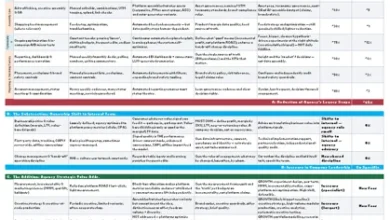
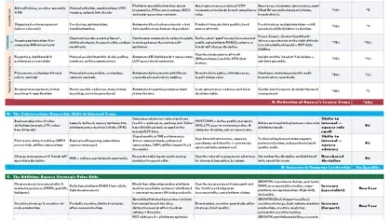
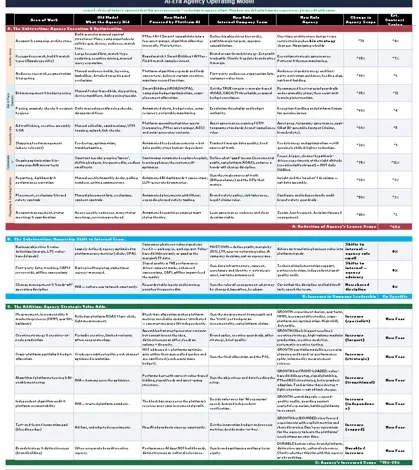
A rigorous examination of standard agency contracts reveals twelve distinct operational dimensions where artificial intelligence has assumed primary execution responsibilities. These can be categorized into five core clusters, illustrating significant reductions in manual labor intensity and corresponding cost weights:
1. The Agency Activity Army
Account architecture, keyword research, match-type sculpting, and audience segmentation historically consumed roughly 22% of contract costs. Modern algorithmic engines now ingest expansive intent signals beyond simple keywords, collapsing thousands of micro-campaigns into consolidated asset groups. Consequently, manual building efforts can be reduced by approximately 78%, shifting the agency’s role to one-time architecture design and high-level strategic governance.
2. The Bid and Pace Dancers
Manual bid adjustments, daily pacing, day-parting, and anomaly checks previously accounted for 14% of contract cost weights. Automated smart-bidding models now continuously optimize campaigns against defined business objectives. Because frequent manual interventions disrupt machine learning stability, routine optimization tasks can be reduced by roughly 73%, limiting human involvement to establishing foundational reward functions and maintaining guardrails.
3. The Assembly Line
Ad trafficking, asset building, tag verification, and feed management represented 12% of traditional agency expenditure. Generative AI tools integrated into major ad platforms now dynamically construct creative variations tailored to individual consumer profiles using minimal source inputs. While data taxonomy and feed management still require human oversight, overall assembly-line labor can be reduced by about 45%.
4. The Optimization Theater
Daily routines involving the pausing of underperforming ads, minor A/B testing, and fragmented learning agendas historically constituted 16% of contract expenses. Modern AI platforms execute continuous, large-scale explore-exploit cycles autonomously. This transition allows routine optimization efforts to be scaled back by approximately 75%, reserving human experimentation for major, high-impact strategic initiatives.
5. The Reporting and Servicing Factory
Manual dashboard updates, frequent status meetings, extensive placement reporting, and routine account management accounted for up to 30% of legacy contract weight. Cloud-fronted data lakes and automated brand safety tooling have largely replaced manual reporting rituals. By shifting focus from administrative care-taking to substantive impact, agencies and clients can reduce routine servicing overhead by roughly 60%.
Broader Industry Implications and Outlook
The transition toward an agentic, AI-integrated marketing model redefines the fundamental value proposition of agency partnerships. Rather than selling execution volume and operational motion, modern agencies are positioned to monetize advanced judgment, cross-platform consumer behavior strategy, governance, and creative innovation.
For agency leadership, this evolution offers relief from low-margin, high-volume operational tasks, enabling firms to attract and compensate specialized talent focused on high-value advisory services. Simultaneously, corporate marketing departments must ensure complete ownership of proprietary ad accounts, data pixels, and customer attribution pipelines to mitigate third-party dependencies.
As enterprise clients and agencies navigate this transition throughout 2026 and beyond, market observers anticipate an acceleration in both agency restructuring and the emergence of modern, outcome-focused firms. Organizations that successfully renegotiate their operating models and align financial incentives with artificial intelligence will be uniquely positioned to achieve sustainable growth in an increasingly automated marketplace.