The Intelligence Revolution and the Mandatory Restructuring of Global Marketing Agency Operating Models

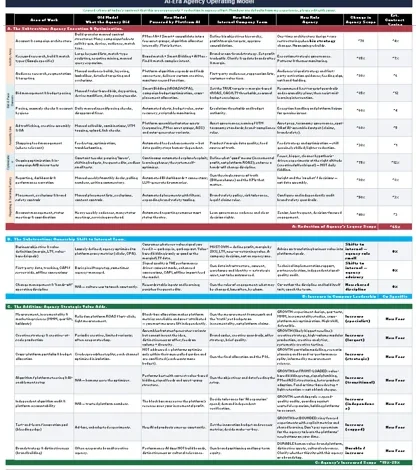
The global marketing landscape is currently undergoing a structural transformation driven by the rapid maturation of artificial intelligence and automation technologies. This shift has moved beyond mere experimentation, forcing a comprehensive reassessment of how marketing agencies—ranging from creative and media to performance and CRM specialists—structure their operations and charge for their services. As algorithmic intelligence assumes the burden of manual execution, the traditional agency model, built on labor-intensive "execution armies," is becoming obsolete. Industry analysts and strategic consultants now project a significant decoupling of agency fees from manual labor, signaling a future where value is derived from strategic judgment rather than operational volume.
The Strategic Drivers of Transformation
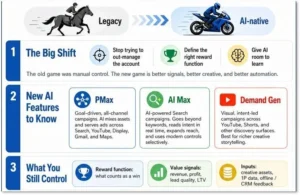
The current industry-wide realization that the legacy agency model is no longer tenable is driven by three primary technological catalysts. First, the evolution of platform-native intelligence, such as Google’s Performance Max (PMax) and Meta’s Advantage+, has effectively automated the granular tasks of keyword research, audience segmentation, and real-time bidding. Second, the rise of generative AI has revolutionized the "assembly line" of creative production, allowing for the rapid generation of ad variations and formats at a fraction of previous costs. Third, the shift toward automated measurement and data engineering has reduced the necessity for manual reporting and "optimization theater."
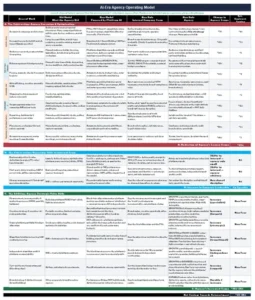
These drivers are creating a "cascade of benefits" for clients who are willing to renegotiate their contracts to reflect the new reality. By July 2026, it is estimated that the reduction in manual work currently listed in standard Agency Statements of Work (SOW) will translate into a 25% to 75% savings in base agency fees. Conversely, new categories of high-value strategic work, currently underpowered or unlisted in contracts, are expected to command a 15% to 25% increase in fees. The net result for the advertiser is a reduction in total expenditure coupled with materially better business outcomes, provided the agency can successfully pivot to a "deep partner" role.
A Chronology of Declining Manual Value
The transition toward an AI-centric agency model is occurring on a sliding scale. As of late 2024, many organizations have already begun capturing initial savings of 25% to 35% through the elimination of redundant manual tasks. By 2025, these savings are expected to deepen as agencies integrate more sophisticated "agentic" workflows. By mid-2026, the industry anticipates a full-scale migration where performance marketing contracts, which were historically the most labor-heavy, will shrink by as much as 75% to 80% in terms of execution-related fees.
In contrast, brand marketing contracts are expected to see a more complex evolution. While the execution components of brand campaigns will likely shrink by 25% to 40% due to automation, the overall strategic budget for brand building is expected to rise. This is because, in an era of automated performance, the strategic differentiation provided by brand identity and creative concepting becomes a primary driver of competitive advantage.
The Five Clusters of Agency Subtraction
To understand where the cost savings originate, one must analyze the five primary clusters of work that are being absorbed by platform AI.
1. The Activity Army
Historically, agencies dedicated significant billable hours to account architecture, keyword research, and audience targeting. In the legacy model, a hundred thinly sliced campaigns were created to provide a sense of "control." Today, algorithms devour this work. Modern platforms treat audience segments as "hints" rather than rigid boundaries, finding converters that a human analyst might never have identified. Consequently, the agency’s role has shifted from "building" to "deciding," focusing on setting reward functions and margin protection bands. This area represents approximately 22% of legacy contract costs and is ripe for a 78% reduction in human effort.
2. The Bid and Pace Dancers
Manual bid adjustments, daily pacing, and "hygiene" checks once occupied the majority of a performance specialist’s day. However, AI-led smart bidding now operates at a scale and speed that human operators cannot match. Furthermore, industry data suggests that "over-touching" accounts—manually intervening in algorithmic learning cycles—actually degrades performance. Agencies are now required to operate at the rhythm of the AI’s learning cycle, reducing the effort in this cluster by an estimated 73%.
3. The Assembly Line
The process of trafficking ads, tagging, and creating variations was once a massive labor sink. Ad platforms can now assemble creative bits, text, and site assets into the best version for each individual user in real-time. The agency’s role in this 12% cost cluster is narrowing to asset preparation and data quality governance, leading to a 45% reduction in billable hours.
4. Optimization Theater
The "daily ritual" of pausing "losers" and shifting budgets by "feel" has been replaced by continuous explore-exploit cycles managed by the platforms. Human-led A/B testing is being superseded by multi-armed bandit testing at scale. Agencies must now focus on a few "big bets"—large-scale experiments that can drive a 15% or greater increase in revenue—rather than hundreds of micro-tweaks. This cluster represents 16% of contract weight and can be reduced by 75%.
5. The Reporting and Servicing Factory
The most significant cost weight in many agency contracts—roughly 30%—is the production of weekly decks, spreadsheets, and "check-in" meetings. AI-fronted data lakes and automated dashboards are making manual reporting obsolete. As automation increases, the need for exhaustive "account management" meetings decreases. Analysts project a 60% reduction in the labor required for this cluster, shifting the focus from "proving value" through reports to "delivering impact" through strategy.
The Death of "Percent of Media Spend"
A critical barrier to this transformation is the legacy fee structure based on a "Percent of Media Spend." This model creates a perverse incentive: it rewards the agency for spending more money and performing more manual activity, even when AI could do the work more efficiently for less. Strategic consultants argue that this model is inherently "anti-AI," as it penalizes the agency for adopting automation that reduces billable hours or optimizes spend.
To align incentives with modern technology, agency contracts must migrate toward a three-part operating model:
- A Lean Base Retainer: Focused on governance, steering, and data engineering (40-50% of the total fee).
- Project Fees: Reserved for creative concepts, pre-testing, complex strategic analytics, and portfolio strategy (30-40% of the total fee).
- Outcome Incentives: Tied to incremental profit or verified revenue lift, rather than platform ROAS (15-25% of the total fee).
Impact on Talent and Agency Economics
While the reduction in manual labor may seem a threat to agency revenue, proponents of this shift argue it is an opportunity for a "higher-value" rebirth. By eliminating $50-per-hour manual tasks, agencies can focus on $500-to-$1,000-per-hour strategic work. This allows agencies to move away from the "junior-heavy" staffing models of the past, where low-cost employees were used to maximize margins on manual labor. Instead, the new model favors experienced individuals capable of cross-platform consumer behavior analysis and "agentic wrangling."
From a talent perspective, the role of the analyst is expected to be entirely redefined by 2028. The "Analyst of the Future" will no longer be a data-puller but a strategy-driver who manages the AI guardrails and interprets high-level business signals. Agencies that embrace this shift are expected to emerge as "outcomes-centered strategic partners," while those tethered to the manual execution model face an existential threat.
Broader Industry Implications and Risks
The transition to an AI-driven agency model is not without risk. There is an "extraordinary criticality" regarding data ownership. As agencies integrate more automation, clients are being advised to ensure complete ownership of their ad accounts, pixels, and data pipelines to avoid becoming "hostages" to proprietary agency tools. Furthermore, the removal of "Percent of Media Spend" models will likely expose and eliminate undisclosed markups and rebates, which may cause internal friction within organizations that have historically benefited from these "toxic" incentives.
Ultimately, the transformation represents a shift from "buying motion" to "buying judgment." The agency of 2026 and beyond will not be valued for the number of keywords it manages or the number of reports it generates. Its value will lie in its ability to navigate an unknown future, manage complex AI ecosystems, and deliver verified incremental profit. As the "intelligence revolution" continues, the distinction between agencies that "pay for the past" and those that "embrace the present" will define the next decade of the marketing industry. For clients and agencies alike, the message is clear: the basis of value has changed, and the time to renegotiate the future is now.