Parenting Claude: Establishing Guardrails for Trustworthy AI-Assisted Web Development

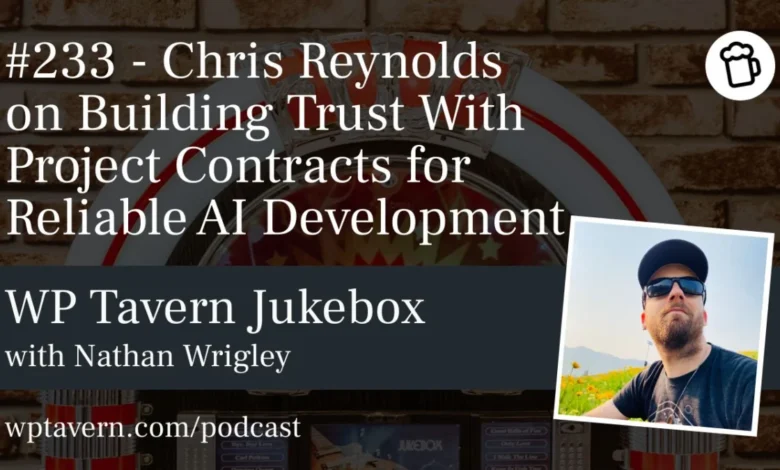
The rapid integration of Large Language Models (LLMs) into professional software engineering workflows has fundamentally altered the paradigm of web development. As generative AI tools become ubiquitous in coding environments, the industry is grappling with the transition from deterministic, step-by-step programming to non-deterministic, AI-assisted development. This shift brings both unprecedented productivity gains and significant risks regarding code reliability, security, and the erosion of traditional quality assurance processes. Chris Reynolds, a veteran of the WordPress community and Senior Manager of Developer Relations at Pantheon, recently presented a framework at WordCamp US designed to address these challenges through the implementation of structured project contracts.
The fundamental tension in AI-assisted development stems from the architecture of LLMs. These models are engineered to identify the most probable, efficient path from a user’s prompt to an output. While this capability accelerates coding tasks, it often prioritizes speed over adherence to rigid software standards, such as accessibility compliance, rigorous testing, and security protocols. Without proper oversight, AI systems may inadvertently introduce vulnerabilities or bypass established best practices in favor of a "path of least resistance" logic.
The Concept of the Project Contract
To mitigate these risks, Reynolds advocates for the "project contract" methodology. This approach involves embedding a structured, enforceable set of rules and checklists directly into the development workflow. By leveraging markdown files—such as a Claude.md file or an agents.md file—developers can define the specific parameters, coding standards, and security requirements that an AI must adhere to throughout the lifecycle of a project.
This methodology relies on a "forcing function"—a technical gatekeeper that prevents the AI from finalizing or committing code until it has satisfied every item on a pre-defined checklist. This mechanism often involves a "reviewer agent," a secondary AI process spawned specifically to audit the work of the primary coding agent. If the primary agent fails to meet the criteria established in the project contract—such as passing unit tests, performing linting, or conducting accessibility audits—the reviewer agent rejects the code, forcing the primary agent to refine its output until it complies with project standards.
Chronology of AI Adoption in Web Development
The journey toward widespread AI adoption in development has been marked by rapid evolution. Between 2022 and 2026, the industry moved from experimental, low-utility chatbots to highly sophisticated agents capable of refactoring entire codebases.
- 2022–2023: Early experimentation with tools like ChatGPT and GitHub Copilot began to reshape developer workflows. Initial use cases were limited to code snippets and basic troubleshooting.
- 2024: The introduction of more advanced models with larger context windows and "agentic" capabilities allowed for more complex task execution, such as building entire site architectures from natural language prompts.
- 2025–2026: The maturation of agent orchestration platforms enabled developers to daisy-chain AI models, creating systems where one AI builds while another audits. This period marked the shift toward formalizing guardrails like the project contract to manage non-determinism.
The Implications of Non-Deterministic Development
The transition to AI-assisted coding presents a profound challenge to the traditional "deterministic" mindset. Historically, software engineering relied on the principle that identical inputs would consistently produce identical outputs. LLMs operate in a non-deterministic space where outputs can vary based on latent variables within the model’s training data and internal "reasoning."
Industry experts note that this volatility creates a "black box" effect. Even when an LLM provides a rationale for its code, the underlying logic remains opaque. This uncertainty necessitates a shift in the developer’s role from a direct creator to an overseer. However, this evolution raises critical questions regarding the future of talent development. If junior developers rely heavily on AI to perform initial coding tasks, the traditional "bottom rung" of the career ladder—where foundational skills are honed through manual trial and error—may be effectively bypassed.
Data and Environmental Concerns
The surge in AI usage is not without significant infrastructure costs. The demand for massive computing power to train and run these models has led to a surge in the construction of large-scale data centers. According to industry analysis, these facilities require significant electricity and water consumption, placing strain on local grids and raising questions about the long-term environmental sustainability of AI-driven development.
Furthermore, as companies scale these tools, the reliance on proprietary, resource-intensive models continues to grow. Critics argue that while individual developers may experience increased efficiency, the collective impact on energy consumption and the reliance on black-box systems requires a more robust ethical and philosophical framework than currently exists in the tech sector.
Balancing Innovation and Oversight
The "parenting" of AI agents is becoming a necessary skill for the modern developer. By treating the AI as an entity that requires consistent guidance, developers can harness the power of LLMs while minimizing the risk of "chaos" in the codebase. The implementation of pre-commit hooks and automated reviewer agents serves as a modern equivalent to traditional peer review, albeit at a machine-to-machine scale.
The consensus among industry leaders at events like WordCamp US is that while AI tools offer the potential for democratic, playful, and rapid development, they are not a replacement for rigorous software engineering principles. The "project contract" is not merely a technical configuration; it is an assertion of human oversight in an increasingly automated environment.
Future Outlook
Looking toward 2027 and beyond, the industry is expected to move toward deeper agent orchestration. Future development environments may feature "multi-agent systems" where specialized agents—planners, coders, testers, and security auditors—work in concert to build web applications.
As these systems become more integrated, the primary task for the human engineer will shift further toward architecture, strategy, and high-level verification. The core challenge for the next several years will be maintaining the human capacity to understand, debug, and govern the complex systems generated by AI. While the industry has made significant strides in making these tools "truthful" and reliable, the consensus remains that a healthy dose of professional skepticism, combined with robust, automated guardrails, is the only viable path forward for reliable software development in the age of artificial intelligence.
Related posts: