Reliable AI Development Through Project Contracts: Establishing Guardrails for the Future of Web Programming

The rapid ascent of Large Language Models (LLMs) has fundamentally altered the trajectory of software engineering, shifting the industry from a traditionally deterministic, step-by-step workflow to a non-deterministic environment where code is increasingly generated by machines. As developers grapple with this paradigm shift, the focus has moved from merely adopting AI tools to establishing rigorous frameworks that ensure security, accessibility, and architectural integrity. At the forefront of this movement is the concept of the project contract—a structured, automated set of guardrails designed to govern how AI interacts with a codebase.
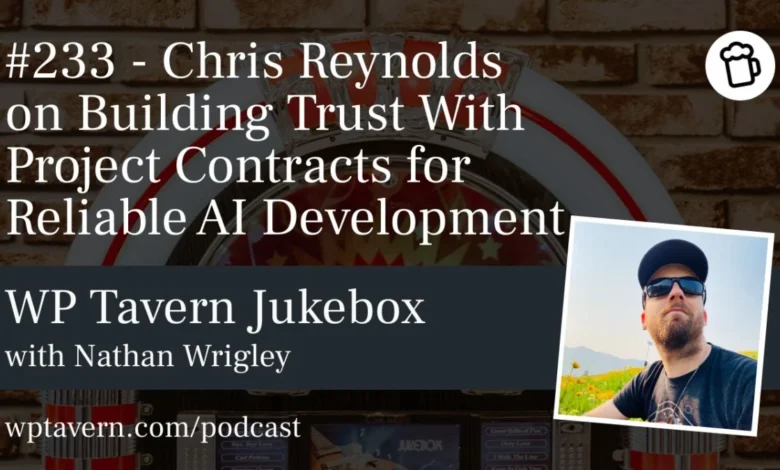
The discourse surrounding these practices reached a critical juncture at WordCamp US, where industry leaders like Chris Reynolds, Senior Manager of Developer Relations at Pantheon, presented strategies for managing the unpredictability of AI agents. By implementing automated reviewer agents and pre-commit hooks, developers are finding ways to mitigate the risks of AI-driven shortcuts while maintaining the velocity that these tools provide.
The Shift Toward Non-Deterministic Development
For decades, software development was defined by its predictability. An engineer would write a specific set of instructions, and the computer would execute them with absolute consistency. The arrival of LLMs—such as Claude, GPT-4, and others—has introduced a level of non-determinism that challenges conventional wisdom. Because these models are trained to find the most probable path from point A to point B, they often prioritize speed over adherence to complex, multi-layered quality standards.
This behavior, while efficient, presents significant risks in an enterprise environment. Without proper oversight, an AI may unintentionally introduce security vulnerabilities, ignore accessibility requirements, or commit sensitive data to a repository. The "vibe coding" era, as some have termed it, allows individuals without formal developer backgrounds to generate functional applications in hours rather than weeks, but this democratization comes with the inherent risk of hidden technical debt and architectural chaos.
The Anatomy of a Project Contract
To counter the unpredictable nature of AI, developers are increasingly adopting "project contracts." These are not legal documents in the traditional sense, but rather technical specifications and checklists embedded directly into the project workflow.
A project contract typically consists of:
- System Instructions (Claude.md): A foundational markdown file that defines the rules of engagement, coding standards, and architectural preferences that the AI must follow for the duration of the session.
- Automated Reviewer Agents: A secondary AI agent that is spawned upon the completion of a task to audit the primary agent’s output. This agent functions as a "task police," verifying that the code meets specific linting, testing, and security criteria.
- Forcing Functions: Mechanisms such as pre-commit hooks that prevent code from being committed to a repository unless it passes a comprehensive, automated checklist. This creates a fail-safe that ensures the AI cannot bypass necessary validation steps.
By codifying these requirements, developers can enforce consistency. If an AI attempts to refactor code without maintaining the integrity of existing tests, the automated reviewer agent flags the discrepancy, effectively forcing the AI to revert or correct its work before the code reaches the production branch.
Chronology of AI Adoption in Web Development
The timeline of AI in web development has accelerated at an unprecedented pace. In 2021 and 2022, AI was primarily used for rudimentary text generation and simple script snippets. By late 2023, LLMs began demonstrating advanced coding capabilities, allowing for the generation of complex, multi-file web applications.
By 2024 and 2025, the industry shifted toward "agentic" workflows, where developers stopped treating AI as a chatbot and began treating it as a collaborator capable of managing files, running tests, and executing deployment tasks. The current focus in 2026 is on "guardrail architecture"—the intentional design of constraints that keep the AI within the boundaries of safe and professional engineering practices. This evolution represents a maturation of the technology, moving from experimental play to enterprise-grade utility.
Addressing the Loss of Foundational Skills
One of the most pressing concerns within the developer community is the potential atrophy of foundational skills. As senior engineers increasingly pivot toward roles that resemble "AI managers" or "reviewers," there is an emerging fear that the lower rungs of the professional ladder—the junior developer roles that provide the necessary experience for advancement—are being hollowed out.
If AI systems handle the basic tasks of bug fixing, documentation, and boilerplate coding, the opportunities for entry-level developers to learn the "how" and "why" behind software construction are diminished. Industry analysts suggest that this will force a change in how computer science education and corporate mentorship are structured. The focus may shift from teaching syntax and basic implementation to teaching system architecture, algorithmic thinking, and advanced code review, as these are the skills required to oversee AI agents effectively.
The Environmental and Economic Implications
The proliferation of AI-assisted development is not without its costs. The reliance on increasingly large models necessitates massive investments in data centers, raising concerns regarding energy consumption and environmental impact. While the efficiency gains for individual developers are tangible, the broader economic and environmental footprint of these models remains a point of contention.
Furthermore, there is a fundamental philosophical question regarding the "black box" nature of current models. Even the researchers behind the most advanced LLMs admit that the internal reasoning processes of these models are not fully understood. This lack of transparency means that developers are effectively trusting a system whose decision-making process is, in many respects, opaque.
Future Outlook and Industry Standardization
As the industry moves deeper into the latter half of the decade, the trend toward agent orchestration is expected to become the standard. Rather than a single model attempting to handle every aspect of a project, future workflows will likely involve a network of specialized agents—a planner, a coder, a tester, and a reviewer—all operating in tandem to ensure that the output is both high-quality and secure.
For the individual developer, the path forward is clear: embracing these tools requires a move away from passive observation and toward active, disciplined governance. The project contract is not merely a tool for code quality; it is a manifestation of the developer’s intent. By defining the rules of the environment, developers ensure that AI remains a powerful assistant rather than an unpredictable agent of chaos.
As AI models continue to iterate, the industry must maintain a rigorous focus on testing and verification. The goal for 2027 and beyond is not to eliminate AI, but to integrate it into a robust, contract-based ecosystem where the human developer remains the final arbiter of quality and intent. Whether this transition will result in a more efficient industry or a more fragmented one remains to be seen, but the necessity of guardrails is now a settled matter in the professional development community.
As Chris Reynolds and his peers have demonstrated, the future of coding is not found in the rejection of artificial intelligence, but in the sophisticated, parental guidance required to make that intelligence useful, safe, and reliable. The "vibe coding" era may have been the introduction, but the era of project contracts is the professionalization of that potential.