X quietly pulls standalone XChat app from app stores in pivot back to Elon Musk everything app strategy

The digital landscape witnessed another subtle yet significant shift in platform architecture as X, formerly known as Twitter, quietly removed its standalone messaging application, XChat, from both the Apple App Store and the Google Play Store. The unlisting, which occurred late last week, marks a swift reversal of a product strategy that was introduced to the public only months prior. Industry trackers and technical analysts, most notably 9 to 5 Mac and MacRumors code sleuths, confirmed that the application was voluntarily pulled by the company rather than removed due to a policy violation or store suspension.
This unexpected disappearance underscores the ongoing structural evolution of X under the ownership of Elon Musk. While the platform has continuously experimented with decentralized and modular feature rollouts, the overarching corporate ambition has consistently pointed toward creating a unified ecosystem. The rapid lifecycle of XChat—from a prolonged beta testing period to an official public launch, and finally to a total unlisting and code purging—highlights the experimental nature of product development at the modern tech conglomerate.
Chronology of a Short-Lived Standalone Venture
The trajectory of XChat was defined by rapid, highly anticipated iterations designed to capture market share in an increasingly crowded instant messaging sector. The timeline of the application’s brief existence illustrates a calculated internal debate regarding product segregation versus platform unification:
Late 2023 to Early 2024: Whispers and subsequent confirmations emerged regarding X’s intention to uncouple direct messaging functionality from the core social media application. Selected users were granted access to a closed beta testing phase of the standalone chat interface.
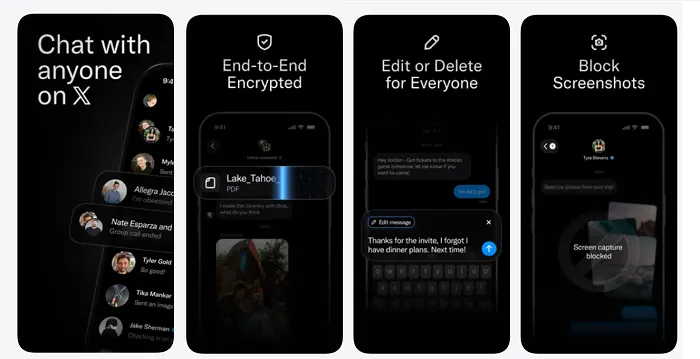
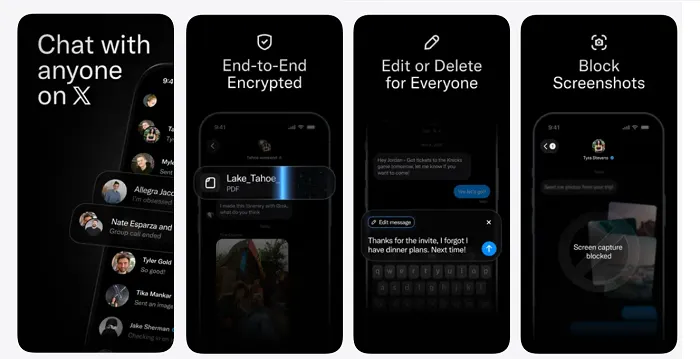
April 2024: Following months of internal testing and telemetry gathering, X officially launched the X Chat app to the general public on major mobile marketplaces. The application was marketed as a dedicated space for peer-to-peer and group communications, featuring enhanced privacy controls and early iterations of end-to-end encryption.
Summer 2024: Strategic shifts began to emerge behind the scenes. In July, X announced a pivotal financial services partnership with Cross River Bank to power its proprietary X Money accounts, signaling a pivot toward integrated financial transactions rather than purely communicative silos.
September 2026: XChat disappeared without a public press release or developer bulletin from both iOS and Android storefronts. Independent app store trackers confirmed the voluntary unlisting, while software analysts discovered that deep references to the application had simultaneously been scrubbed from the primary X source code.
Contradicting the Vision of the Everything App
The initial release of XChat baffled many industry observers because it seemed to directly contradict the core philosophy that Elon Musk had championed since acquiring the platform. Musk repeatedly articulated a vision for transforming X into an all-encompassing "everything app"—a Western equivalent of China’s WeChat—where users could seamlessly consume news, engage in social discourse, hail rides, and execute financial transactions without ever leaving a single, unified interface.
By isolating messaging into a distinct, standalone application, X forced users to manage multiple downloads and fragmented user experiences. This fractured approach immediately raised questions among tech analysts about whether the company was experiencing strategic drift or attempting to solve backend technical debt. Direct messaging within the core X application had historically been viewed as bloated or vulnerable, leading some to theorize that a clean-slate standalone app was built purely for architectural insulation.
Regulatory Maneuvering and the Quest for Money Transmitter Licenses
Beyond structural engineering and user experience debates, a more pragmatic financial motive appears to have driven the short-lived existence of XChat. For years, Elon Musk’s executive team has pursued regulatory approval across various United States jurisdictions to secure crucial money transmitter licenses. These licenses are the foundational legal requirement for operating peer-to-peer payment networks, digital wallets, and broader financial ecosystems.
Historically, X faced significant regulatory hurdles, experiencing rejections or stalling applications in multiple U.S. states. Within the complex compliance landscape of fintech regulation, regulatory bodies frequently scrutinize the operational boundaries of tech companies attempting to integrate financial rails into social media platforms. Analysts have suggested that housing advanced messaging and prospective payment functionalities within an isolated, highly secure, standalone application might have been a deliberate strategy to satisfy state-level compliance officers.
A separate application operating under distinct security protocols could theoretically present a more easily audited surface area for state regulators reviewing consumer protection and data security measures. However, the regulatory landscape shifted meaningfully when X secured its crucial partnership with Cross River Bank in July, establishing a federally compliant banking and payment infrastructure via X Money. Once this institutional partnership was cemented to power creator payouts and digital wallets, the strategic necessity of maintaining a fragmented, standalone chat application evaporated.

The Return to Consolidation and Codebase Purging
The definitive nature of the XChat shutdown is further evidenced by actions taken deep within the platform’s software architecture. According to findings shared by tech researcher Aaron Perris of MacRumors, software engineers at X systematically eliminated references to the chat application from the master source code. This comprehensive purge indicates that the unlisting was not merely a temporary suspension or a regional storefront glitch, but rather a permanent decommissioning of the project.
With XChat entirely dismantled, the platform is aggressively consolidating its communication architecture back into the main X application. Users are once again required to rely on the native messaging tab embedded within the primary client to access encrypted direct messages, voice and video calling features, and media sharing. This consolidation aligns precisely with Musk’s original directive to minimize friction and keep users within a single, highly engaged digital environment.
Broader Implications for the Future of X
The rise and fall of XChat offers a fascinating case study in agile product iteration weighed against overarching corporate strategy. It demonstrates that while large technology platforms are willing to pivot toward experimental architectures to solve immediate tactical problems—such as regulatory compliance or software scalability—they ultimately default to unified product strategies when core infrastructure stabilizes.
For users, the removal of XChat simplifies the digital footprint required to interact on the platform. There is no longer a need to maintain a secondary app purely for messaging threads. For advertisers, creators, and enterprise stakeholders, the move signals a renewed commitment to maximizing daily active user metrics within the primary application, ensuring that content consumption, social engagement, and emerging financial services like X Money remain interconnected.
As X continues its arduous journey toward becoming a multi-faceted digital utility, the XChat experiment will likely be remembered as a brief, tactical detour in a much larger campaign to reshape the digital sphere. Whether the unified core application can successfully shoulder the heavy burdens of secure messaging, media streaming, and global payment processing without compromising performance remains the central question for the platform’s future.
Related posts: