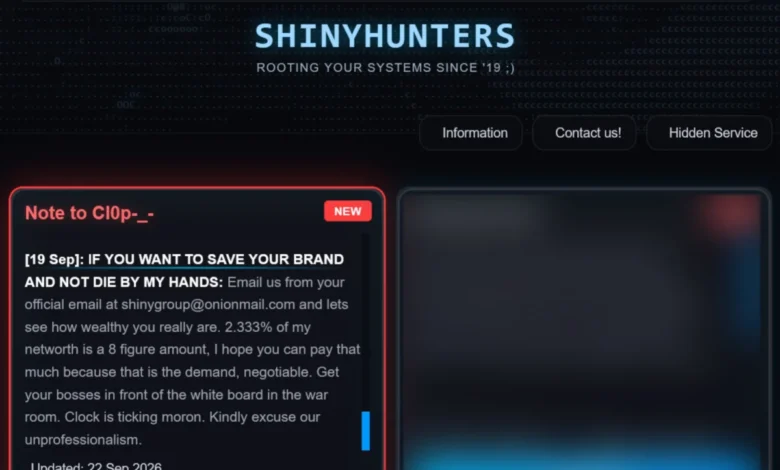
The landscape of federal cybersecurity has been rattled once again, highlighting the vulnerability of critical government infrastructure even within elite law enforcement agencies. The notorious cybercriminal collective known as ShinyHunters has made headlines by claiming responsibility for a massive breach targeting the Federal Bureau of Investigation (FBI). Unlike typical financially motivated ransomware campaigns that plague private corporations and educational institutions, this incident appears to stem from a personal and professional grievance. The hackers are reportedly demanding a public retraction and correction of an official FBI security advisory that cast aspersions on their tactics, using stolen sensitive data concerning agency personnel as their primary bargaining chip.
This unfolding digital crisis underscores the persistent threats facing federal agencies and the escalating volatility of interactions between state-sponsored or organized cybercrime syndicates and law enforcement. As cybersecurity experts scramble to verify the technical claims made by the group, the potential exposure of personal information belonging to federal employees, applicants, and their families has introduced significant security and privacy concerns.
The Core Allegations and Demands
According to reports emerging in late September 2026, ShinyHunters claims to have exfiltrated between two and three terabytes of sensitive data from FBI-managed servers. The compromised material purportedly includes detailed personal records of active FBI employees and job applicants, such as full names, home addresses, personal phone numbers, dates of birth, and, in several instances, biographical details regarding their spouses.

To substantiate their claims, the hackers provided security researchers and media outlets with a sample data pack containing records of approximately 5,000 individuals. Independent verification using open-source intelligence tools (OSINT) and historical breach databases suggested that a portion of the phone numbers and personal identifiers matched records associated with personnel within the Department of Justice and its primary investigative arm.
In addition to exfiltrating the data, the perpetrators defaced the official FBI recruitment portal, FBIjobs.gov. They replaced standard navigation pages with a mock law enforcement seizure notice, effectively rendering the application portal and the Special Agent Applicant Portal temporarily unavailable.
Crucially, ShinyHunters’ representatives have explicitly stated that the operation is not driven by financial extortion or demands for cryptocurrency payouts. Instead, their primary objective is retaliation against the bureau. The group has given federal leadership a strict one-week deadline to alter or completely remove a public service announcement (PSA) published earlier in the year that detailed the syndicate’s extortion methods, calling the report’s characterizations "false allegations."
Background and Chronology of the Dispute
The roots of this high-stakes standoff trace back to early 2026, marking a continuous escalation of tensions between the cybercrime group and American federal authorities.

- May 15, 2026: The FBI and the Cybersecurity and Infrastructure Security Agency (CISA) issued a joint Public Service Announcement (PSA) via the Internet Crime Complaint Center (IC3). The advisory warned organizations about an active cybercriminal group—subsequently identified as ShinyHunters—that leverages stolen data to exert intense pressure on victims. The advisory highlighted the group’s aggressive psychological tactics, including direct harassing phone calls, threatening messages directed at victims’ families, and "swatting"—the dangerous practice of making false emergency reports to dispatch armed police to a victim’s residence.
- June 2026: Google’s Threat Intelligence group published findings documenting a wave of attacks orchestrated by ShinyHunters targeting the education sector. These attacks exploited a previously identified vulnerability in Oracle PeopleSoft software, disrupting learning management platforms and educational institutions nationwide.
- September 18, 2026: In an audacious display of inter-gang hostility, ShinyHunters allegedly hijacked the leak website of a rival ransomware syndicate, Cl0p. The group posted an eight-figure ransom demand alongside a mock seizure notice, signaling an aggressive expansion of their operational footprint.
- September 22, 2026: Reports surfaced detailing the alleged breach of FBI infrastructure. ShinyHunters publicly claimed responsibility for infiltrating the bureau’s employment portal, issuing their ultimatum to FBI Director Kash Patel and Brett Leatherman, the assistant director for the FBI’s cyber division.
The Technical Vector: Oracle PeopleSoft and AWS GovCloud
The methodology behind the alleged breach involves a sophisticated exploitation chain, though specific technical details remain under rigorous analysis by independent cybersecurity firms.
According to statements made by ShinyHunters to specialized tech publications, the infiltration began via a zero-day vulnerability—a previously unknown software flaw—nested within Oracle PeopleSoft software utilized by the FBI’s human resources and recruitment infrastructure. The hackers claim this exploit allowed them to execute arbitrary commands on internal servers without requiring prior authentication credentials.
Once inside the perimeter of the recruitment portal, the group reportedly pivoted to FBI-managed servers hosted on Amazon Web Services (AWS) GovCloud. From these cloud environments, they allegedly downloaded terabytes of internal documents affecting multiple services, including human resources databases, MedLink, and the Criminal Justice Information Services (CJIS) division.
Despite these assertions, cybersecurity analysts urge caution regarding the absolute validity of the technical narrative. A forensic review conducted by the cybersecurity firm CyPro noted that ShinyHunters failed to publish specific vulnerability references, PeopleSoft component identifiers, exact exploit requests, or impacted product versions. Furthermore, the precise mechanism that allowed the attackers to move laterally from a public-facing recruitment application to deeper, classified AWS GovCloud repositories has not been independently verified through public telemetry.

In response to inquiries, an FBI spokesperson issued a brief statement: "The FBI is aware of claims regarding unauthorized activity affecting FBIjobs.gov and is currently investigating."
Broader Implications and Security Analysis
The potential compromise of federal law enforcement personnel data carries profound implications that extend far beyond a mere public relations feud between hackers and government investigators.
First and foremost is the immediate personal security risk posed to the individuals whose data has been exposed. Federal law enforcement agents, analysts, and administrative staff operate in high-risk environments. The exposure of home addresses, personal phone numbers, and family details provides malicious actors—ranging from domestic extremists and organized crime syndicates to hostile foreign intelligence services—with a roadmap for targeted harassment, physical surveillance, or espionage recruitment. Even job applicants who were never formally hired by the bureau find their personal dossiers potentially exposed to the public internet.
Second, the incident highlights persistent vulnerabilities in third-party enterprise software utilized across the public sector. Enterprise resource planning systems like Oracle PeopleSoft manage vast repositories of sensitive human capital data, making them prime targets for advanced persistent threat (APT) groups and financially motivated extortionists alike. When these platforms harbor undiscovered zero-day vulnerabilities, the resulting blast radius can compromise even organizations with theoretically robust defensive postures, such as the nation’s premier federal investigative agency.

Third, the attack represents a novel paradigm in cybercriminal behavior. Historically, cyber syndicates avoid intentionally drawing the concentrated, full-scale retaliatory focus of the FBI unless operating from heavily shielded foreign jurisdictions with tacit state protection. By directly targeting the bureau out of a desire to correct a public relations narrative rather than secure a financial payout, ShinyHunters has signaled a dangerous shift toward ideological or ego-driven retaliation against law enforcement oversight.
This breach also compounds a difficult year for FBI leadership regarding information security. In March 2026, the bureau faced a separate high-profile incident when Iran-linked hackers allegedly breached FBI Director Kash Patel’s personal email account, subsequently publishing historical photographs and documents. While the Justice Department maintained that the exposed material contained no sensitive government secrets, the cumulative impact of these digital intrusions raises difficult questions about the digital hygiene and defensive resilience of top-tier national security officials.
As federal investigators and private sector cybersecurity experts continue their forensic analysis of the FBIjobs.gov infrastructure, the immediate operational focus remains on securing compromised systems, assessing the true volume of exfiltrated data, and offering protective guidance to affected personnel and applicants. Whether the federal government will respond to ShinyHunters’ ultimatums remains highly unlikely given institutional protocols against negotiating with cybercriminals, setting the stage for a protracted game of digital cat-and-mouse in the months ahead.