The Evolution of Search Marketing: Why Adopting AI-Driven Google Ads Maturity Frameworks is Essential for Enterprise Growth

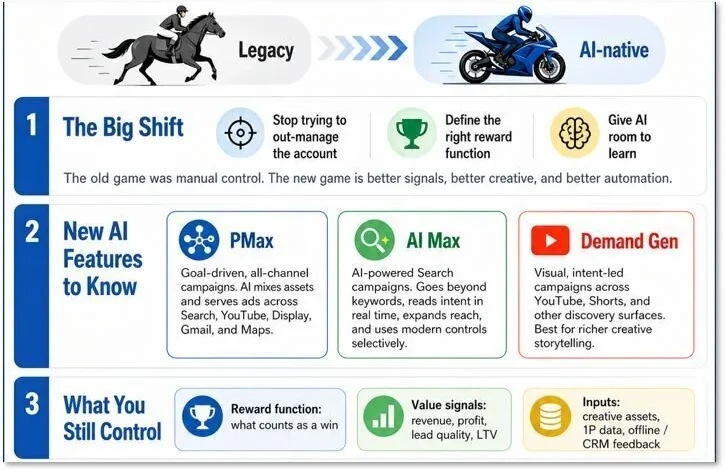
In an era defined by fuel-efficient long-range motorcycles, insisting on using horses for daily transportation would be considered impractical. Yet, digital marketing veteran and former Google employee Avinash Kaushik argues that a parallel inefficiency persists within corporate advertising departments. Despite the rapid advancement of automated machine learning systems, many organizations continue to manage digital campaigns using legacy, manual methodologies. To address this widening operational gap, industry analysts have introduced comprehensive maturity models designed to evaluate whether enterprises are genuinely prepared for an automated, artificial intelligence-driven advertising ecosystem.
The Ongoing Transformation of Digital Advertising Infrastructure
For several years, major advertising platforms—most notably Google Ads and Meta—have systematically integrated machine learning into their core architectures. This ongoing shift, often described by digital strategists as the "AIfying" of programmatic advertising, is designed to reduce manual intervention while optimizing campaign outcomes. Rather than requiring human operators to continuously adjust micro-settings, modern platforms leverage narrow artificial intelligence to process vast arrays of behavioral signals in real time.
Despite these technological strides, corporate strategy meetings and digital marketing forums frequently frame search engine marketing through an outdated lens. Discussions regularly revert to rigid dichotomies between brand and non-brand campaigns. Furthermore, search marketing professionals continue to manually configure match types, scheduling hours, geographical parameters, audience segments, and negative keywords. In many instances, digital agencies attempt to demonstrate ongoing value by executing multiple manual account modifications daily. Industry experts caution that this hands-on, control-heavy approach counterintuitively depresses profit margins and stalls campaign performance.
Two Foundational Perspectives on Platform Trust
Understanding the friction in modern advertising adoption requires examining the viewpoints of industry practitioners who champion automated systems. Observers generally approach platform automation through two distinct lenses: trust in platform engineering and trust in algorithmic evolution.
Professionals with deep, foundational experience inside technology firms often view platform architecture from a place of institutional familiarity. For example, former engineers and product specialists who spent over a decade collaborating directly with Google’s core development teams point out that while platforms occasionally make strategic missteps, these errors are typically operational anomalies rather than systemic flaws.
Concurrently, advocates for artificial intelligence maintain that the entirety of performance marketing will inevitably be governed by automated algorithms. Consequently, the optimal strategic posture for modern enterprises is to "embrace and extend" platform capabilities rather than resist them. While machine learning algorithms can experience optimization hiccups, their primary advantage lies in continuous learning and daily iterative improvement. From a pragmatic business perspective, the option to remain anchored in legacy management practices is no longer viable in a competitive global marketplace.
Current AI Offerings Within the Google Ecosystem
Google’s contemporary suite of advertising tools relies heavily on automated campaign structures designed to streamline asset deployment across multiple channels. Understanding these core offerings is vital for assessing organizational readiness:
Performance Max (PMax): Positioned as an all-encompassing campaign solution, PMax requires advertisers to supply basic parameters—including business goals, budgets, and a diverse library of creative assets such as text, images, videos, and logos. The platform’s underlying AI dynamically mixes and matches these assets to deliver tailored advertisements across Search, YouTube, Display networks, Gmail, and Google Maps.
AI Max: This search-exclusive campaign format eliminates traditional constraints such as rigid keyword match types and manual brand segmentations. Instead, AI Max evaluates user intent in real time, expanding audience reach by analyzing contextual signals far beyond the literal keywords typed into the search bar.
Demand Gen: Formerly known as Discovery ads, this visual-first format uses machine learning to interpret user intent, effectively distributing video assets, YouTube Shorts, and display placements across high-engagement environments.
Underpinning all three architectures are two critical mechanisms: the reward function, which dictates how the system defines a successful business outcome, and advanced signal processing, which evaluates user intent across data points far more complex than humanly possible. While these narrow AI applications are not entirely infallible, statistical analyses indicate that automated optimization yields a significantly higher ratio of successful conversions compared to manual oversight.
The Google Ads Maturity Assessment Framework
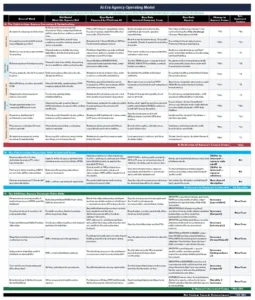
To help corporate leadership objectively determine whether their advertising operations reside in the modern era or remain trapped in legacy workflows, digital strategists have developed structured maturity evaluation models. These frameworks assess organizational capability across two core dimensions: capability scoring and depth scoring.
Capability Scoring measures the technological sophistication of an organization on a scale from zero to four, where zero represents legacy manual operations and four signifies an AI-native ecosystem. Depth Scoring evaluates how broadly these sophisticated capabilities are deployed across the enterprise, preventing self-deception by measuring metrics such as total ad spend, conversion volume, and campaign coverage.
The comprehensive maturity score is calculated using a structured formula that multiplies weighted dimension scores by normalized capability and depth metrics. Industry benchmarks suggest that enterprises aiming for optimal performance should target a composite maturity score of 85 or higher, ensuring that the vast majority of business outcomes are optimized through automated intelligence.
Core Dimensions of the Maturity Model
The evaluation framework typically encompasses six foundational dimensions, each weighted according to its strategic importance in modern digital advertising:
-
Measurement and Value Architecture (Weight: 30 Points)
The integrity of any automated system depends entirely on the quality of the data and signals it receives. If an enterprise optimizes its campaigns for superficial proxies—such as basic pageviews, sessions, or unweighted form submissions—the resulting automated output will reflect those flawed inputs. Modern architectures require robust implementation of enhanced conversions, data-driven attribution, value-based bidding, and centralized data management layers to ingest first-party and offline customer insights. -
Search Operating Model (Weight: 20 Points)
Transitioning to a modern search operating model involves embracing smart bidding, broad match logic, responsive search ads, and full coverage via AI Max. This requires organizations to relinquish the impulse to hyper-segment campaigns by manual match types or device modifiers, utilizing governance controls selectively rather than attempting to micromanage every individual auction.
Additional dimensions within the framework evaluate First-Party Data and Audience Intelligence, Surface Breadth and Campaign Mix, Creative and Landing Page Adaptability, and Operating Cadence and Governance. Together, these elements form a holistic strategy designed to outsmart competitors through superior data integration rather than sheer capital expenditure.
Methodologies for Avoiding Self-Deception
Evaluating corporate advertising maturity frequently exposes a cognitive bias among marketing teams eager to project advanced capabilities to executive leadership. To ensure absolute objectivity during internal assessments, strategists recommend specific auditing protocols.
Organizations are advised to evaluate deployment depth before scoring technological capability, ensuring that isolated pilot projects do not distort the broader organizational reality. Furthermore, audits should focus strictly on the top 80 percent of advertising expenditures, preventing edge cases from masking systemic inefficiencies.
Broader Implications and Industry Impact
The transition from manual account management to AI-driven automation represents a fundamental cultural and operational shift for marketing departments. Historically, the benchmark of a skilled digital marketer was their ability to manually manipulate bids, negative keywords, and campaign structures to outperform competitors.
In the contemporary landscape, the primary responsibility of the advertising professional has shifted. Success now depends on feeding the machine superior data, providing diverse and high-grade creative assets, defining precise customer value signals, and granting algorithms sufficient operational freedom to learn and adapt.
While the cultural friction associated with retraining marketing teams and relinquishing manual control can be challenging, the resulting financial implications are substantial. Industry data suggests that enterprises successfully achieving high maturity scores frequently observe exponential increases in revenue and return on ad spend. Beyond financial gains, automating repetitive, manual administrative tasks allows marketing professionals to reallocate their expertise toward higher-level strategic planning, transforming digital advertising from a tactical chore into a core driver of enterprise growth.