The Intelligence Revolution and the Mandatory Transformation of Global Marketing Agency Operating Models

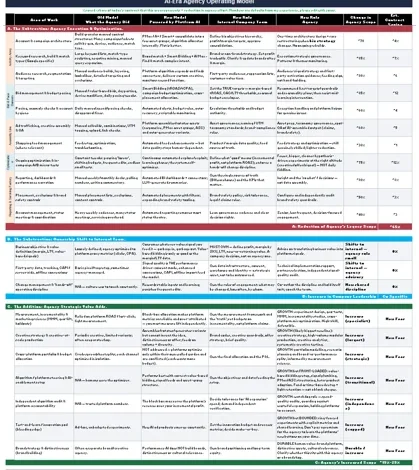
The global marketing industry is currently undergoing a structural upheaval as the dual forces of artificial intelligence and automation dismantle traditional agency operating models. This shift is not merely a technological upgrade but a fundamental reordering of how brand-agency partnerships are structured, valued, and compensated. As machine learning algorithms take over the execution-heavy tasks that once defined agency work—such as campaign architecture, bidding, and manual reporting—the industry is moving toward a future where "judgment" replaces "motion" as the primary currency of value.
The Economic Realignment: Savings and Reinvestment
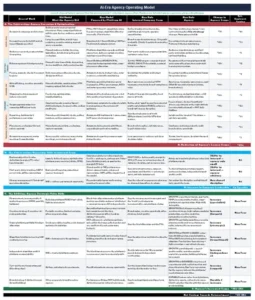
The immediate financial implications of this transition are stark. Industry projections suggest that by July 2026, the reduction in manual labor currently listed in standard Agency Statements of Work (SOW) will result in a 25% to 75% savings in base agency fees. This reduction applies across the spectrum of agency types, including media, creative, performance, brand, and lifecycle marketing.
However, this is not a simple story of budget cutting. While execution costs are plummeting, new strategic imperatives are emerging. Work that is currently underpowered or unlisted in modern contracts—such as advanced data engineering, cross-platform consumer behavior analysis, and AI governance—is expected to drive a 15% to 25% increase in specific agency fees. When balanced, this "A+B" formula (savings from automation plus investment in high-value strategy) is designed to deliver materially better business outcomes while positioning change-embracing agencies as indispensable long-term partners.
The impact is most visible in performance marketing, where contracts are expected to shrink by as much as 80% in terms of pure execution fees. Conversely, brand marketing is seeing a resurgence in strategic importance. While the execution components of brand contracts may shrink by 40% due to automation, the overall budgets allocated to brand strategy and creative concepting are likely to increase as companies seek to differentiate themselves in an AI-saturated landscape.
Chronology of the Automation Shift
The transition to an AI-led marketing ecosystem has followed a distinct timeline, moving from experimental tools to foundational infrastructure:
- 2018–2021: The Emergence of Algorithmic Bidding. Platforms began introducing automated bidding strategies, reducing the need for manual daily adjustments by junior agency staff.
- 2022–2023: The Generative AI Explosion. The rise of Large Language Models (LLMs) transformed creative versioning and copy generation, making the "assembly line" of ad variations nearly instantaneous.
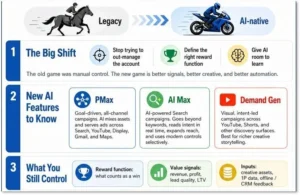
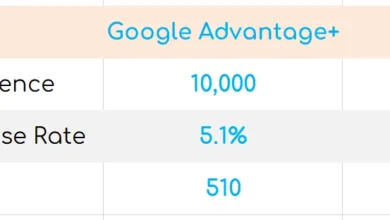
- 2024: The Year of Platform Autonomy. Tools like Google’s Performance Max (PMax) and Meta’s Advantage+ (A+) moved from optional features to the primary drivers of campaign performance, effectively "devouring" the manual work of audience segmentation and keyword research.
- 2025–2026 (Projected): The Agentic Era. Agencies will transition fully to "Agentic" workflows, where AI agents handle governance, pacing, and real-time optimization, leaving humans to focus on high-level strategy and ethical guardrails.
Identifying the Five Clusters of Obsolescence
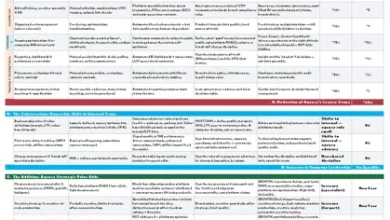
To understand where the 65% average savings in agency fees originate, analysts point to five specific clusters of traditional agency work that are being absorbed by platform intelligence:
1. The Activity Army
Historically, agencies billed heavily for "keyword sculpting," audience segmentation, and account architecture. In the new model, platforms like PMax and Advantage+ use intent-based signals—often processing tens of thousands of data points—to find customers that a human would never think to list. The agency’s role has shifted from "building" to "deciding," focusing on setting reward functions rather than manual campaign structures. This area represents roughly 22% of contract weight and is seeing a 78% reduction in human effort.
2. The Bid and Pace Dancers
Manual budget adjustments, day-parting, and "hygiene" checks once occupied hundreds of agency hours. Research indicates that "over-touching" accounts in an AI-driven environment actually degrades performance by resetting the machine’s learning cycles. Consequently, the agency’s job has shrunk to setting the correct target (e.g., Value-Based Bidding) and operating at the rhythm of the AI’s learning cycle.
3. The Creative Assembly Line
The labor-intensive process of trafficking, tagging, and creating ad format variations is being replaced by Generative AI. Platforms now assemble bits of text, image, and audio into the best version for each individual user in real-time. Agency value has moved upstream to "Asset Preparation" and "Creative Concepting," while the mechanical assembly is handled by the platform.
4. Optimization Theater
The "Optimization Theater"—the practice of pausing "losers" and shifting small percentages of budget by feel—is now recognized as counterproductive. Modern AI platforms run continuous "explore-exploit" cycles at a scale and speed humans cannot match. Agencies are now expected to focus on fewer, larger, high-impact experiments rather than a high volume of micro-optimizations.
5. The Reporting Factory
The era of manual weekly decks and 36-person update meetings is ending. Claude-fronted data lakes and automated dashboards can now explain not just what happened, but why, in real-time. This reduces the need for "account management" by an estimated 60%, shifting the focus from data reporting to data storytelling.
The Death of the "Percent of Media Spend" Model
A critical consensus among industry leaders is that the traditional "Percent of Media Spend" compensation model is fundamentally incompatible with an AI-driven future. This model incentivizes agencies to spend more and touch the account more frequently—actions that are often detrimental to algorithmic performance.
To align incentives with business growth, contracts are migrating toward a three-pillar structure:
- Lean Base Retainer (40-50%): Focused on governance, steering, and data engineering.
- Project Fees (30-40%): Dedicated to creative concepts, complex strategic analytics, and portfolio strategy.
- Outcome Incentives (15-25%): Tied directly to incremental profit or verified revenue lift, moving away from easily manipulated metrics like platform ROAS (Return on Ad Spend).
Industry Reactions and Expert Analysis
The shift has drawn mixed reactions from the agency world. While some legacy firms struggle with the loss of high-margin "billable hours," forward-thinking CEOs view the transition as a liberation.
"Agencies are no longer hamsters on a wheel," one executive noted. "We are moving from $50-an-hour manual work to $1,000-an-hour strategic consulting. This allows us to hire more experienced talent and pay them better, because we are selling outcomes, not just activity."
However, analysts warn that this transition requires brands to reclaim "Data Sovereignty." For years, agencies have often held the "keys" to ad accounts and data pixels. In an AI world, where data is the fuel for the algorithm, brands must own their accounts and data pipelines directly to avoid becoming "hostages" to their service providers.
Broader Implications: A New Species of Agency
The "Cut to Grow" strategy is not about devaluing the agency but about evolving it. The agencies that survive the next two years will likely be smaller, more senior-heavy, and structurally built to be outcome-centered strategic partners. These modern agencies will focus on "Agentic Wrangling"—the management of multiple AI agents across different platforms—and "Value Signal Hunting," ensuring that the data being fed into the AI is of the highest quality.
For the individual professional, whether an analyst, creative director, or marketing manager, the message is clear: the basis of value is changing. The "illusion of work" created by manual tasks is disappearing, replaced by the requirement for high-level judgment, ethical oversight, and strategic innovation.
As the industry moves toward 2027, the line between technology and marketing will continue to blur. The successful marketing organization of the future will not be the one with the largest execution team, but the one that best integrates human judgment with machine scale. The intelligence revolution has arrived, and for those ready to renegotiate the terms of their engagement, the potential for growth is unprecedented.